The Hidden Detail That Makes or Breaks Satin Lace Shorts
At first glance, making or buying a pair of satin lace shorts seems easy enough. A little fabric, some elastic, maybe a delicate trim — how hard could it be? But there is one tiny, almost invisible detail that marks the line between a masterpiece and a total disaster. It is what separates shorts that look expensive, fluid, and intentional from shorts that just look… homemade. So what is the big secret? It is not what you think, and it is hiding on the inside.
There’s More to Satin Lace Shorts Than Meets the Eye
There is a weirdly powerful feeling you get from clothing that looks delicate but feels well-made. Satin lace shorts are a perfect example of that. They can be loungewear, a date-night look, or a vacation go-to. But the trick is, they are never just “shorts.” They are a balancing act of texture, drape, and fit.
And that balance is where the real work begins. The very things that make satin lace shorts look luxurious are the exact same things that make them look cheap or awkward when they go wrong.
A lot of people think the secret is just buying expensive fabric or adding some lace. But it is not. The real secret is a collection of techniques that, when done right, take the whole thing to a professional level. Most of us have been there — slippery fabric that will not stay still, seams that pucker no matter what, and a finished garment that just does not hang right. It is maddening. So let us finally break down the system that separates the masterpieces from the messes.
It Is Not One Detail — It Is a System
The big selling point of satin is its shine and smoothness. But when you are sewing, those are actually your biggest enemies. The so-called “hidden detail” is not one magic trick. Instead, it is a series of five interconnected choices that work together to tame this beautiful but difficult fabric. And if you mess up even one of them, the whole project can fall apart.
Think about it: your eye is naturally drawn to texture and shine. Satin reflects light, so it is already begging for attention. That means any little mistake — a pucker, a snag, a crooked seam — is not just a small error. It is a glaring flaw with a spotlight shining right on it.
The real secret, the one that pros understand, is that you have to build satin lace shorts from the inside out. The structure you cannot see is what makes the beauty on the outside possible. It is all about controlling the fabric at every single stage, from the moment you unroll it to the final press. The path to expensive-looking satin shorts is paved with intention. And it all starts with the cut.
The Five Pillars of a Perfect Pair of Satin Lace Shorts
Here is where things get practical. If you have ever wanted to finally conquer satin, these are the five things you have to get right.
1. The Cut Is Non-Negotiable
The first mistake usually happens before you even sit down at the sewing machine. Satin is incredibly slippery. If you fold it to cut two layers at once, like you would with cotton, the layers are going to shift. Even a millimeter of movement can leave you with two different-sized pieces that will never line up properly. That is a guarantee for a twisted, uneven garment.
The solution is simple and non-negotiable: cut satin in a single layer. Lay your fabric flat on a cutting mat. Use pattern weights to hold the pattern down — not pins, because pins can leave permanent holes or snag the fabric. Then use a sharp rotary cutter instead of scissors. A rotary cutter lets you cut precisely without lifting or shifting the fabric, ensuring your pieces are perfect right from the start. This step might feel tedious, but it eliminates a huge number of problems further down the line.
2. The Right Tools for a Delicate Job
Your standard sewing setup will betray you here. Satin is woven from delicate, floating threads, and the wrong tools will just tear them up.
First, needles. A universal needle is too blunt — it punches through the satin fibers and creates snags and little pulls. You need a Microtex needle instead. These have a super fine, sharp point designed to pierce the fabric between the threads, not through them. Always use a fresh needle for every project. A size 60/8 or 70/10 works perfectly.
Next, thread. A high-quality, fine polyester or even silk thread is what you want. Heavy cotton thread creates too much tension and causes the very puckering you are trying to avoid. It is a partnership: the fine needle makes a tiny hole, and the fine thread slips right through without making a scene.
3. The Stitch That Stops Puckering
Puckering is the number one complaint with satin. It happens when the needle and thread pull those delicate fibers too tightly, creating a wrinkly, bunched-up seam. Here is how you fight back.
First, lengthen your stitch. A standard stitch length is too short — it puts too many holes and too much thread into a small space. A longer stitch, around 2.5mm to 3.0mm, gives the fabric more room to breathe.
Second, manage your tension carefully. Hold the fabric taut — but do not stretch it — from both the front and back of the presser foot as you guide it through. This helps the machine feed the slippery fabric evenly. If you have one, a walking foot is your best friend here, since it has its own feed dogs to grip the top layer and move it at the same pace as the bottom.
Additionally, a great pro-trick: if your machine tends to “eat” the fabric at the start of a seam, just place a little piece of tissue paper under the fabric. Sew the first few stitches through the paper and the satin. It provides just enough stability, and you can tear the paper away when you are done.
4. The Real Hidden Detail — The French Seam Finish
This is it. That’s the game-changer. The detail that truly separates a masterpiece from a mess lies on the inside of the shorts.
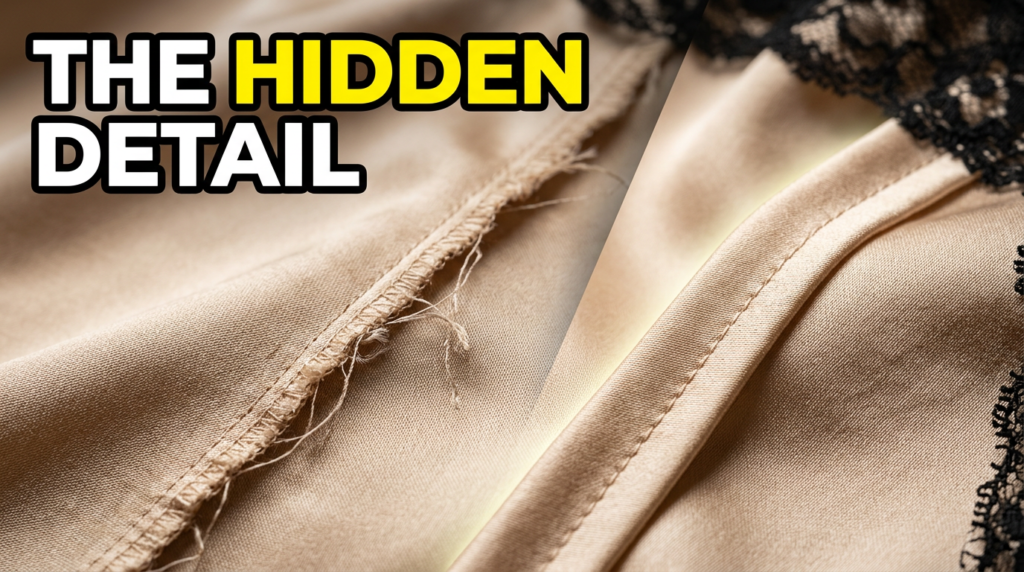
Because satin frays. A lot. Simply serging or zig-zagging the edge is not good enough. You can often see those finishes right through lightweight satin, and they definitely do not feel luxurious against your skin.
The absolute gold standard for finishing satin lace shorts is the French seam. A French seam is essentially a seam hidden inside another seam. First, you sew with the wrong sides of the fabric together, trim the edge, and then flip it and sew it again — completely encasing the raw edges. The result is a gorgeous, clean finish on the inside that looks just as good as the outside.
Yes, it takes more time. But this is the undeniable mark of a high-quality garment. It shows the maker cared not just about how the shorts look, but how they are built and how they will feel to wear. As Vogue’s guide to fabric and garment construction explains, it is always the interior construction of a piece that reveals its true quality. This is the real hidden detail.
5. The Waistband and Hem
You can do everything else right, but a bad waistband or hem will ruin the whole effect. For an elastic waistband, the goal is a clean, even casing that will not twist. Stitch your casing precisely. When you feed the elastic through, make sure to secure it at both ends inside the seam allowance before closing the opening. That is what stops the elastic from flipping over inside the casing every time you wear the shorts.
For the hem, a narrow rolled hem is the perfect choice. It is lightweight and will not weigh down the fabric’s fluid drape. Many machines have a special rolled hem foot, but you can also do it by stitching a line 1/4 inch from the raw edge, pressing on that line, then turning and pressing again before you topstitch. It creates a clean, professional edge that matches the delicacy of the satin perfectly.
Why These Details Actually Matter
So why go through all this extra trouble? Because these details are the difference between a piece of clothing you put up with and one you genuinely love. It is the difference between feeling confident and feeling just a little bit self-conscious.
When a garment is made well — with clean finishes and a thoughtful design — it simply feels better to wear. It moves with you, not against you.
A pair of satin lace shorts with scratchy, bulky seams on the inside will never be truly comfortable. A waistband that twists and digs in will always be annoying. These are not just sewing problems; they are experience problems. That feeling of luxury does not only come from the fabric’s shine. It also comes from the confidence of knowing that every part of the garment — seen and unseen — is crafted with care.
The Bigger Picture: Why Satin Lace Shorts Are Everywhere Right Now
This obsession with getting the micro-details right points to a bigger shift in fashion: the blurring of lines between different kinds of clothes. Satin shorts — and satin lace shorts specifically — are not just for pajamas anymore. They have become a staple that lives somewhere between loungewear and streetwear, lingerie and daywear. Celebrities and stylists are consistently pairing them with blazers, graphic tees, and sneakers, proving just how versatile they really are.
This blurring of lines means we expect more from our clothes. We want pieces that are comfortable, beautiful, and versatile all at once. A garment that can go from the couch to a night out has to perform on every level. According to fashion editors at Harper’s Bazaar, the satin-as-outerwear trend has been one of the most defining style shifts of recent seasons — and it shows no signs of slowing down.
And that is precisely where the DIY and maker community is so important. People are not just buying these shorts; they are learning how to make them, mastering the tricky fabric, and getting them just right by their own standards. In a way, making a great pair of satin lace shorts has become a real test of fashion know-how. Not in a snobby way, but in a practical one. Does it work? Does it feel good? Is it made to last? Those are the questions that define modern style.
Your Action Plan for Satin Lace Shorts
So, what can you actually do with all this?
If you are wearing satin lace shorts, think about balance. Since the shorts are already all about texture and shine, pair them with something simpler and more structured on top — a crisp t-shirt, a fitted tank, or a blazer works really well.
If you are shopping for them, be a detective. Turn them inside out. Look for French seams or another clean, enclosed finish. Check how the waistband is constructed. Feel the weight of the fabric. These are the clues that tell you whether a garment is worth its price tag.
And if you are making them, here is your new checklist:
- Cut one layer at a time with a rotary cutter
- Use a new Microtex needle and quality thread
- Lengthen your stitch and hold the fabric taut
- Master the French seam for the ultimate interior finish
- Build a clean waistband and a delicate narrow rolled hem
The bigger lesson here is that the most beautiful things in fashion are often the result of serious technical problem-solving. The things that look the most effortless are usually anything but.
The Real Story Behind That Perfect Pair
So the next time you see a perfect pair of satin lace shorts shimmering under the light, think beyond “oh, that’s cute.” Think about the puzzle underneath. Think about the single-layer cut, the Microtex needle, the longer stitch length, and that perfectly enclosed French seam hiding on the inside.
That is the real story. And maybe that is the ultimate appeal of satin lace shorts: they look completely effortless, but they are actually built on pure intention.
FAQ Section
What are satin lace shorts good for?
A: Satin lace shorts are incredibly versatile. They work as loungewear, sleepwear, a date-night look, or even a casual daytime outfit when paired with the right top. Their soft texture and light drape make them a year-round wardrobe staple.
How do I style satin lace shorts for a night out?
A: Pair satin lace shorts with a structured blazer, fitted cami, or a simple tucked-in top. Add block heels or strappy sandals to keep the look elevated. Keep accessories minimal — the fabric does the talking.
How can I tell if satin lace shorts are good quality?
A: Turn them inside out. High-quality satin shorts will have clean, enclosed seam finishes — ideally French seams. A neatly constructed waistband that lies flat is another strong indicator of quality craftsmanship.
Can I hand-wash satin lace shorts?
A: Yes. Always hand-wash satin in cool water with a gentle detergent. Avoid wringing or twisting the fabric. Lay them flat to dry and store away from direct sunlight to preserve the sheen.
What fabric is best for making satin lace shorts at home?
A: Charmeuse satin is one of the most popular choices for shorts because of its soft drape and beautiful shine. For beginners, a satin-back crepe can be easier to work with since it is slightly less slippery.