The Hidden Secret That Makes a Woven Leather Crossbody Bag Worth Every Penny
Take a look at a woven leather crossbody bag. It looks beautiful, it looks expensive, and it seems almost effortlessly structured. But here is the thing — take a single strip of leather on its own, and it is actually quite flexible, even floppy. So if the material itself is soft and pliable, what makes a woven leather crossbody bag hold its shape, carry weight without distorting, and still look immaculate after years of use?
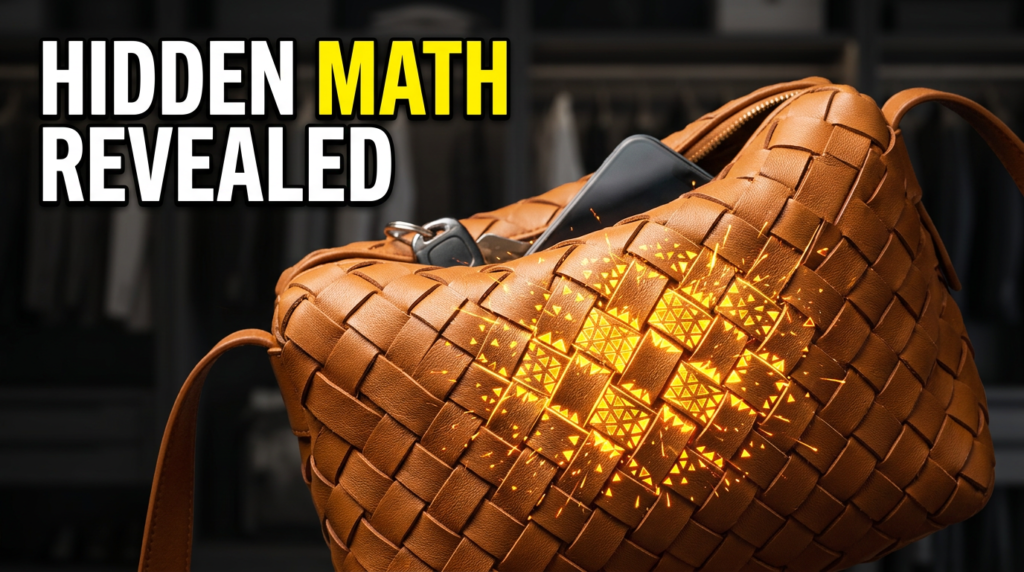
It is not just the leather. It is the math hidden inside it. That simple criss-cross pattern running across the surface is not just decoration. It is a work of structural genius. And once you understand it, you will never look at a woven bag the same way again.
Why the Weave Is the Real Story
The most obvious answer people jump to is that good leather is just strong. And that is partly true. Full-grain and top-grain leather are both dense, fibrous materials with impressive tensile strength for their weight. But that is not the whole story — not even close.
Think about it this way: if you took the same amount of leather and made it into a solid, unwoven panel, you would get a bag that stretches unevenly under weight. A sharp corner of a phone or keys could start a stress crack with very little effort. A single pressure point becomes a catastrophic failure over time. So clearly, the material alone is not what makes a woven leather crossbody bag perform the way it does. The strength is not just in what it is made from. It is in how it is put together.
The secret is not the ingredient. It is the recipe. And that recipe is the weave.
The Geometry Behind a Woven Leather Crossbody Bag
To understand why the weave works, you have to think not about the squares you see — but about the triangles you cannot.
Looking at a woven leather surface, all you see is a neat grid of interlocking squares. But a grid is actually a deceptively unstable shape. Take four rigid pieces pinned together at the corners into a square. Push on one side. It collapses into a rhombus almost immediately. The angles shift, and the structure fails.
Now try the same thing with three pieces pinned into a triangle. Push on any corner. Nothing moves. The triangle is inherently rigid. It is, in fact, the only polygon that cannot change shape without one of its sides changing length. That geometric fact is one of the most important principles in structural engineering — and it is quietly at work inside every woven leather crossbody bag you have ever admired.
Here is where it gets really interesting. When you load a woven bag — dropping your phone, wallet, keys, and a pair of sunglasses inside — the downward force travels diagonally across the woven grid. Those leather strips, normally sitting at 90-degree angles to each other, get pulled taut. Instantly, that grid of interlocked squares starts behaving like a network of thousands of tiny triangles. Each section of the weave channels force diagonally, and it is that hidden geometry that bears the load. The structure has, in effect, triangulated itself. This is the same foundational principle used in bridge trusses, skyscrapers, and aerospace engineering.
The Physics That Explains the Luxury Feel
So triangles are strong. But what is actually happening inside the weave when you carry a woven leather crossbody bag? It comes down to two fundamental forces: compression and tension.
Compression is a pushing or squeezing force. Tension is a pulling force. When weight is applied to the bag, that force is immediately distributed across the entire woven network. Each leather strip handles a tiny portion of either tension or compression. No single thread or strip is overwhelmed. No single point is forced to carry more than its share.
This is the same principle behind ripstop fabrics, where a reinforced grid prevents a small tear from spreading by distributing stress outward. In a woven leather bag, the same logic applies. A scratch or stress point that might split a flat leather panel is instead absorbed and neutralised by the surrounding interlocked strips.
The result is a bag that feels firm but flexible, structured but not rigid, and far more durable than its weight would suggest. That satisfying firmness when you pick up a quality woven leather crossbody bag? That is geometry doing its job.
As Vogue’s guide to investment bags points out, the construction method — not just the material — is what separates a bag that ages beautifully from one that deteriorates quickly. The weave is exactly that construction method.
Why This Pattern Has Been Trusted for Thousands of Years
Once you see this principle clearly, you start noticing it everywhere. The act of weaving itself is one of the oldest structural technologies humans ever developed. Ancient cultures used interlaced reeds to build baskets, interlocked twigs to create shelter walls, and wove fibres into fabrics that could carry, protect, and last.
The reason this technique has survived for thousands of years is simple: it works. It transforms individually weak strips into a collectively powerful surface. And fashion — particularly in leather goods — has never stopped using it.
Look at the classic woven leather designs that have defined luxury fashion across decades. The intrecciato weave made famous by Bottega Veneta. The herringbone leather weaves seen in vintage structured bags. The open lattice crossbody silhouettes that dominate street style today. All of them are applying the same ancient geometric principle — just with increasingly refined materials and craftsmanship.
The scale of the weave changes, the leather finish changes, the colour and hardware change. But the underlying math stays exactly the same.
What to Look For in a Quality Woven Leather Crossbody Bag
Understanding the structure makes you a smarter shopper. Not every woven leather crossbody bag is made equal, and the differences show up in very specific ways.
The Weave Tightness
A tighter, more consistent weave means the leather strips are interlocked more precisely. That translates directly into better load distribution and a longer lifespan. Loose or uneven weaving creates weak points where stress concentrates — exactly where cracks and tears begin over time.
The Seam and Hardware Attachment Points
Here is where most bags actually fail — not in the weave itself, but at the transition away from it. When a maker stitches a strap or hardware piece onto a woven panel, all those beautifully distributed forces suddenly converge at a few concentrated points. That junction—where the woven structure meets a single line of stitching—is the most common failure point in any woven bag. On a well-made bag, reinforced stitching, bartacks, and metal rivets at these junctions protect that vulnerable transition.
The Leather Quality
Full-grain leather holds a tight weave better and develops a richer patina over time. Top-grain leather is also a solid choice. Bonded leather or PU leather will look good initially, but the fibres are not strong enough to maintain weave tension across years of use. The weave amplifies the material’s quality in both directions — great leather gets better with time in a woven structure, but weak leather will degrade faster because every stress point is active.
According to Elle’s breakdown of leather bag quality, the best crossbody bags combine quality material with construction that reinforces rather than compromises the leather’s natural strength. A woven structure does exactly that.
How to Style a Woven Leather Crossbody Bag
The woven texture does a lot of the work for you — it adds visual interest and tactile richness without needing anything else to compete with it. Because of that, styling is actually quite straightforward.
For a clean, minimal look, pair a tan or cognac woven leather crossbody bag with a white linen shirt, straight-leg trousers, and simple loafers. The bag becomes the focal point without trying to be.
For a night-out look, a black woven leather crossbody bag works especially well against a solid-colour slip dress or tailored co-ord set. The texture adds dimension without bulk.
For a casual street-style combination, a woven leather bag in a neutral tone — camel, sand, or warm brown — sits perfectly against oversized knitwear, wide-leg jeans, and clean white trainers.
The one styling rule worth remembering: since the weave already adds texture, keep the rest of the outfit relatively clean and uncluttered. Let the bag do what it was designed to do.
The Bigger Picture: Why a Woven Leather Crossbody Bag Is an Investment Worth Making
A woven leather crossbody bag is not just a fashion purchase. It is, in the most literal sense, an engineered object. The same mathematical principle behind steel truss bridges, geodesic domes, and ultra-strong carbon fibre also shapes the bag sitting on your shelf right now.
From ancient basket weaving to the intrecciato leather of a luxury atelier to the lightweight carbon fibre panels of a stealth aircraft, the same fundamental geometry is at work. It takes individually weak materials and turns them into something that is, collectively, orders of magnitude stronger.
So the next time you pick up a woven leather crossbody bag, take a second to appreciate what you are actually holding. It is not just an accessory. It is a masterclass in structural design, wrapped in beautiful leather, and sized perfectly to carry your entire day.
FAQ Section
What is a woven leather crossbody bag?
A: A woven leather crossbody bag uses interlaced strips of leather to create a criss-cross pattern on its exterior. This weaving technique adds structure, durability, and a distinctive textured look that sets it apart from smooth leather bags.
Are woven leather crossbody bags durable?
A: Yes — significantly more so than smooth flat leather panels. The woven structure distributes stress across thousands of interlocked points rather than concentrating it in one place, making the bag highly resistant to cracking, tearing, and distortion under everyday weight.
How do I care for a woven leather crossbody bag?
A: Use a soft brush or cloth to remove dust from between the woven strips regularly. Apply a leather conditioner every few months to keep the strips supple. Avoid prolonged exposure to direct sunlight or moisture, which can cause the leather to stiffen or crack between the weave.
What should I look for when buying a woven leather crossbody bag?
A: Check the tightness and consistency of the weave first. Then inspect the stitching at handle and strap attachment points — reinforced stitching or metal rivets here indicate a well-made bag. Finally, check the leather quality: full-grain or top-grain leather will age far better than bonded or PU alternatives.
What outfits go well with a woven leather crossbody bag?
A: Woven leather crossbody bags work across casual, smart-casual, and evening looks. They pair especially well with clean, minimal outfits — linen sets, tailored trousers, slip dresses, and simple knitwear — where the bag’s texture can stand out naturally.