Tights in Shorts: The 2000s Trend That Refuses to Die and How to Wear It Right in 2026
If scrolling online lately has given you a weird sense of déjà vu, you are not imagining things. The combination of tights in shorts is back — a fashion pairing most people assumed was buried deep in a 2009 time capsule, locked away alongside smudged party photos and questionable blog posts.
For one brief, shining moment, this was the absolute peak of cool. Then, almost overnight, it became a total joke. A look so specific to its era that spotting it felt like a glitch in the matrix. Yet, against all odds, it is creeping back. Runways, influencers, and the person next to you at the coffee shop are all bringing it back into rotation.
This is not simply a nostalgic comeback, though. Rather, it is the story of a surprisingly tough trend that has travelled from the height of Indie Sleaze fashion to a full sartorial punchline — and somehow back again. So why does wearing tights in shorts refuse to disappear entirely?
To figure that out, we need to go back. Back to smudged eyeliner, loud electronic music, and a very different internet.
The First Wave: How Tights in Shorts Became the Indie Sleaze Uniform
Picture it: the late 2000s. The Strokes and LCD Soundsystem blasting from the speakers, MySpace functioning as our digital kingdom, and a new aesthetic sweeping through everything. Messy, energetic, a little grimy — it went by the name Indie Sleaze. This era was never about looking polished. Instead, it celebrated looking like you had just rolled out of bed after an incredible party, thrown on whatever was on the floor, and somehow still appeared impossibly cool.
The unofficial uniform for that entire scene? Tiny shorts — often denim cut-offs so short they were barely there — layered over a pair of tights. This was not a random pairing. The look grew from a mix of practicality and pure attitude. Wearing denim hot pants year-round like Kate Moss at Glastonbury simply was not realistic for anyone dealing with actual weather. Tights provided a thin, easily snagged layer of warmth while still preserving that coveted cool shape. They made the super-short shorts feel just a fraction less scandalous.
The look spread everywhere. It got championed by the era’s ultimate It Girls. Alexa Chung, the undisputed queen of the aesthetic, wore her shorts-and-tights with Peter Pan collar blouses for a slightly chic, Parisian feel. The characters in the UK series Skins turned it into standard-issue gear for any self-respecting rebellious teenager. Over on Gossip Girl, the cast rocked the look on the Met steps, swapping basic black for bold, colourful tights.
Street style blogs immortalised it all in harsh flash photography. Brands like American Apparel and Topshop essentially built their empires selling the essential pieces: the shorts, the oversized band tees, and tights in every colour and thickness imaginable.
As Vogue has noted in its deep dives into the Indie Sleaze revival, this wasn’t just an outfit — it was a signal. It said you knew the right bands, attended the right gigs, and probably had inside knowledge of the afterparty location. At its peak, tights in shorts defined effortless, rock-and-roll cool. But as we all know, what goes up eventually comes down.
The Peak and the Punchline
Like any trend that gets too popular, the shorts-and-tights look was always heading for a fall. Once a uniform goes mainstream, the cool disappears with it. What began as a niche look for the effortlessly hip quickly became a formula replicated in every suburban shopping mall.
With each step down the chain, the aesthetic got a little more warped. The curated messiness gave way to poorly fitting combinations. Flimsy polyester shorts got paired with sheer, easily-ripped tights. Proportions went strange. Textures clashed. The whole thing started to look less like a deliberate style choice and more like getting dressed in the dark.
Predictably, the internet — which had built the trend up — turned on it just as fast. Style blogs and early fashion forums started calling it basic or, worse, cringe. It became a meme before memes were really a cultural currency. Suddenly, the outfit screamed “tried too hard” — the very opposite of everything it originally stood for.
Beyond the social shift, there was also the growing realisation that the look simply did not make practical sense. Too warm for summer, too cold for winter, stuck in an impractical middle ground. The friction of denim rubbing against nylon felt annoying. The whole thing started to feel costume-like rather than considered. Consequently, as the 2010s arrived and fashion pivoted toward minimalism and athleisure, shorts-and-tights got shoved to the back of the wardrobe, a relic of a very specific and now rather embarrassing era. It seemed destined to live on only in grainy 2009 Facebook albums.
The Science of the Silhouette: Why Tights in Shorts Work (or Fail)
So why, after becoming a total fashion pariah, does this look remain possible to pull off at all? The secret lies not in the trend itself, but in the basic principles of styling. Whether tights in shorts succeeds or falls apart entirely comes down to three things: proportion, texture, and colour.
Proportion: Create One Clean Line
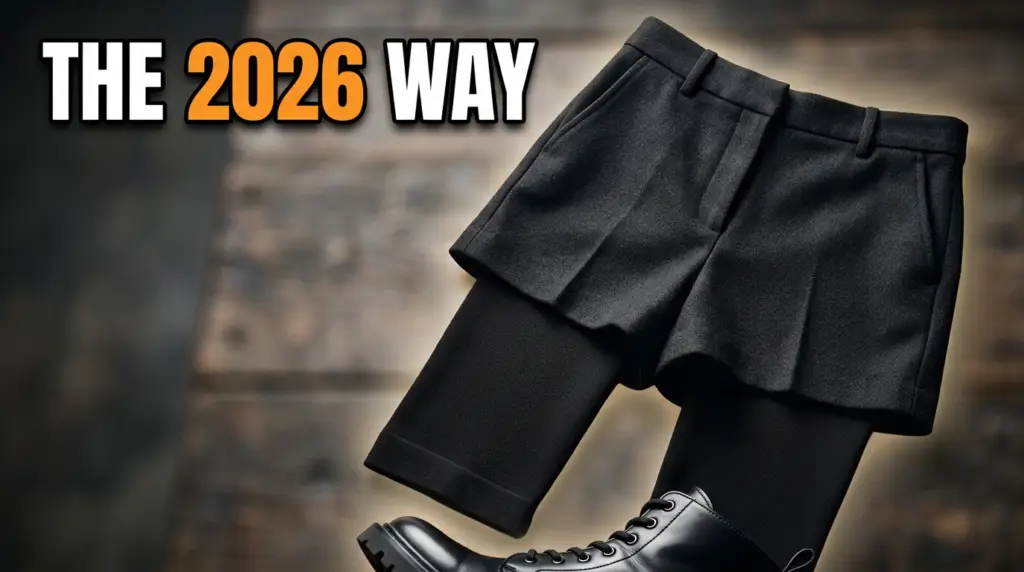
When it works, it works because it functions as a smart layering trick rather than two random items thrown together. The real magic comes from creating one clean, unbroken silhouette. The most foolproof approach — and the version dominating the modern revival — goes monochromatic. Pairing black shorts with black opaque tights creates a single continuous line from waist to ankle. As a result, legs look longer, the overall outfit reads sleeker, and nothing about it feels accidental.
Texture: Match the Fabrics to the Season
Fabric choice is the next crucial element. The original trend frequently failed because it combined summer fabrics — think frayed denim — with winter-weight tights. That clash felt unintentional and seasonally confused. The updated, successful version corrects this by using shorts cut from autumn or winter-appropriate materials: structured tweed, wool, corduroy, or leather. These heavier fabrics sit naturally alongside tights, making the entire look feel deliberate and weather-appropriate. It signals a considered choice rather than an accidental one.
Footwear: The Detail That Decides Everything
Shoes anchor the whole outfit. During the cringe phase, the look frequently got dragged down by flimsy ballet flats or worn-out trainers. Today’s successful versions use footwear to give the outfit a clear identity. Chunky combat boots push it toward edgy. Sleek ankle boots or knee-highs add something more sophisticated. Even loafers can work, landing the look in preppy, academic territory. The shoe functions as the full stop at the end of the fashion sentence — it confirms what the look intends to say. Getting this detail right is genuinely the difference between looking like a styling pro and a fashion victim.
The Comeback: Why Tights in Shorts Are Back in 2026
Fashion frequently operates on what analysts call the 20-year cycle. The theory holds that it takes roughly two decades for a trend to travel from popular, to dated, to nostalgic, and finally back to being considered retro and cool again. The late 2000s were, right on schedule, approximately twenty years ago.
Trends rarely return in exactly their original form, though. They come back through a modern filter, updated and reimagined for the present. The Miu Miu Autumn/Winter 2023 show served as a significant catalyst — models appeared on the runway in micro-shorts and embellished briefs layered over sheer tights, styled with prim little cardigans. Provocative, playful, and immediately influential, that show put the combination firmly back on the high-fashion map.
From there, the look began trickling outward. Alexa Chung, the trend’s original godmother, has since been photographed in more refined versions pairing tailored shorts with semi-sheer tights. Bella Hadid and Suki Waterhouse have both appeared in styles that read as a direct, knowing nod to 2009.
Crucially, the 2026 interpretation is more polished. As Harper’s Bazaar has observed in its coverage of the Indie Sleaze revival, the shredded denim cut-offs have swapped out for tailored leather or wool shorts. The flimsy tights have given way to high-quality opaque or intentionally sheer styles. The rest of the outfit reads more restrained — often an oversized blazer, a sleek turtleneck, or a quality knit sweater.
This newer version is self-aware. Rather than stumbling out of a 4 a.m. club, it consciously references a past aesthetic and cleans it up for today. It acknowledges the trend’s cringe history and reclaims it with confidence. Less Indie Sleaze, more Indie Luxe.
Why This Trend Simply Refuses to Die
On one level, the answer is practical. Tights in shorts is a genuinely useful styling trick for transitional weather — it extends wardrobe options and offers a degree of coverage while still playing with shorter hemlines.
On a deeper level, however, its staying power comes from its position in the fashion cycle. A new generation encounters it as something fresh and retro, while the original generation feels genuine nostalgia for their younger years. Both responses fuel the same revival from opposite directions.
This time, the trend has learned from its past mistakes. The modern take prioritises thoughtful layering, quality fabrics, and a deliberate silhouette. It no longer belongs exclusively to one subculture. Instead, it functions as a flexible styling choice available to anyone willing to approach it with the right proportions and materials.
The journey from cool to cringe to cool again is a perfect miniature of how fashion actually operates. Trends don’t die — they hibernate. They wait until we forget why we hated them, so we can remember why we loved them. Wearing this look today carries a clear statement: I know this has a history, and I’m choosing it anyway. In fashion, that kind of self-awareness never goes out of style.
FAQ Section
Q: What does tights in shorts mean as a fashion trend?
A: Tights in shorts refers to the styling combination of wearing opaque or sheer tights underneath a pair of shorts, rather than bare legs. It originated during the late 2000s Indie Sleaze era and has recently experienced a fashion revival on runways and in street style.
Q: How do you wear tights in shorts without looking dated?
A: The key is proportion, texture, and footwear. Go monochromatic — black shorts with black opaque tights work best. Choose shorts in autumn/winter fabrics like wool, leather, or tweed rather than denim cut-offs. Finish with ankle boots, knee-highs, or chunky combat boots to anchor the look intentionally.
Q: Is the tights in shorts trend back in 2026?
A: Yes. Following the Miu Miu Autumn/Winter 2023 show, the combination gained significant runway and celebrity momentum. The 2026 version is more tailored and polished than the original 2000s iteration, with higher quality fabrics and a more restrained overall styling approach.
Q: What tights work best with shorts?
A: Opaque black tights create the cleanest, most elongating silhouette. Intentionally sheer tights in neutral tones also work well for a more dressed-up finish. Avoid flimsy, low-denier tights that are likely to snag — the quality of the tight matters significantly in the modern version of this look.
Q: What shoes go with tights in shorts?
A: Chunky combat boots for an edgy feel, sleek ankle boots or knee-high boots for something more sophisticated, or loafers for a preppy academic tone. Avoid ballet flats or basic trainers — these tend to drag the overall look down rather than anchor it.
Q: What shorts work best with tights?
A: Structured, tailored shorts in heavier fabrics — wool, leather, corduroy, or tweed — work best. These materials sit naturally alongside winter tights and make the entire combination feel seasonally coherent rather than accidental.
Q: Why did tights in shorts go out of style originally?
A: Once the Indie Sleaze aesthetic moved from niche to mainstream around 2010–2011, the look lost its original edge. Poorly fitting combinations, clashing fabrics, and widespread adoption across fast fashion diluted the aesthetic. Combined with fashion’s broader shift toward minimalism and athleisure, the trend eventually read as costumey and “try-hard.”