The Truth About Using Mild Dish Soap for Cleaning Jewelry
You have probably heard it a hundred times: a little bath in mild dish soap makes jewelry sparkle again. But this advice is missing a crucial piece. Using it on the wrong piece can cause real, permanent damage. The truth is, mild dish soap for cleaning jewelry is one of the best tools you have — but only when you know which pieces it suits and which ones it can quietly ruin. This guide covers what works, what does not, the five mistakes most people make, and the simple routine that professional jewelers actually use.
How Mild Dish Soap Actually Cleans Jewelry
Here is the core idea that jewelers consistently stand by. A simple solution of mild, clear, fragrance-free dish soap and warm water ranks as one of the safest and most effective cleaners for a wide range of jewelry. The science behind it comes down to one ingredient: surfactants.
Surfactants work as the active agents in dish soap. They carry a unique molecular structure with two distinct ends — one that bonds with water, and one that bonds with oil and grease. When you soak a grimy ring, the oil-loving ends latch onto body oils, lotions, and built-up dirt. Then the water-loving ends pull that captured grime away from the surface and into the water.
Why Surfactants Beat Harsher Alternatives
This lifting action removes the dulling film on jewelry without the abrasive scratching that something like toothpaste would cause. Toothpaste is engineered to be abrasive — useful for teeth, genuinely damaging for polished metal surfaces. Mild soap, by contrast, lifts grime chemically rather than mechanically.
The standard method most jewelers recommend follows the same simple steps. Fill a small bowl with warm water. Add just a few drops of mild dish soap. Use a soft brush to work into the details. Rinse thoroughly under clean water. Dry completely with a lint-free cloth. Some guides suggest a one-to-two minute soak for lightly soiled pieces, while others recommend ten to thirty minutes for heavier buildup. The exact time matters less than the principle: gentleness throughout.
Which Soap to Choose
The specific soap matters significantly. Your safest option is always a mild, dye-free, and lotion-free formula. Added moisturisers, antibacterial agents, and heavy fragrances might protect your hands, but they leave residue on jewelry surfaces and can harm delicate finishes over time.
Which Jewelry Is Safe to Clean With Dish Soap
Start with the straightforward category: solid gold, platinum, and hard gemstones. These materials handle a warm soap-and-water bath comfortably. Gold and platinum are tough, non-porous metals. Diamonds, sapphires, and rubies fall into the hard gemstone category and tolerate gentle cleaning without any risk.
For these pieces, a soft toothbrush works perfectly. It reaches the tiny settings and under the prongs where oil and dirt accumulate. The goal is not aggressive scrubbing — it is gently agitating grime that the soap has already loosened.
Silver follows similar logic, with one important caveat. Soap and warm water effectively remove surface grime and oils from silver. However, if your main problem is tarnish — that dark, cloudy layer — soap alone will not solve it. Tarnish results from a chemical reaction, not surface dirt. Most jewelers suggest washing first to remove debris, then following up with a dedicated silver polishing cloth to address the tarnish itself.
Diamonds and Hard Gemstones
Mild soap works particularly well on diamonds because it lifts the very oils that cause cloudiness. A diamond’s brilliance depends entirely on how it reflects light. Even a thin film of lotion blocks that reflection. The sparkle you see after a proper clean is simply the result of that residue being fully removed — nothing more complicated than that.
For a deeper look at professional jeweler recommendations on at-home cleaning methods, Vogue’s expert-backed guide to cleaning fine jewelry at home offers reliable detail from industry professionals worth bookmarking.
Jewelry You Should Never Soak in Dish Soap
This is where the advice to “just use dish soap” becomes genuinely risky. Pearls, opals, emeralds, and costume pieces all require a different approach entirely.
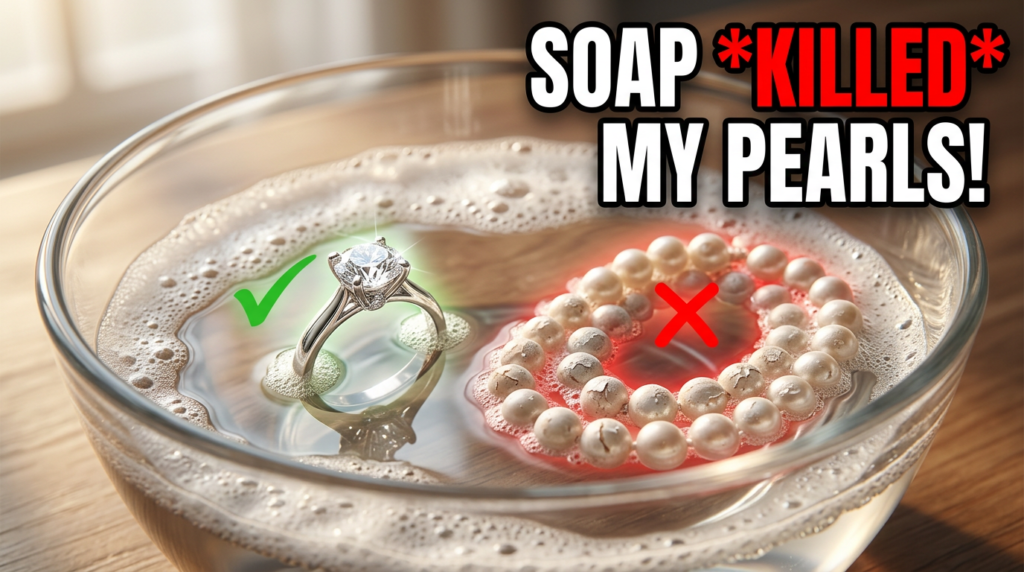
Pearls are organic gems. Opals carry a high natural water content. Both materials are vulnerable to chemicals and prolonged soaking, which can cause discolouration or structural damage. A quick, careful wipe with a soft damp cloth carrying the faintest trace of soap is generally acceptable. Soaking, however, is the real danger and should never happen.
Emeralds present their own specific challenge. Many emeralds undergo treatment with oils or resins to fill natural internal fractures and improve their visual clarity. A brief, gentle wash rarely causes problems, but aggressive cleaning or extended soaking can affect those fillers over time. This is precisely why professional jewellers avoid ultrasonic cleaners and harsh chemicals on treated emeralds.
Costume Jewelry: The Highest Risk Category
Costume jewelry carries the most serious risk. These pieces typically combine base metals, thin plating, and adhesives. Soaking them ranks among the fastest ways to cause irreversible damage. Water seeps behind settings and weakens the glue holding stones in place — causing them to fall out. It also accelerates tarnishing and causes plating to lift and flake. For most costume pieces, a slightly damp microfibre cloth used gently around the stones is the correct method.
Two additional details matter consistently. Always use warm or lukewarm water — never hot. A sudden temperature extreme can stress gemstones and potentially cause cracking. The risk with normal tap water is small, but there is no reason to take it. Also, rinse every piece thoroughly after cleaning. Soap residue dries into a dull film that attracts more dirt almost immediately.
According to The Knot’s guide to caring for fine and delicate jewelry, inspecting your piece before cleaning is also essential — checking for loose stones or worn prongs takes five seconds and prevents stones from disappearing down the drain during rinsing.
The Five Mistakes That Damage Jewelry During Cleaning
Most jewelry damage does not happen in dramatic accidents. It happens during well-intentioned cleaning sessions. These five mistakes account for the majority of it.
Mistake one: using the wrong “mild” soap. Soaps containing moisturisers, heavy fragrances, or antibacterial agents leave film or harm delicate surfaces. Always choose plain, clear, additive-free dish soap.
Mistake two: using too much force. A soft-bristled toothbrush works well — the emphasis belongs firmly on “soft.” Scrubbing aggressively scratches softer metals and loosens prongs over time.
Mistake three: soaking everything. This method suits sturdy pieces beautifully, but it can destroy pearls, opals, and any costume jewelry held together with adhesive. One well-intentioned five-minute soak causes damage that no amount of cleaning can reverse.
Mistake four: cleaning over an open drain. This sounds obvious, but it remains the single easiest way to lose a ring or earring permanently. Always use a bowl or plug the sink before you start.
Mistake five: trusting “natural” DIY hacks. Baking soda, vinegar, and toothpaste frequently appear in cleaning guides. Baking soda can address tarnish on some silver, but it also strips away the desirable dark patina on antique pieces and leaves fine scratches on others. Toothpaste is by design abrasive — that quality helps teeth but damages polished metal finishes.
The real lesson here is simple. Jewelry cleaning is not about finding the strongest cleaner. It is about asking: what is the gentlest method that actually gets the job done?
The Routine That Works Better Than Any Cleaner
Here is the genuinely surprising part. After all the discussion of cleaning solutions, the most effective jewelry care strategy is not a cleaner at all. It is a consistent daily routine.
That routine is remarkably simple. Wipe pieces down with a soft cloth after every wear. This step matters especially for pearls, which are sensitive to the natural oils and acids on skin. Preventing buildup costs far less effort than removing it later. When a deeper clean becomes necessary, the targeted mild soap method handles it reliably.
The professional jewelry industry largely agrees on this point. Even with every commercial cleaning product available, most jeweler guides still return to the same formula: warm water, a few drops of mild dish soap, a soft brush, and a thorough rinse and dry.
Modern jewelry increasingly mixes materials in a single piece — gold, enamel, adhesive, and multiple stone types together. That reality makes material identification more critical than ever. The cleaning method must suit the most fragile element in the piece, not the sturdiest.
The Complete Rules to Remember
These six rules cover everything you need for safe, effective jewelry cleaning at home.
First, use mild dish soap and warm water confidently for sturdy pieces — solid gold, platinum, silver, diamonds, sapphires, and other hard gemstones.
Second, always choose a soft toothbrush or soft cloth. Nothing abrasive touches a polished finish.
Third — and most critically — never soak pearls, opals, emeralds, or costume jewelry. A gentle wipe with a damp cloth is the correct method for all of these.
Fourth, rinse every piece thoroughly. Soap residue left behind dries into a dull film and attracts new dirt immediately.
Fifth, dry jewelry completely with a soft lint-free cloth before wearing or storing it.
Sixth, inspect every piece before cleaning. A quick check for loose stones or weak settings takes seconds and prevents real loss.
If you feel uncertain about any piece, choose the least dramatic option: a gentle wipe with a damp cloth. For anything truly valuable or sentimental, a brief consultation with a professional jeweler is the safest move. Mild dish soap is not a gimmick — for a wide range of jewelry, it genuinely is one of the best tools available. The real skill is simply knowing when to use it and when to leave it by the sink.
FAQ — Mild Dish Soap for Cleaning Jewelry
Q1: Is mild dish soap for cleaning jewelry actually safe?
A: Yes — for the right pieces. Mild dish soap and warm water are safe and effective for solid gold, platinum, silver, diamonds, sapphires, rubies, and other hard gemstones. The key is choosing a plain, fragrance-free, dye-free formula and avoiding it entirely on pearls, opals, costume jewelry, and adhesive-set stones.
Q2: How much dish soap should I use to clean jewelry?
A: A few drops in a small bowl of warm water is sufficient. You do not need a soapy lather — the surfactants in even a small amount of soap do the work. Too much soap actually makes thorough rinsing harder and increases the risk of leaving a dulling residue behind.
Q3: Can I use dish soap to clean a diamond ring?
A: Yes, and it works particularly well. Dish soap lifts the body oils and lotion residue that cloud a diamond’s brilliance. Soak briefly, scrub gently with a soft toothbrush around the setting and under the prongs, rinse thoroughly, and dry completely.
Q4: Why should I never soak pearls in dish soap?
A: Pearls are organic gems sensitive to both chemicals and prolonged water exposure. Soaking can cause discolouration, surface damage, and weakening of the silk thread on strung necklaces. Use only a soft damp cloth with a minimal trace of plain soap, and dry them immediately afterward.
Q5: What dish soap brand is best for cleaning jewelry?
A: Any plain, fragrance-free, dye-free, and lotion-free dish soap works well. Common options like plain Dawn Free and Clear or similar unscented formulas are widely recommended. Avoid anything labelled “moisturising,” “antibacterial,” or “ultra-concentrated with added ingredients.”
Q6: How often should I clean my jewelry with dish soap?
A: For regularly worn pieces like engagement rings and everyday gold or silver, a gentle clean every two to four weeks maintains appearance well. More frequent cleaning is rarely necessary if you wipe pieces down with a soft cloth after each wear to prevent oil buildup.
Q7: Can dish soap remove tarnish from silver jewelry?
A: Dish soap removes surface grime and oils from silver but does not reverse tarnish. Tarnish results from a chemical reaction in the metal, not surface dirt. Clean with mild soap first to remove debris, then use a dedicated silver polishing cloth to address the tarnish layer separately.
Q8: What common household cleaners should I never use on jewelry?
A: Avoid toothpaste — it is abrasive by design and scratches polished metal surfaces. Use vinegar carefully — it can damage softer stones and certain metal finishes. Handle baking soda cautiously with antique silver, as it can strip desirable patina. Bleach and chlorine should never contact any jewelry.