The Raffia Bag Paradox: Why One Costs $30 and Another Costs $3,000
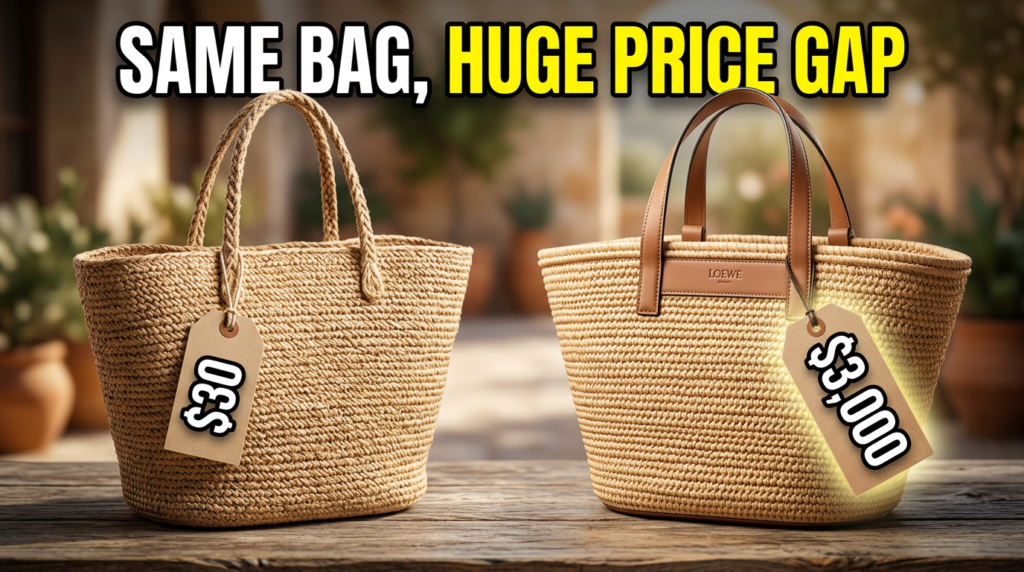
Two bags. Both made of dried grass. One costs around thirty dollars. The other costs three thousand. They look strikingly similar, and the material is essentially the same plant fiber. So what accounts for that extra $2,970? The answer is not simply quality or craftsmanship — though those play a role. The real story behind the raffia bag price gap involves economics, psychology, and a carefully constructed idea of value. This article breaks all of it down, from the fiber itself to the strange logic that makes a woven palm leaf worth a month’s rent.
What Is Raffia and Why Does Fashion Obsess Over It?
Raffia is a natural fiber taken from the leaves of the raffia palm tree, which grows primarily across Africa. For centuries, local craftspeople used it as a staple material for baskets, hats, and woven goods. However, in the world of high fashion, it became something else entirely — a code for effortless, summery sophistication.
That code is remarkably powerful. Brands from Prada to Loewe built entire summer collections around it, turning a humble plant fiber into a recurring symbol of relaxed luxury. The famous Prada raffia tote became a fixture on the arms of Gigi Hadid and Dua Lipa, cementing the material’s status as a seasonal must-have.
Natural Raffia vs. Synthetic Raffia
Fashion, however, plays fast and loose with the word “raffia.” It can refer to the authentic, natural fiber — or it can describe a synthetic, paper-based yarn engineered to look similar. Real raffia is notably flexible and strong. The paper version costs less and handles more easily in production, but it is also far more delicate, particularly around moisture.
Regardless of the source, the core appeal stays consistent. Raffia carries a dry, organic, slightly imperfect texture that reads as naturally chic. It is a visual shortcut to looking put-together without appearing to have tried — which explains why it returns to the spotlight every single summer.
Why Making a Raffia Bag Is Harder Than It Looks
The breezy, casual appearance is completely deceptive. Constructing a well-made raffia bag demands real technical precision. The weaver must create a sturdy, stable base, maintain perfectly even tension across the entire structure, and reinforce the areas that absorb the most stress — particularly the handles and corners. So while the finished product projects effortlessness, the engineering behind it is anything but simple.
The Craft Gap Between a $30 Tote and a $3,000 Designer Bag
This brings us to the second piece of the puzzle: actual construction quality. A cheap raffia tote moves fast through production. The weave tends to be loose, the material often uses lower-grade paper straw, and finishing receives minimal attention. Anyone who has carried one knows the feeling — scratchy broken ends of straw snagging fabric, handles that start fraying after a single season.
A high-end raffia bag takes a fundamentally different approach. Luxury brands typically pair the raffia with more durable complementary materials. Leather-wrapped handles, reinforced leather corners, and solid leather bases appear across the category. These additions are not purely decorative. They address the material’s inherent weaknesses and protect the bag precisely where wear accumulates fastest.
How Luxury Houses Build Raffia Bags
Loewe, a brand particularly celebrated for its basket bags, consistently uses prominent calfskin detailing and sturdy leather handles that transform the overall structure. Many high-end raffia pieces involve handweaving by skilled artisans — a process that requires both significant expertise and considerable time. The goal is a weave firm enough to hold its shape across seasons while retaining that soft, organic quality.
Furthermore, the interior construction separates price tiers clearly. Full linings, interior pockets, and secure closures turn a decorative basket into a genuinely functional handbag. These are details a $30 tote simply does not include.
For anyone curious about how fashion houses evaluate materials and construction quality when producing luxury accessories, Vogue’s deep dive into luxury bag construction and what actually justifies designer prices offers useful context from industry insiders.
However, even accounting for premium materials and skilled labor, the physical components of a luxury raffia bag do not add up to thousands of dollars. The majority of the price tag comes from something entirely intangible.
The Economics: Veblen Goods and the Logic of Luxury Pricing
This is the heart of the paradox. Why does a bag made from a common plant fiber carry a price tag usually reserved for rare or exotic materials? The answer traces back to the 1890s and an idea called Veblen Goods.
Economist Thorstein Veblen identified a strange pattern in consumer behavior: for certain luxury items, demand actually increases as the price increases. This directly contradicts the basic logic of supply and demand. A Veblen good does not sell despite its high price — it sells partly because of it. The price itself signals exclusivity, wealth, and status.
How Luxury Brands Engineer Perceived Value
Luxury brands master this dynamic with three key strategies. First, they invest heavily in marketing — not just advertising a product, but constructing an entire world around it. Campaigns, editorial placements, celebrity associations, and curated social media collectively tell a story. The bag becomes your invitation to be part of that story.
Second, brands use scarcity, or at least the convincing feeling of it. Limited production runs, waitlists, and seasonal drops make items feel coveted. The harder something appears to obtain, the more people want it. Scarcity and desire reinforce each other in a loop.
Third, the retail experience itself communicates value. Store design, personal service, and every environmental detail send the message that purchasing here means joining an exclusive group.
What You Are Actually Paying For
When someone buys a Prada raffia tote for over $2,000, they are not paying primarily for crocheted palm fibers. They are paying for the triangular logo and everything it represents — a century of brand history, the fashion show circuit, global celebrity culture, and the unspoken social signal that comes with carrying it. According to Harper’s Bazaar’s breakdown of luxury fashion pricing and brand economics, brand equity consistently accounts for the largest portion of a luxury item’s retail price — far outweighing raw materials and production.
The Psychology: Why We Buy Into It
So why do shoppers willingly participate in this system? Because a raffia bag — or any luxury accessory — functions as a social signal.
Carrying one communicates things without words. It suggests disposable income, awareness of current trends, and membership in a particular social group. Veblen called this conspicuous consumption: purchasing goods specifically to signal economic power. The bag projects a lifestyle — sunny, expensive holidays, effortless taste — regardless of where you actually carry it.
The Quiet Luxury Angle
There is also a subtler element at work. A raffia bag feels less aggressive than a logo-covered leather purse. It hints at understated, unhurried elegance rather than shouting wealth directly. It taps into a genuine desire to appear authentic and grounded — which feels meaningful against a backdrop of fast fashion and synthetic materials. The organic texture of raffia reinforces that story convincingly.
Understanding this system changes how the pricing feels. You are not paying for a slightly better basket. You are paying for membership in a particular cultural moment. The brands know exactly what they are selling. Now you do too.
How to Buy a Raffia Bag Smartly at Any Budget
None of this means the $3,000 version is a scam. It simply represents a completely different value proposition. A perfectly stylish and well-made raffia bag exists at under $50. The question is what you actually want from the purchase.
If the look matters more than the label, here is what to examine before buying. Start with the weave — it should be tight, consistent, and even throughout. Then feel the material. Good natural raffia bends and flexes; cheap paper straw feels brittle and snaps. Most importantly, inspect the handles and corners. Reinforcement — ideally leather — at these points determines how long the bag actually lasts.
Styling a Raffia Bag
Styling is straightforward. Because the bag carries so much natural texture, it pairs best with clean, simple pieces. Denim, linen, a classic white t-shirt — these let the bag’s organic character take the lead without competing for attention. The contrast between a structured outfit and a woven natural bag is precisely what makes the combination work.
The bottom line is this: the story of the raffia bag — from palm leaf to runway staple — reveals how fashion actually creates value. That enormous price gap between a $30 tote and a $3,000 one is not primarily about different materials or superior labor. It is about branding, psychology, and the deeply human instinct to signal identity through objects. Knowing that does not make the luxury version less desirable for everyone. But it does mean you can make the choice with clear eyes.
FAQ — Raffia Bag
Q1: What is a raffia bag made of?
A: A raffia bag is made from fibers taken from the leaves of the raffia palm tree, which grows primarily in Africa. In fashion, the term sometimes also refers to synthetic or paper-based yarn designed to mimic the natural fiber’s appearance and texture.
Q2: Why is a raffia bag so expensive at luxury brands?
A: The material itself represents only a small portion of the cost. The majority of the price covers brand equity, marketing investment, retail experience, and the social status the label conveys — not the physical components of the bag.
Q3: Is a raffia bag durable?
A: Natural raffia is reasonably durable when constructed well, particularly when reinforced with leather handles and corners. Paper-based raffia is more delicate and less resistant to moisture. Either version benefits from careful storage and avoiding prolonged exposure to rain.
Q4: How do I know if a raffia bag is good quality?
A: Examine the weave first — it should be tight and consistent with no loose or fraying ends. Check that handles and corners feature reinforcement, ideally leather. Quality natural raffia flexes without snapping, while poor-quality paper straw feels brittle.
Q5: Can a raffia bag get wet?
A: Natural raffia handles light moisture better than paper-based versions, but neither material tolerates being soaked. Extended water exposure can cause warping, weakening of the fibers, and damage to any leather detailing. It is best treated as a fair-weather accessory.
Q6: What outfits work with a raffia bag?
A: Simple, clean outfits work best. Linen trousers, denim, cotton dresses, and classic basics allow the bag’s natural texture to stand out. Avoid busy prints or heavily textured clothing that competes visually with the weave.
Q7: Are designer raffia bags worth the price?
A: That depends entirely on what you value. If brand identity, craftsmanship details, and the cultural signal matter to you, the price reflects a real — if intangible — value. If you simply want the aesthetic, well-made options exist at a fraction of the cost.
Q8: Which luxury brands make the most sought-after raffia bags?
A: Prada and Loewe lead the category. Prada’s raffia tote became a genuine celebrity staple, while Loewe’s basket bags are widely recognised for their quality leather detailing and artisan construction. Both brands release new raffia styles each summer season.