Brown Suede Sneakers: The Hidden Flaw Every Owner Needs to Understand
Suede is the texture we love and the look we keep coming back to. It makes jeans feel sharper and formal outfits feel more human. But it holds a secret — a flaw buried in its very fibers that turns it into a magnet for dirt and permanent damage. Brown suede sneakers, in particular, sit at the center of this paradox. That soft, velvety surface you bought them for is precisely what makes them so vulnerable. This guide explains the science behind that flaw and gives you the five-rule system that changes how you care for them forever.
Why Brown Suede Sneakers Are So Hard to Keep Clean
There is an undeniable appeal to suede. The name itself traces back to the French phrase gants de Suède — meaning “gloves of Sweden” — a reference to the exquisitely soft gloves that became a fashion import in 19th-century France. That history still lives in the material. Suede feels upscale while remaining casual and approachable. Less formal than polished leather, but visually richer than plain canvas.
Brown suede, specifically, has outlasted countless sneaker trends. A pair works equally well with a simple t-shirt and jeans — making the whole outfit feel more considered — and with a tailored suit, keeping it from tipping into stiff territory. Stylists have pointed to this versatility for years. It is genuinely one of the most useful shoes in a wardrobe.
The Moment Reality Hits
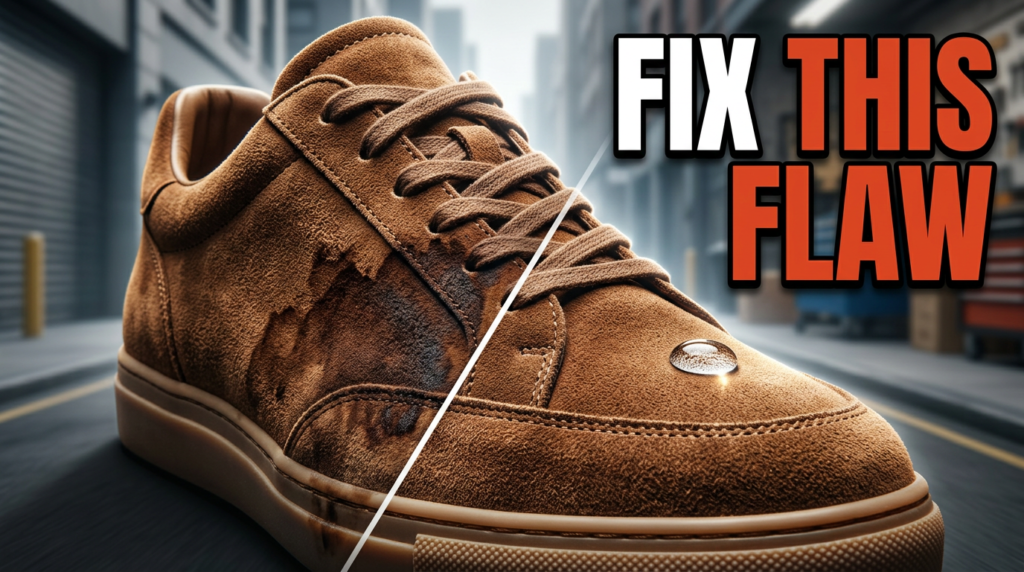
Then you wear them outside for the first time. You stay careful, stay vigilant. And then — a coffee drop from someone passing by, an unexpected puddle, a friend scuffing their boot against yours. That perfect velvety surface suddenly carries a dark, ugly mark. Your heart sinks.
This is the shared frustration of every suede owner. Why does a single drop of water — something that beads up and rolls off finished leather — instantly create a noticeable, often permanent blemish? The answer is not bad luck. It is by design. To understand it, you need to look much, much closer.
The Microscopic Reason Suede Stains So Easily
Suede is not simply “soft leather.” It is fundamentally different from the smooth leather on most dress shoes. When an animal hide gets processed, tanneries split it into layers. The tough outer layer — the part that faced the elements — produces dense, naturally water-resistant, smooth leathers like full-grain. Suede comes from the other side: the softer inner layer of the hide, known as the split.
Because it originates from the underside, this layer consists of looser, more pliable fibers. To create the signature velvet texture, tanneries sand or buff the surface, raising millions of tiny individual fibers. This process creates what the industry calls the “nap.”
The Forest Analogy That Explains Everything
Full-grain leather resembles a smooth, paved road. A water drop lands, stays on the surface, and a cloth removes it easily. Suede, with its millions of upright fibers, resembles a dense forest. When a drop of water or a particle of dirt lands on it, it does not sit on top. It falls between the trees — between the individual fibers of the nap.
This structure creates a dramatically larger surface area. Each tiny fiber absorbs moisture and traps dirt. A stain on suede occupies three-dimensional space, seeping deep into the open-pore structure. Water does not just wet the surface — it soaks in, darkens the color, and mats the fibers together. When it dries, it leaves mineral deposits behind, creating the dreaded watermark. The fibers stiffen, and the soft texture disappears.
Dirt is not sitting on top of suede. It is physically trapped inside a microscopic web of fibers. That is the hidden flaw. The beautiful napped texture is essentially a perfectly designed system for absorbing liquids and capturing grime. However, knowing this changes everything. Because if you understand what you are fighting, you can choose exactly the right tools.
For a broader look at how fashion experts assess suede’s place in the modern wardrobe and which styles currently lead the category, Vogue’s guide to the best suede shoes and how to wear them offers useful context from style editors who work with the material regularly.
The Five-Rule Suede Owner’s Code
Understanding the microscopic battlefield makes standard cleaning advice suddenly logical. Treating suede is not about scrubbing harder. It is about working smarter and respecting the nap.
Rule One: Always Start Dry
Never attack a dirty suede shoe with water and soap as your first move. Loose, dry dirt plus water equals mud — and mud drives grime deeper into the fibers, creating a permanent stain. Your first tool is always a dedicated suede brush. Most carry two sides: softer bristles and firmer brass or rubber bristles.
Start with the softer side. Brush gently in one direction across the entire shoe. This removes the top layer of dust and loose dirt while lifting and realigning the nap’s fibers. Think of it as sweeping the forest floor before any deeper work begins. For more stubborn surface marks, the firmer side with short, quick strokes handles them — but always gently. Aggressive brushing permanently damages delicate fibers.
Rule Two: Use a Suede Eraser for Targeted Stains
For small, concentrated stains or dark scuff marks, a suede eraser is your next weapon. It looks and functions similarly to a standard pencil eraser. Rub it directly onto the stain — it crumbles slightly, picks up dirt particles clinging to the fibers, and pulls them away. After using it, brush away the eraser residue and restore the nap. This eraser-then-brush sequence handles a surprising range of common stains effectively.
Rule Three: Wet Cleaning Is a Last Resort
Sometimes a dry approach is not enough. For water stains, oil, or deeply embedded grime, a liquid cleaner becomes necessary. However, this step ruins more shoes than any other when done incorrectly. Suede should never be soaked.
Choose a cleaner formulated specifically for suede — not household soap, not baking soda, not random chemicals. These can react with the tannins in the leather and cause discoloration or hardening. Test the cleaner on a hidden spot first, such as the inside of the tongue. Apply a small amount to a soft cloth, not directly to the shoe. Work gently into the stained area using a circular motion. After treating the spot, apply a very light, even layer of clean water to the rest of the shoe to avoid a visible cleaning ring. Blot the entire shoe with a dry microfibre towel to absorb excess moisture.
Rule Four: Dry Slowly and Revive the Nap
This rule matters more than most people realise. Never use direct heat to dry suede — no hair dryers, no radiators, no hot cars. Heat shrinks and hardens the leather fibers, making them brittle and permanently destroying the texture.
Instead, stuff the inside with paper towels or shoe trees. This absorbs moisture from the inside and — more importantly — keeps the sneaker holding its proper shape as it dries. Air dry at room temperature for at least 24 hours. Once completely dry, the nap will feel flat and stiff. Do not panic. A final pass with the suede brush lifts the fibers back up and restores that soft, velvety texture.
Rule Five: Protect Before the Problem Starts
The best cleaning session is the one you never need. Before wearing a new pair — or after any deep clean — apply a suede protector spray. These sprays create an invisible barrier on the fibers that repels water and prevents stains from embedding. Hold the can six to eight inches from the shoe and apply a light, even coat. Let it dry completely, then apply a second coat. Reapply every few months and your sneakers stay defended.
According to Harper’s Bazaar’s expert care guide for suede shoes and accessories, consistent use of a protective spray is the single most impactful preventive step suede owners regularly skip — and the one that causes the most avoidable damage over time.
The Real Cost of Owning Brown Suede Sneakers — And Why It Is Worth It
So is suede a flawed material? Absolutely. Its very structure — the soft, napped texture you buy it for — is a microscopic trap for dirt and water. It punishes neglect and rewards consistent attention. But that is not a fatal flaw. It is a characteristic.
Brush rather than scrub, erase instead of wash, blot instead of rub, and dry with patience rather than heat. Caring for suede is less about force and more about finesse.
The quiet versatility of brown suede sneakers — the ability to make simple outfits feel considered and dressed-up outfits feel relaxed — comes with a routine attached. That routine takes minutes. The payoff is a shoe that does more styling work than almost anything else in a wardrobe. A shoe that says you know the rules of style well enough to appreciate a genuine challenge.
FAQ — Brown Suede Sneakers
Q1: Are brown suede sneakers hard to maintain?
A: Brown suede sneakers require more consistent care than leather or canvas alternatives. However, the routine is straightforward once you understand the material. A suede brush, an eraser, and a protector spray handle the vast majority of situations with minimal time investment.
Q2: How do I remove a water stain from suede sneakers?
A: Lightly dampen the entire shoe with clean water using a damp cloth — do not just treat the stain spot. This prevents a visible ring from forming as the shoe dries. Stuff with paper towels, air dry at room temperature for 24 hours, then brush to restore the nap.
Q3: Can I wear suede sneakers in the rain?
A: Light drizzle is manageable if you have applied a suede protector spray. Heavy rain or prolonged exposure to moisture causes significant damage. Most suede-care experts recommend treating suede as a fair-weather material and reserving it for dry conditions.
Q4: What is the best way to clean brown suede sneakers at home?
A: Start with a dry suede brush to remove loose dirt. Use a suede eraser for concentrated stains. If wet cleaning becomes necessary, use a suede-specific cleaner applied with a cloth — never directly onto the shoe. Always air dry naturally and brush again once fully dry.
Q5: Does suede protector spray actually work?
A: Yes, significantly. A quality suede protector spray creates a hydrophobic barrier on the fibers that causes water to bead rather than absorb. It also makes stains easier to brush off before they embed. Two coats before first wear and reapplication every few months provide consistent protection.
Q6: Can I put suede sneakers in the washing machine?
A: No. Machine washing destroys suede. The combination of water saturation, agitation, and heat permanently damages the fibers, warps the shape, and ruins the nap beyond recovery. Always clean suede by hand using the dry-first method.
Q7: How do I restore flattened nap on suede sneakers?
A: Use a suede brush after the shoe is completely dry. Brush in short, consistent strokes across the entire surface. For particularly matted areas, a clean rubber eraser gently rubbed across the fiber can help lift them before a final brush pass.
Q8: What outfits work best with brown suede sneakers?
A: Denim, chinos, linen trousers, and tailored separates all work well. The warm, earthy tone of brown suede pairs naturally with neutrals — navy, grey, olive, and cream. Avoid pairing with overly polished or formal outfits, as the relaxed texture of suede creates a deliberate contrast that works best when the rest of the look is clean and unfussy.