Kikiriki: The Secret Wholesale Fashion World Most People Miss
Most people never see where boutique fashion actually comes from. They walk into a carefully curated independent store and, almost immediately, fall in love with a one-shoulder ruffle dress or a sheer cut-out maxi. As a result, they pay the price on the tag without ever questioning how it got there. Kikiriki is part of the answer — and understanding it changes how you see every piece of clothing you’ve ever bought from a cool, independent shop.
This is not a brand you will find advertising on social media. It is an invitation-only, business-to-business platform — built for retailers, not shoppers. Getting inside reveals something far more interesting than just clothes.
What Kikiriki Actually Is — And Why You’ve Never Heard of It
Kikiriki describes itself as a “fearless and edgy lifestyle brand.” Founded in the 1990s, it operates with roots in Istanbul and a significant market presence in New York and Italy. However, it functions less like a traditional brand and more like a global fashion supplier — a members-only digital warehouse where independent boutiques and online stores go to buy their inventory before any of it reaches you.
The platform operates on a B2B (business-to-business) model. As a result, retailers, boutique owners, and designers can access it only after completing a verification process that confirms their wholesale credentials. For example, applicants must provide a registered company name, a business registration number, and a verifiable web presence. Furthermore, these requirements help maintain the platform’s professional standards. Consequently, casual browsers are intentionally kept out, ensuring that the marketplace remains focused on legitimate business buyers. If wholesale prices became public knowledge, the entire retail pricing model would collapse.
How the Verification Process Works
Getting approved for access requires more than just filling out a form. Applicants must demonstrate they operate a legitimate retail business. The process involves submitting business registration documents and proof of trading activity. The wait for approval can stretch to several weeks. This friction is by design — Kikiriki protects its wholesale pricing by ensuring only genuine industry professionals see it.
As the Business of Fashion’s deep dive into the wholesale fashion industry confirms, B2B platforms like this form the invisible middle layer between manufacturing and retail — the engine most consumers never see.
Further reading: the Business of Fashion’s deep dive into how wholesale platforms shape the retail fashion industry
Inside the Platform — What the Catalogue Actually Looks Like

The first thing that strikes you about Kikiriki’s interface is how different it feels from any retail site. There are no lifestyle photographs, no aspirational campaigns, and no carefully curated editorial stories. Instead, the platform presents itself as a tool — efficient, clinical, and staggering in its volume. Clothes appear on mannequins or against plain white backdrops. Sections carry functional labels: Dresses, Bodysuits, Tops, Private Label.
The designs themselves, however, are anything but clinical. Kikiriki supplies a very specific kind of store — one that stocks pieces designed to turn heads. Asymmetrical tulle dresses, black satin mini-dresses with balloon skirts, sheer cut-out maxis, faux leather corsets, mesh pants, and full-body tulle jumpsuits fill the catalogue. These are not basic pieces. They are statement items, the kind that fill a boutique’s window display and bring customers through the door.
The Private Label Offer — Why Quality Has to Be High
Beyond its own designs, Kikiriki also operates as a private label manufacturing partner. This means other brands can use its production infrastructure to create pieces they then sell under their own name. Because designers put their own label on these garments, the quality threshold must be high enough to meet that standard. This explains why wholesale does not automatically mean low quality — particularly on a platform at this level.
The catalogue archives hundreds of styles developed across decades. Browsing it reveals clear global influences — the structured, edgy tailoring associated with their Italian market, the bold and club-ready designs that reflect New York, and the intricate textile craftsmanship rooted in the Istanbul headquarters. Each market shapes a distinct aesthetic direction within a single platform.
The Micro-Trends Kikiriki Shows Before They Hit Your Feed
Retail stores plan their collections months — sometimes a full year — in advance. Wholesale platforms like Kikiriki are where they do that planning. What appears on the site today is essentially a preview of what will start populating social media feeds in the coming seasons.
Looking at current inventory through a trend lens, several clear directions emerge. Lightweight, sheer materials — silk voile, tulle — appear used in dramatic, layered ways. A lilac and periwinkle colour palette, which stylists already flag as a rising direction for 2027, shows up repeatedly. Hand-finished embroidery, fringe, and beading on statement pieces signal the broader forecaster-named shift toward “tactility” and “authenticity” in fashion.
What These Pieces Tell You About Mainstream Fashion
One-shoulder tiered ruffle maxis in vibrant pink. Sheer ruffled black maxis. Architectural bodysuits with structured shoulders or intricate corsetry. These pieces appear on Kikiriki months before you see them anywhere else. They also reveal something important: much of what arrives in mainstream retail is a safer, filtered version of what wholesale actually offers.
Large department stores avoid the riskier, more daring pieces. Boutiques that stock Kikiriki — the ones targeting what the platform itself describes as “a fashion-forward girl who is fearless and likes to push life to the limit” — deliberately seek out those filtered-out designs. This is why independent boutiques consistently offer clothes that feel more distinctive than anything at a mall.
Elle’s coverage of the ongoing balletcore and maximalist fashion cycles documents exactly this dynamic — how niche wholesale aesthetics move from B2B platforms to boutiques to mainstream trends over a 12-to-18-month pipeline.
Further reading: Elle’s breakdown of how niche fashion aesthetics move from wholesale platforms into mainstream trends
The Real Numbers — What Retail Markup Actually Looks Like
The most closely guarded part of any B2B platform is its pricing. The reason sites like Kikiriki lock down their catalogues comes down to this: if consumers could see wholesale costs alongside retail prices, the perceived value of every item would shift dramatically.
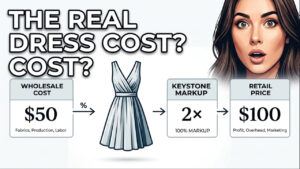
The standard industry practice is keystone pricing — a retailer doubles the wholesale cost. A dress bought at wholesale for $50 sells on the rack for $100. For more distinctive or trend-forward pieces, that multiplier rises. A markup of 2.2 to 2.6 times the wholesale cost is common on statement items. In some cases, particularly for hero pieces with strong visual appeal, the markup climbs higher.
Breaking Down Estimated Wholesale Costs
Using publicly available retail prices from boutiques that stock the Kikiriki aesthetic alongside standard industry markup ranges, the numbers become clearer. A long-sleeve cotton turtleneck shell retailing at around $32 at a boutique likely entered that store at a wholesale cost of $12 to $18. A more elaborate shell dress retailing at $53 probably cost the boutique $21 to $24.
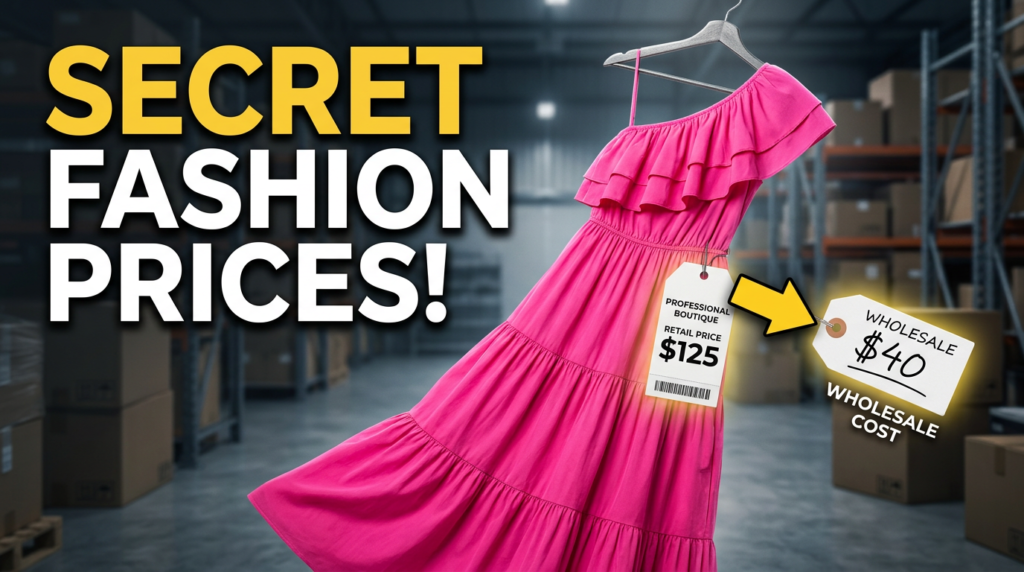
For a high-impact sheer cut-out maxi dress retailing at $125, a boutique could have sourced it at a wholesale price of $40 to $55. That represents a markup of over 100%. This is not a scandal — it is the business of fashion. The markup funds the store’s rent, staff wages, unsold inventory risk, and the curation work that makes independent boutiques worth visiting.
Seeing those numbers, however, reframes the retail experience entirely. Paying $125 for a dress does not just pay for the fabric. It pays for someone else spending weeks on a B2B platform, selecting the pieces, taking the financial risk on stock, and presenting them in a space worth walking into.
What the Kikiriki Model Reveals About Fashion as a Business
Kikiriki is not just a supplier. It represents an entire layer of the fashion industry that most consumers never see — the practical, profitable machine that sits between design and discovery. Understanding how it works does not diminish the magic of retail shopping. If anything, it deepens it.
The most fearless and distinctive fashion rarely makes it to department stores. It moves through platforms like this one, gets selected by brave boutique owners willing to take a risk on inventory, and eventually reaches the customers who seek out those stores specifically. Supporting independent boutiques, therefore, directly funds that pipeline of more interesting design.
Trends do not appear from nowhere — they move through a calculated global network of wholesale platforms, boutique buyers, and fashion-forward consumers over a 12-to-18-month cycle. Knowing that cycle exists is the first step to shopping with more intention and a sharper eye for what is genuinely new versus what has already been through the machine.
FAQ
Q1: What is Kikiriki and who is it for?
A: Kikiriki is a B2B wholesale fashion platform based in Istanbul, with major market presence in New York and Italy. It serves retailers, boutique owners, and designers — not individual consumers. The platform requires verified wholesale credentials to access, keeping its pricing and catalogue restricted to industry professionals.
Q2: Can regular shoppers buy from Kikiriki directly?
A: No. Kikiriki operates exclusively as a business-to-business platform. Access requires proof of a registered business, a company registration number, and a verifiable retail or design operation. Individual consumers cannot create accounts or purchase directly from the site.
Q3: Where is Kikiriki based and how long has it been operating?
A: Kikiriki has its headquarters in Istanbul and has operated since the 1990s. It maintains a significant presence in the New York and Italian markets, with its global reach making it a supplier to independent boutiques across multiple continents.
Q4: What kind of fashion does Kikiriki specialise in?
A: Kikiriki describes its aesthetic as “fearless and edgy.” Its catalogue skews heavily toward statement pieces — asymmetrical tulle dresses, architectural bodysuits, sheer cut-out maxis, faux leather corsets, and mesh designs. It targets boutiques whose customers want distinctive, head-turning fashion rather than mainstream basics.
Q5: What is keystone pricing and how does it relate to wholesale platforms like Kikiriki?
A: Keystone pricing is the standard retail practice of doubling the wholesale cost to set the retail price. A dress purchased wholesale for $50 sells in a boutique for $100. For more distinctive pieces, the multiplier often rises to 2.2 to 2.6 times the wholesale cost, covering the boutique’s operating costs and profit margin.
Q6: Does Kikiriki offer private label manufacturing?
A: Yes. In addition to its own branded designs, Kikiriki offers private label services. This means other brands can use its production infrastructure to create garments sold under their own name. Because designers attach their label to these pieces, the quality standard on private label production must meet professional brand requirements.
Q7: How does a platform like Kikiriki influence mainstream fashion trends?
A: Boutiques buy their inventory from wholesale platforms like Kikiriki months or even a year before pieces reach the shop floor. The designs available on the platform today represent a preview of what will appear in independent stores — and eventually on social media feeds — in the coming seasons. The trend cycle flows from wholesale to boutique to mainstream over a 12-to-18-month pipeline.
Q8: Why does wholesale fashion pricing stay hidden from the public?
A: Wholesale pricing transparency would disrupt the retail model. If consumers could see that a $125 dress cost a boutique $45 to source, the perceived value of the item — and the entire retail experience — would shift. The markup is not purely profit; it funds rent, staffing, inventory risk, and the curation work that makes boutique shopping worth the premium.