Floral Aldehyde Perfumes: The Secret Science Behind That Expensive, Luminous Smell
What if the secret to one of the world’s most iconic perfumes has less to do with a garden, and more to do with a laboratory? And what if the reason a fragrance feels timeless and expensive isn’t because of a rare flower — but because of a strange molecule that smells a little like soap, a little like metal, and a little like sunshine?
That’s exactly what floral aldehyde perfumes are built on. And once you understand how they work, you’ll never smell a fragrance the same way again.
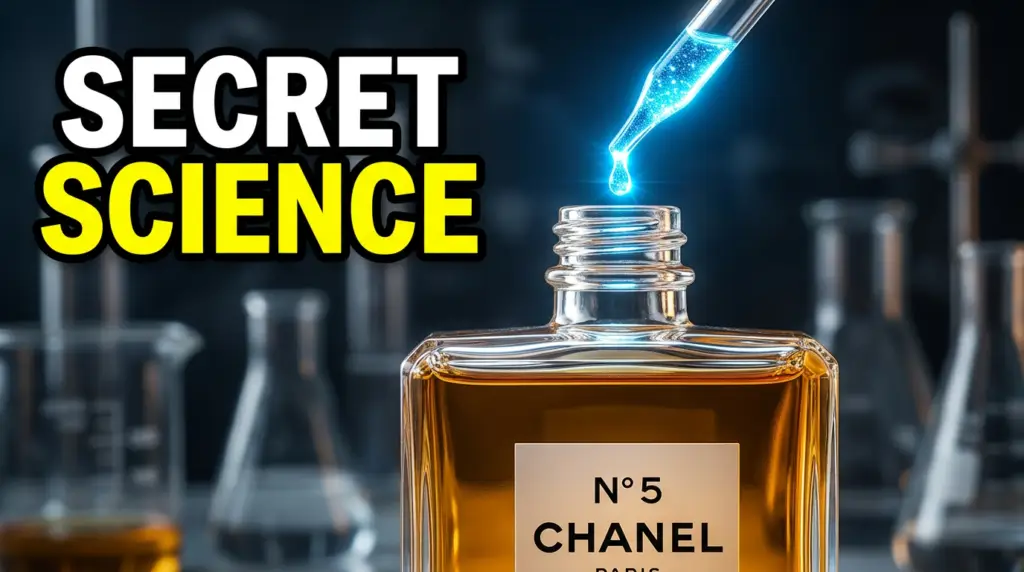
Chanel No. 5 is a legend. But its iconic status comes from a secret ingredient that wasn’t picked from a flower — it was made in a lab. Before No. 5, the goal of most perfumes was to smell like flowers. After it, they could become abstract art. The secret is a family of strange synthetic molecules that smell like soap and sunshine. Here’s the science of aldehydes, and how they changed everything.
The World of Perfume Before Aldehydes
To understand just how radical this was, you have to picture the world of perfume in the early 20th century.
Before the roaring twenties, perfumery was often a literal art. The most popular style aimed to capture the true-to-life scent of a single flower — a soliflore. Rose perfumes smelled like a rose. Jasmine perfumes smelled like jasmine. They were beautiful, but they were mostly imitations of nature. Perfumers were like portrait artists, trying to paint a perfect likeness of a flower.
In that era, a respectable woman’s fragrance was expected to be subtle and natural. Synthetics were already making their way into bottles, but the real innovation of No. 5 wasn’t using man-made ingredients — it was how it used them. The existing palette was beautiful, but a new philosophy was arriving.
And it came from a woman who had no interest in smelling like a simple flower.
Coco Chanel’s Vision
Gabrielle “Coco” Chanel wanted something new — something that smelled like a woman, not just a bed of roses. She envisioned a fragrance that was as complex and modern as her fashion: a perfume that was constructed, not just picked. To build it, she needed an architect, not just a gardener.
That architect was perfumer Ernest Beaux. And his building material was a molecule that was about to launch a revolution.
What Are Floral Aldehyde Perfumes? The Secret Ingredient Explained
The molecule at the heart of this revolution is the aldehyde. It might sound technical, but in perfumery, aldehydes are pure magic.
They’re a family of aromatic ingredients known for adding a kind of sparkle, airiness, and a clean, waxy brightness to a fragrance. They don’t smell like anything in a garden. They smell abstract.
Some perfumers describe the effect as “rocket fuel” — giving a fragrance an initial whoosh that makes it feel like it’s taking off. Others compare it to the fizz of champagne: an effervescent quality that makes a scent feel alive. This family of molecules isn’t one single smell, but a whole spectrum of effects. Depending on which one a perfumer uses, the scent can range from soapy, to waxy, to citrusy, or even metallic.
The Aldehyde Spectrum
The range of effects is wider than most people realise:
- Aldehyde C-10 carries the scent of orange peel — citrusy and sharp.
- Aldehyde C-11 is a fully synthetic creation, which allows for precise, powerful use in perfumery.
- Aldehyde C-12 evokes lilac or violet, but with a waxy texture that some describe as the “smell of fresh laundry.”
Lower molecular weight aldehydes can be harsh and pungent. Higher molecular weight ones, however, are far more pleasant — smooth, luminous, and wearable.
How Aldehydes Transformed Floral Formulas
These synthetic molecules had been used in perfumery since the late 19th century, but usually in small amounts just to add a little something extra. Then a few forward-thinking perfumers saw their true potential. They realised aldehydes could do something magical when paired with traditional florals. Rather than blending in quietly, they acted like a lighting crew — making the flowers glow with an almost electric aura, lifting heavy floral bouquets and giving them power, diffusion, and a futuristic polish.
This, therefore, was the tool Ernest Beaux would use to create something the world had never smelled before.
The Eureka Moment: How Chanel No. 5 Was Born
The creation of Chanel No. 5 is wrapped in one of the greatest legends in fragrance history.
By 1920, Coco Chanel was already a force in fashion. Through her lover at the time, Grand Duke Dmitri Pavlovich, she connected with Ernest Beaux — a master perfumer who had previously created scents for the Russian royal family. Beaux had been experimenting with aldehydes for years, reportedly inspired by their use in a 1912 Houbigant perfume called Quelques Fleurs, one of the first multi-floral bouquets to feature these synthetics.
When Chanel commissioned him, she gave a simple but profound brief: create a perfume that smells “like a woman.” She wanted something “artificial” — in the same way that a dress is a manufactured work of art.
The Legendary Mistake
Beaux presented Chanel with a series of samples, numbered 1 to 5 and 20 to 24. Chanel chose vial number 5. Five was her lucky number, and she felt it was a sign.
But here’s where the story gets really interesting. A famous legend claims that the composition in vial number 5 was a lab mistake — that an assistant accidentally added aldehydes at nearly ten times the normal concentration. This supposed “overdose” created a scent that was shockingly bold: startling, metallic, and powerfully abstract.
Was it a genius accident, or an act of daring creativity by Beaux? Most historians now believe the overdose story is brilliant marketing mythology rather than fact. But what we know for certain is that Chanel loved it. It wasn’t a demure flower — it was a declaration. The aldehydes gave it a powerful, radiant opening that settled into a rich heart of jasmine and rose.
This bold composition consequently became the most iconic floral aldehyde perfume in the world.
How Floral Aldehyde Perfumes Changed the Entire Industry
The launch of Chanel No. 5 in 1921 was a turning point for perfumery as a whole.
Its overwhelming success proved that a perfume didn’t have to imitate nature. It could be an idea — a work of art in its own right. As a result, perfumers were now free to be abstract artists, not just floral portraitists. As Vogue’s fragrance history coverage has noted, No. 5 fundamentally redefined what luxury scent could mean.
The First Followers: Arpège and the New Blueprint
Other design houses quickly saw the future. In 1927, Jeanne Lanvin commissioned Arpège — named after the musical term “arpeggio.” Its cascade of floral notes, made radiant and expansive by a sophisticated use of aldehydes, became a global classic. Furthermore, it cemented the idea that this new style of perfumery was here to stay.
Why Aldehydic Perfumes Smell “Expensive”
These fragrances, together, established a new blueprint for luxury. The bright, sharp, and clean quality of aldehydes became associated with modernity, sophistication, and elegance. They give fragrances a sense of volume and projection, creating a powerful halo effect around the wearer — which is a large part of why we associate these scents with smelling “expensive.”
Moreover, aldehydes allowed perfumers to create scents with real tension and contrast. Clean and complex. Soft and sharp. Floral and metallic, all at once. This duality is exactly what makes them so memorable. Perfume had moved, at last, from the garden to the gallery.
Floral Aldehyde Perfumes Worth Knowing Today
You might think of aldehydes as a purely vintage signature — the smell of classics like Chanel No. 5 or Lanvin’s Arpège. But the truth is, aldehydes never really went away. They remain a powerful force in contemporary perfumery.
Today, modern perfumers use them in more subtle and nuanced ways. Here’s how aldehydes show up in some notable contemporary fragrances:
- Byredo’s Blanche — aldehydes create an extreme sense of cleanliness, like freshly washed laundry.
- Maison Francis Kurkdjian’s 724 — they contribute a crisp, urban freshness.
- Tom Ford’s Métallique — the metallic side of aldehydes sits front and center, paired with creamy vanilla for a futuristic, edgy contrast.
- Chanel No. 5 L’Eau — a modern reinterpretation that uses aldehydes for a more transparent, airy feel suited to a new generation.
As Byrdie’s guide to aldehyde fragrances explains, today’s perfumers treat aldehydes more like a seasoning than a main ingredient — adding a trace amount to make a citrus note fizz, a floral bouquet feel more spacious, or a woody base carry a clean, powdery texture.
Why Aldehyde Scents Feel So Comforting
Their enduring appeal speaks to a deep human connection to what aldehydes evoke: cleanliness, freshness, and ritual. The smell of soap, crisp air, and clean skin is fundamentally comforting. When those sensations are woven into a complex perfume, the result is both reassuring and aspirational. It’s the smell of not just being clean, but of being put-together, polished, and deliberate.
The Legacy: From Icon to Abstraction
The next time you smell a fragrance that feels bright, sharp, and strangely luminous — a scent that doesn’t just smell like flowers, but like the idea of flowers seen through a flash of light — you’re almost certainly smelling aldehydes at work.
They are the secret ingredient that helped transform perfumery from an art of imitation into an art of abstraction. They prove that sometimes the most revolutionary beauty comes not from nature, but from a collision of science and imagination. A single molecule — perhaps dosed with legendary bravado — gave birth to an icon and forever changed what it means to smell beautiful.
That inexplicable scent of metal and sunshine? Now you know exactly where it comes from.
FAQ Section
Q: What are floral aldehyde perfumes?
A: Floral aldehyde perfumes combine traditional floral notes — like rose and jasmine — with synthetic aldehyde molecules that add a distinctive bright, soapy, waxy, and sometimes metallic quality. The result is a scent that smells like flowers seen through a luminous, abstract filter rather than a straightforward bouquet.
Q: What do floral aldehyde perfumes smell like?
A: They have a characteristic clean, bright, and slightly soapy quality with an effervescent quality often described as “fizzy” or “sparkling.” Depending on which aldehydes a perfumer uses, the effect can range from citrusy and airy to waxy, powdery, metallic, or fresh-laundry clean — always underpinned by floral notes beneath.
Q: Is Chanel No. 5 a floral aldehyde perfume?
A: Yes — Chanel No. 5 is the most iconic floral aldehyde perfume in history. Created in 1921 by perfumer Ernest Beaux for Coco Chanel, it features a bold aldehydic opening that settles into a rich heart of jasmine and rose. Its success defined the entire floral aldehyde genre.
Q: Why do aldehyde perfumes smell expensive?
A: Aldehydes give fragrances a sense of projection, volume, and brightness that creates a powerful halo effect around the wearer. This radiant, expansive quality — combined with the complexity of floral and waxy contrasts — is strongly associated with luxury, sophistication, and high-end perfumery.
Q: Are floral aldehyde perfumes still popular today?
A: Absolutely. While the boldest classic-style aldehydic opening has become less fashionable in mainstream perfumery, aldehydes appear in many contemporary fragrances as a more subtle ingredient. Byredo’s Blanche, Tom Ford’s Métallique, and Chanel No. 5 L’Eau all use aldehydes in modern, nuanced ways.