Why Your Sweet Unisex Perfume Smells So Different On Your Skin
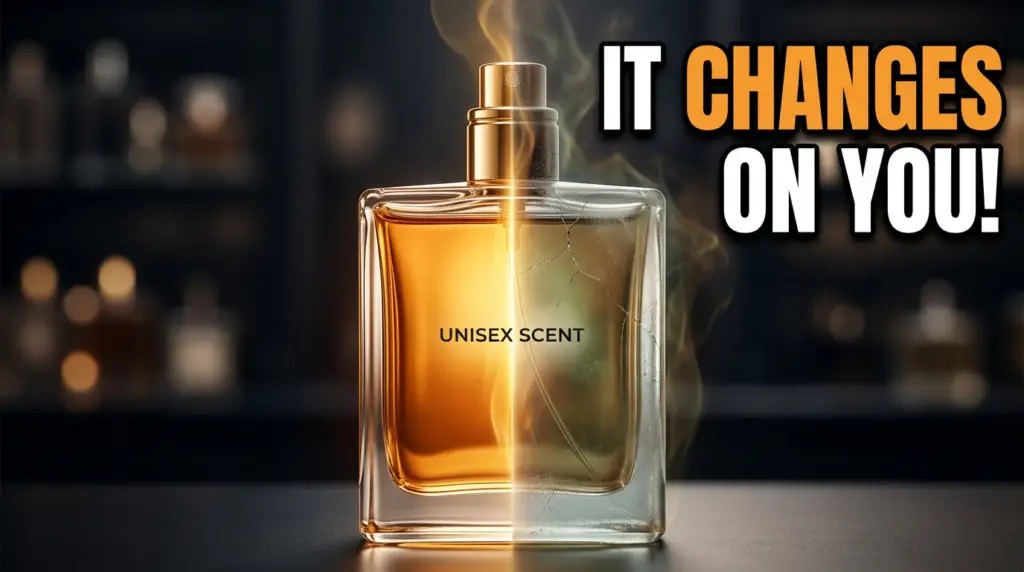
Have you ever smelled a captivating sweet unisex perfume on a friend, rushed out to buy it, and discovered that on your skin… it tells a completely different story? You’re not imagining it, and you’re definitely not going crazy. That experience is, in fact, incredibly common. And the reason isn’t magic — it’s pure science happening right on your skin.
Every single time you spray a perfume, your body adds its own secret ingredient, creating a signature scent that simply can’t be replicated.
The Perfume Isn’t Finished in the Bottle
You might think a perfume is a finished product once it’s sealed in the bottle. But that’s only half the story. Every fragrance is actually finished twice — once by the perfumer in a lab, and a second time by your skin after you spray it.
The fragrance molecules don’t just sit on your skin. They react and transform. They interact with a host of unique biological factors that are specific to you and you alone.
This is why two people can wear the exact same fragrance and smell noticeably different. It’s also why a perfume might smell one way on a paper test strip and totally different once it meets the warmth of your body. Understanding this science, therefore, helps you make far smarter choices the next time you’re standing at a fragrance counter.
Your Skin’s Unique Blueprint
The most fundamental reason a sweet unisex perfume smells different from person to person comes down to the canvas it’s applied to: your skin. Your skin isn’t just a surface — it’s a complex, living organ with its own unique chemical environment. Three major factors are at play here.
1. Your Skin Type
Whether your skin is oily, dry, or somewhere in between has a noticeable effect on how a perfume performs. If you have oily skin, your skin’s natural oils — or sebum — can help hold onto fragrance molecules, which may make the scent last longer and smell richer.
On the flip side, if you have very dry skin, there’s less natural oil to anchor the scent. As a result, perfume tends to evaporate more quickly, and you might find the fragrance fades faster than you’d like.
2. Your Skin’s pH Level
pH is a measure of how acidic or alkaline something is, and healthy human skin is typically slightly acidic. This natural acidity is part of the complex environment that perfume molecules interact with. While most fragrances are designed to be stable, subtle shifts in pH can sometimes influence how certain notes are perceived. For instance, some people find that more acidic skin can make citrus notes seem sharper or slightly more abrasive.
3. Your Skin Microbiome
This is, perhaps, the most fascinating factor of all. Your skin is home to a unique ecosystem of billions of microorganisms, and this ecosystem is as individual as your fingerprint. These tiny organisms are metabolically active, meaning they break down compounds on your skin — including sweat, oils, and yes, the aromatic molecules in your perfume.
Emerging research suggests that different bacteria can enhance or alter different notes. For example, some scientists hypothesize that certain bacteria like Corynebacterium could enhance musky or woody notes. This microbial activity is a huge reason why the final “dry-down” of a fragrance — how it smells after a few hours — is completely personal to you.
Your Body’s Internal Engine
Beyond the surface of your skin, what’s happening inside your body also plays a significant role in your personal scent profile. Two of the biggest internal drivers are your body temperature and your hormones.
Heat as a Catalyst
Your body temperature acts like a catalyst for fragrance. Heat helps diffuse scent molecules, which is exactly why applying perfume to pulse points — like your wrists, neck, and behind the ears — is always recommended. These spots are warmer because blood vessels sit closer to the skin, and that warmth helps the fragrance project outward.
If you naturally run hot, your perfume will likely project more strongly. However, that same heat can also cause the fragrance to evaporate more quickly, meaning the scent might evolve faster. Someone with a cooler body temperature, on the other hand, might find their fragrance wears closer to the skin and feels more subtle — but it will also dissipate more slowly.
Hormonal Fluctuations
Hormones are powerful chemical messengers, and they can genuinely influence your body chemistry. Fluctuations — such as those during a menstrual cycle or pregnancy — can change your skin’s oil production and sweat levels, both of which may affect how a perfume develops on you.
This is why a perfume you absolutely love might suddenly seem a little too strong, too sweet, or just slightly off during certain times. Stress, similarly, plays a role. When you’re stressed, your body tends to produce more sweat, which can cause your perfume to behave unexpectedly. This constant internal flux means your signature scent today might not smell exactly the same on you tomorrow.
The Lifestyle Factor
It’s not just your biology. Your daily habits also leave an imprint on your skin, and that imprint mixes with whatever fragrance you’re wearing. Think about your diet, the medications you take, and even your environment.
Diet and Hydration
What you eat can surprisingly influence your natural body scent, which in turn mixes with any fragrance you apply. Certain potent foods — like garlic, onions, and strong spices — contain volatile molecules that can be released through your pores after being metabolized. This may subtly alter how a fragrance develops on your skin throughout the day.
On the other hand, a diet that contributes to well-hydrated skin can genuinely help a perfume perform better. Hydrated skin holds onto fragrance molecules more effectively than dry skin, which can improve both the longevity and the overall performance of your scent. So that tip to apply an unscented moisturizer before your perfume isn’t just a myth — it’s about giving the fragrance the hydrated canvas it needs.
According to fragrance experts at Byrdie, properly moisturised skin is one of the most underrated tricks for making any perfume last longer and smell truer throughout the day.
Climate and Environment
Your environment matters just as much. Climate, temperature, and humidity all play a role in how a fragrance performs. In hot and humid weather, fragrance molecules tend to project more intensely — but they can also be affected by sweat. The moisture in humid air might even cause the scent to feel heavier or “bloom” in unexpected ways.
In cold, dry climates, fragrance doesn’t project as far, and the cold air actually slows down evaporation. However, since cold weather often leads to drier skin, the scent might not hold as well, creating a more subtle experience overall. A perfume you love in the crisp air of autumn might feel completely different in the thick humidity of summer.
How Some Perfumes Are Actually Designed to Change With You
So far, the focus has been on how you change the perfume. But what if some perfumes are deliberately designed to be changed by you? This brings us to a popular and genuinely interesting corner of modern perfumery: molecular scents, and specifically, a synthetic aroma-molecule called Iso E Super.
Iso E Super is a strange and fascinating ingredient. It’s described as having a soft, woody, amber-like scent — but its defining quality is its transparency. For many people, it’s almost imperceptible on its own. In fact, a significant percentage of the population is partially “anosmic” to it, meaning they can’t consistently smell it. You might get a fleeting whiff, and then it vanishes, only to reappear moments later.
This is where skin chemistry becomes the main event. When used in a fragrance, Iso E Super is known for melding with your personal skin scent to create a radiant, warm aura that feels entirely your own. It’s a key player in the “your skin but better” fragrance trend that has become hugely popular across both men’s and women’s fragrance spaces.
A famous example is the perfume Molecule 01, which is composed almost entirely of Iso E Super. Its reputation stems from the fact that its perception varies so dramatically from person to person — some report it as a warm, musky scent, while others detect a clean, cedar-like freshness. As Vogue’s fragrance writers have noted, molecular fragrances like Molecule 01 feel less like wearing a scent and more like enhancing your natural one.
This molecule, and others like it, highlights a genuinely modern approach to perfumery — one where the wearer is an active participant. The perfume isn’t quite complete until it reacts with your body heat, your oils, and your unique chemistry. The goal, therefore, isn’t to make you smell like the perfume. It’s to make the perfume smell like you.
How to Find a Sweet Unisex Perfume That Actually Works for Your Skin
So, what does all of this mean practically? The answer is simple but crucial: always test a perfume on your own skin.
Don’t rely on how it smells on a paper strip or on another person. Spray it on your pulse points, let it sit, and actually live with it for a few hours. Pay attention to how the top notes fade and how the heart and base notes evolve. This is genuinely the only way to know if a fragrance truly harmonises with your personal chemistry.
A few extra tips worth knowing:
- Apply to moisturised skin — it helps the scent last longer and perform better
- Test in your natural environment — your skin reacts differently in different seasons
- Give it time — the dry-down after two to three hours is the real test
- Try it on different days — hormonal or dietary changes can shift how it smells on you
The next time a sweet unisex perfume smells different on you than on someone else, you’ll know exactly why. It’s a complex cocktail of your skin type, pH balance, unique microbiome, body temperature, hormones, diet, and even the weather. Your skin is the final, secret ingredient that completes every fragrance formula.
This isn’t a flaw in the system — it’s the magic of it. It ensures that when you do find that perfect scent, it’s not just a perfume you’re wearing. It’s a scent that has become uniquely, undeniably yours.
FAQ Section
Q1: Why does my sweet unisex perfume smell different on me than on my friend?
A: Because your skin chemistry — including your skin type, pH level, natural microbiome, body temperature, and hormones — is unique to you. These biological factors all interact with fragrance molecules and change the final scent you experience.
Q2: Can skin type really affect how a perfume smells?
A: Yes, absolutely. Oily skin tends to hold fragrance longer and may make it smell richer. Dry skin can cause fragrance to evaporate faster, making the scent shorter-lived and sometimes less complex on the skin.
Q3: Why does the same sweet unisex perfume smell different on my skin throughout the day?
A: Perfumes have three layers of notes — top, heart, and base. As the fragrance dries down over hours, the earlier notes evaporate and the deeper, richer base notes emerge. Your skin chemistry continues to interact with each layer differently as time passes.
Q4: Does diet affect how perfume smells on your skin?
A: Yes, it can. Foods like garlic, onions, and spices contain volatile molecules that can be released through your pores, subtly mixing with your fragrance. Staying well-hydrated and maintaining healthy skin can also improve how a perfume performs.