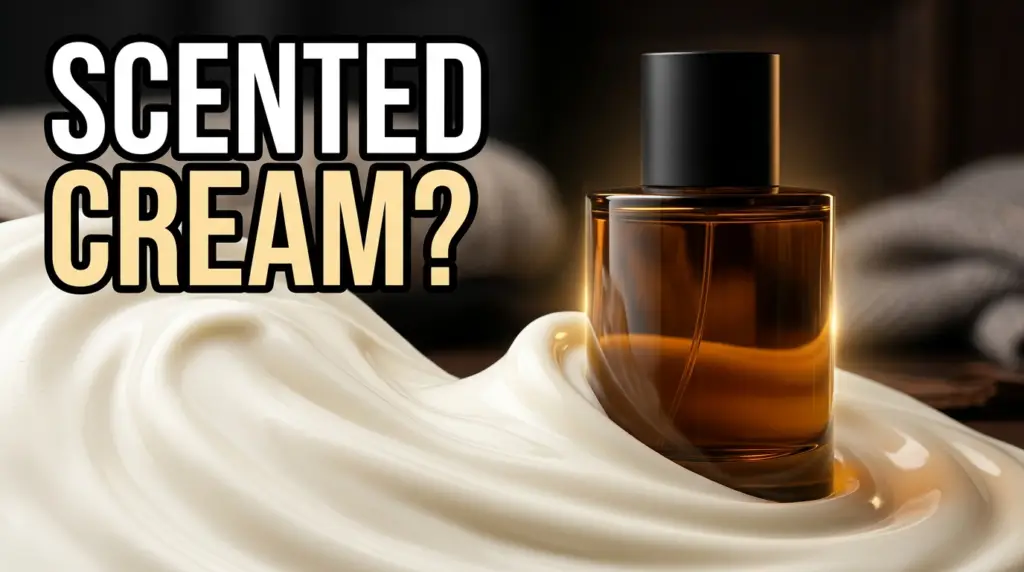
Why Creamy Perfume Feels So Addictive — And How Perfumers Actually Make It
Have you ever smelled a perfume and thought, that feels… soft? Or maybe, that smells rich? That feeling is completely intentional. It’s a clever trick. Master perfumers use a secret language of molecules to fool your brain into feeling textures that aren’t really there — the sensation of smooth silk, rich cream, warm cashmere — all from a scent. And once you understand how a creamy perfume is actually built, you’ll never smell fragrance the same way again.
The Mystery of Texture in Fragrance
When we talk about perfume, we usually talk about notes. Rose, lemon, cedarwood. But there’s another, more mysterious language being spoken — the language of texture.
Some fragrances feel sharp and fizzy, like a blast of cold air. Others feel fuzzy and powdery. And then there are the ones that feel impossibly smooth, rounded, and dense. The ones we call creamy.
That creamy feeling — the sensation of velvet, warm milk, or a luxurious cashmere sweater you can somehow smell — is a deliberate work of art and science. It’s a design choice. Perfumers aren’t just mixing smells; they’re crafting tactile illusions. They’re composing for your nose in a way that makes your brain feel a texture, even though nothing is physically touching you.
Think about the difference between a crisp, citrusy perfume and a creamy one. The citrus feels like it’s bouncing off you — energetic, sharp, immediate. A creamy perfume does something else entirely. It feels like it wraps around you, settling into your skin and creating an aura of intimacy and warmth. It’s the difference between a firework and a blanket.
But how is this even possible? How can a few molecules floating in the air convince your brain it’s experiencing a physical sensation? The secret isn’t just in the perfume bottle. It’s in the unique wiring of your brain.
How Your Brain Processes Scent Differently
To understand the trick, you need to know a little about how your brain processes the world. For most of your senses — sight, sound, and touch — information travels on a very orderly journey. It goes from the sense organ to a part of the brain called the thalamus, which acts as the brain’s logical switchboard. The thalamus sorts incoming data and relays it to the correct parts of the cortex for processing.
But smell is the rebel of the senses.
The olfactory nerve, which carries information from your nose, has a direct line to the brain’s limbic system — one that doesn’t need to stop at the thalamus first. The limbic system is often called the brain’s primal center, home to our emotions, memories, and deepest instincts. It includes the amygdala (our emotion hub) and the hippocampus (our memory hub).
Other senses have to knock on the front door and present their credentials. Scent has a backstage pass straight to the VIP lounge of emotion and memory.
This direct, unfiltered pathway is why a single smell can trigger such a powerful and immediate emotional reaction — or a vivid, long-forgotten memory. Researchers sometimes call this the Proust Effect, named after writer Marcel Proust, who famously described how the smell of a madeleine cake instantly transported him back to his childhood. He didn’t just remember it; he felt it. Scent-evoked memories aren’t just stories — they’re bursts of feeling.
This neurological shortcut is exactly what makes the perfumer’s trick possible. Because scent speaks directly to the emotional brain, perfumers can use specific molecules that tap into our deep-seated associations with comfort, softness, and luxury. Your brain is already wired to be susceptible to this illusion. And perfumers know exactly which molecules to use.
How Perfumers Build a Creamy Perfume From Scratch
So the brain is primed for the trick. Now for the how. How do perfumers actually build that feeling of creaminess from scratch?
They do it using a concept called an accord. In perfumery, an accord is a blend of several scent molecules that, when combined, create a single, unified, and entirely new smell. Think of it like a chord in music — individual notes harmonize to create something richer than the sum of their parts.
The creamy accord is one of the most powerful tools in a perfumer’s kit, and it’s typically built on three key molecular families.
Lactones — The Milky Foundation
First, and most importantly, are lactones. The word itself comes from lac, the Latin for milk — which tells you almost everything.
Lactones are organic compounds that are key contributors to milky, creamy, and often fruity aromas. They’re the molecules that help give peaches their fuzzy, skin-like scent and coconuts their rich, fatty creaminess. Perfumers use specific lactones — like gamma-nonalactone for a coconut-cream effect, or gamma-undecalactone for that soft, peachy-skin feeling — to create the fundamental texture of creaminess. They provide the smooth, velvety backbone of a creamy scent.
Sandalwood — The Velvety Depth
The second pillar is sandalwood. For thousands of years, sandalwood has been prized not just for its woody scent, but for its unique textural quality. High-quality sandalwood — particularly the famed Mysore variety — is renowned for its rich, milky, and balsamic softness.
The key molecules responsible for this are α-santalol and β-santalol, which give it a round, enveloping character that feels less like sharp wood and more like smooth cashmere. In modern perfumery, where high-quality Mysore sandalwood is heavily regulated, perfumers use remarkable synthetic molecules like Sandalore or Ebanol to recreate — and even amplify — this smooth, skin-like effect, providing a creamy, woody foundation that lasts for hours.
Vanillin — The Sweet, Comforting Warmth
The third, most comforting pillar is vanillin. Vanillin is the main chemical component responsible for the characteristic aroma of vanilla, and it’s our most powerful cultural shorthand for “sweet” and “comforting.”
While natural vanilla is a complex blend of over 200 aromatic compounds, vanillin provides that instantly recognizable sense of warmth, care, and indulgence. In a creamy accord, vanillin and its more potent cousin, ethyl vanillin, add a crucial layer of sweet richness. They round out any sharpness and deepen the sensation of luxury. When blended with lactones and sandalwood, vanillin helps transform the accord from simply “smooth” to “addictively rich.”
So the perfumer’s formula often looks something like this:
- Lactones for the milky texture
- Sandalwood for the smooth, velvety woods
- Vanillin for that rich, comforting sweetness
Together, they don’t just create a smell — they create a feeling.
Why Creamy Perfume Feels So Comforting Right Now
Now you know the secret. When you smell a perfume and your brain registers “soft,” “smooth,” or “rich,” you’re not imagining it. You’re experiencing a carefully constructed illusion — an accord designed to tap into your brain’s direct line to emotion. Perfumers are more than just chemists; they are emotional architects.
That addictive quality we feel from these scents plays on a deep, neurological connection. By using creamy accords, perfumers evoke our most primal desires for comfort and well-being. A lactonic fragrance can suggest a sense of nurturing. A sandalwood-heavy scent can feel like a meditative, calming embrace. And a vanilla-forward blend can feel like a nostalgic hug.
This is why the trend of “skin scents” and “comfort scents” has exploded in recent years. According to Byrdie’s fragrance trend reports, the demand for cozy, intimate fragrances has surged as people seek perfumes that feel personal and grounding — and the creamy accord is the perfect tool to deliver that.
These accords are also incredibly versatile. A touch of creaminess can make a floral fragrance feel more sensual, round out a fruity scent and make it more sophisticated, or give a woody perfume a polished, elegant feel. It’s the ultimate supporting actor, making every other note in the composition better.
So the next time you’re at a perfume counter, try to smell beyond the notes. Ask yourself: what feeling is this trying to create? Is it sharp and energetic, or is it soft and enveloping?
Now that you know the trick, you’ll start to notice it everywhere. Perfumery is an art form that plays with memory, chemistry, and emotion. They aren’t just selling you a scent — they’re selling you a feeling, bottled.
FAQ Section
Q: What makes a perfume smell creamy?
A: A creamy perfume gets its texture from a blend of specific molecules — mainly lactones (which create milky, smooth aromas), sandalwood (for velvety depth), and vanillin (for sweet warmth). Together, these ingredients create the sensation of softness and richness.
Q: Is creamy perfume the same as vanilla perfume?
A: Not exactly. Vanilla is one ingredient that contributes to a creamy accord, but a true creamy perfume also relies on lactones and sandalwood to create that full, smooth texture. A vanilla perfume might be sweet and warm but not always as velvety or milky.
Q: Why does creamy perfume feel so comforting?
A: Because scent has a direct pathway to the brain’s emotional and memory centers (the limbic system), certain molecules can trigger feelings of comfort, warmth, and safety. Creamy accords are specifically designed to tap into those associations.
Q: What are the best creamy perfumes to try?
A: Look for fragrances that list sandalwood, vanilla, musk, lactones, or coconut in their notes. These are all signals that the fragrance will have that smooth, enveloping creamy quality.
Q: Is creamy perfume suitable for everyday wear?
A: Absolutely. Creamy perfumes tend to be soft, skin-close scents that work beautifully for daily wear. They’re not overpowering — they create an intimate, personal aura rather than a loud presence.
Q: Do creamy perfumes last long on skin?
A: Yes — sandalwood and vanillin are both known for excellent longevity. The molecular weight of these ingredients means they cling to skin well, making most creamy fragrances strong performers in terms of wear time.