What Does Hair Gloss Do to Your Hair — And Is It Worth the Hype?
You’ve seen it everywhere. That liquid, almost impossible shine. Hair that catches the light with every move, looking like it just stepped out of a professional salon. Hair gloss is the treatment behind that look — and it promises a total transformation in under 20 minutes. But what does hair gloss do, really? Is it a genuine hair upgrade, or just a temporary filter that washes down the drain?
The answer lies in chemistry. Specifically, it’s about how light interacts with your hair’s surface. Understanding that changes everything about how you choose, use, and think about this treatment.
The Science Behind What Hair Gloss Does to Each Strand
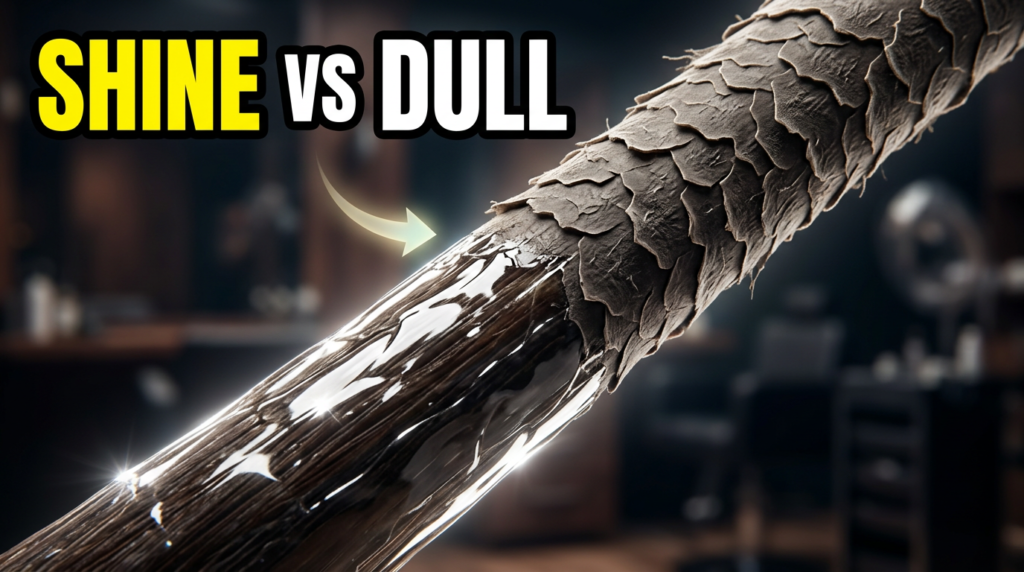
Every strand of your hair has an outer layer called the cuticle. Think of it like tiny, overlapping shingles on a roof. When your hair is healthy, those shingles lie flat and smooth. Light hits that smooth surface and reflects evenly — and our brains read that even reflection as shine.
Damage changes everything. Heat styling, chemical coloring, and everyday wear lift and roughen those cuticle shingles. A rough surface scatters light in all directions instead of reflecting it cleanly. That’s why damaged hair looks dull, frizzy, and flat.
How a Gloss Fixes the Surface
Hair gloss steps in by working directly on that cuticle. Most glosses have a mildly acidic pH, which signals the cuticle to contract and lie flat. The formula then coats each strand with conditioning polymers or silicones, filling in surface gaps and sealing the cuticle down.
The result isn’t an illusion. It’s the direct visual consequence of smoothing your hair’s surface so it reflects light more cleanly and evenly. According to Cleveland Clinic’s guidance on hair and scalp health, the structural integrity of the hair cuticle is central to how healthy hair both feels and appears — making cuticle-sealing treatments a legitimate approach to improving hair quality.
Unlike permanent color, most glosses contain no ammonia or harsh lifting agents. They don’t fundamentally alter your hair’s structure. That’s why gloss is so widely called a low-commitment, high-reward treatment.
Clear vs. Tinted: The Two Types of Hair Gloss
Now that you understand the mechanism, it helps to know the two main types — because they serve very different purposes.
Clear Gloss: Pure Shine, Zero Pigment
A clear gloss has no pigment whatsoever. Its only job is to deliver that glassy shine and softness. It works on any hair type — color-treated, natural, highlighted, or completely untouched. Think of it as a conditioning treatment with an extraordinary shine payoff. It makes your hair look like a healthier, more vibrant version of itself without altering your natural color at all.
Tinted Gloss: Color Maintenance Made Easy
A tinted gloss deposits a small amount of semi-permanent color onto the hair. It’s not designed to make dramatic color changes. However, it’s a powerful tool for refining and refreshing what you already have.
For blondes, a violet-toned gloss neutralizes unwanted yellow or brassy tones. For brunettes, it adds richness and depth. For redheads — whose color is notoriously fast-fading — a tinted gloss can refresh vibrancy and keep the color from looking washed out between appointments.
Furthermore, a tinted gloss is the secret weapon many stylists use to keep color looking freshly done between full-color services. It’s about making your current color look more expensive, not about changing it entirely.
Salon Gloss vs. At-Home Kit: Which One Should You Choose?
The popularity of hair gloss has exploded, so you’ll find it everywhere from high-end salons to drugstore shelves. The right choice depends entirely on your goals, budget, and how much precision you need.
Professional Salon Gloss
A salon gloss is all about customization. Your stylist mixes a formula tailored to your exact hair — creating the perfect shade to address your specific brassiness or adjusting the depth of shine. Salon formulas are typically demi-permanent, mixed with a low-volume developer that allows conditioners and pigments to penetrate slightly past the cuticle. As a result, salon glosses generally last longer — around four to six weeks. This is the right choice for precise color correction or when you want the longest-lasting results.
At-Home Gloss Treatments
At-home glosses, on the other hand, are the champions of convenience. They’re semi-permanent, meaning they use no developer and coat the hair’s surface rather than penetrating it. The effect is slightly milder and lasts roughly one to four weeks depending on how frequently you wash your hair.
Still, at-home options are fantastic for a quick shine boost or for maintaining color between salon visits. Most apply in the shower just like a conditioner — no mixing, no mess, no special tools required.
The final word is simple: there’s no universally “better” option. A salon gloss delivers custom, longer-lasting results for a higher cost. An at-home gloss offers convenience and accessibility for more temporary results. It all comes down to the problem you’re trying to solve.
What the Application Process Actually Looks Like
Applying a gloss at home is genuinely straightforward. Here’s what a typical at-home treatment involves, step by step.
First, start with clean, damp hair. Shampoo to remove any product buildup so the gloss can absorb evenly across every strand. Skip your regular conditioner — most glosses have conditioning ingredients built in.
Next, apply the gloss from roots to ends, making sure every strand is fully saturated. Uneven application can lead to patchiness, so thorough coverage matters. The texture is usually a thick gel or cream.
Wait, Rinse, and Reveal
Then simply wait. Most at-home glosses process in 10 to 20 minutes. There’s no harsh chemical smell, no heat required, and no complicated steps. Once the time is up, rinse thoroughly with lukewarm water. Cooler water helps keep the cuticle sealed for longer-lasting results.
The difference after drying is immediate and visible. Hair feels noticeably softer and silkier. The halo of frizz that often appears around the hairline becomes significantly smoother. Most noticeably, the shine takes on a multi-dimensional, reflective quality — a deep, healthy-looking luster rather than a greasy or oily surface sheen. Hair doesn’t feel weighed down. It simply looks polished.
Why Hair Gloss Is More Than Just a Cosmetic Quick Fix
It’s easy to dismiss hair gloss as another beauty trend with a short shelf life. However, its growing popularity makes more sense when you understand what it actually addresses. A gloss neatly bridges the gap between a deep conditioning treatment and a full color service — tackling dullness, frizz, and faded color in a single product.
Moreover, it fits perfectly with the direction beauty is heading: routines that are faster, gentler, and more reversible. You get real, visible improvement without committing to anything permanent or potentially damaging.
The technology is also improving steadily. Future formulas will likely incorporate bond-building ingredients, advanced conditioners, and sophisticated pH balancers that don’t just make hair appear healthier — they’ll improve its actual feel and long-term manageability. Research published through Healthline’s expert-reviewed hair care guides confirms that glossing treatments work by smoothing the hair’s cuticle, which directly improves light reflection and reduces the appearance of frizz and damage.
The Real Takeaway
Hair gloss works by playing with the physics of light. Smooth the cuticle, and the hair reflects light more cleanly. Our brains are hardwired to read that clean reflection as healthy, beautiful hair.
It’s not magic. It’s not permanent. It’s temporary chemistry that delivers a powerful visual result — and one of the most effective, low-commitment ways to give your hair an instant upgrade.
FAQ — What Does Hair Gloss Do?
Q1: What does hair gloss do that a regular conditioner can’t?
A: A regular conditioner moisturizes and detangles the hair, but it doesn’t specifically seal the cuticle or enhance light reflection the way a gloss does. Hair gloss uses acidic pH chemistry and coating ingredients to create a smooth, reflective surface that most conditioners simply aren’t formulated to produce. The visual shine payoff from a gloss is significantly more dramatic.
Q2: Does hair gloss actually add color to your hair?
A: Only if you use a tinted gloss. Clear glosses contain zero pigment and will not change your hair color in any way. Tinted glosses deposit a small amount of semi-permanent color that refreshes or tones your existing shade rather than making a dramatic color transformation.
Q3: How long does a hair gloss treatment last?
A: At-home glosses typically last one to four weeks, depending on your washing frequency. Salon demi-permanent glosses last longer — usually four to six weeks — because the formula penetrates slightly deeper into the hair’s outer layer.
Q4: Can I use a hair gloss on color-treated hair?
A: Yes, and in fact color-treated hair is one of the ideal candidates for glossing. Color processing lifts the cuticle and leaves hair more prone to dullness and fading. A tinted gloss can refresh your color between appointments, while a clear gloss restores shine and smoothness without affecting the color itself.
Q5: Is hair gloss damaging to your hair?
A: Hair gloss is widely considered one of the least damaging hair treatments available. Most formulas contain no ammonia and do not structurally alter the hair. At-home versions don’t use a developer at all, making them a genuinely low-risk option for most hair types.