The Cinched Waist Blazer: The One Simple Trick That Upgrades Every Blazer You Own
A blazer can make you look powerful in one second — and completely shapeless in the next. You know the feeling. Even with a closet full of choices, none of them seem quite right. The goal is a polished, high-end look, yet the final result often feels boxy. So eventually, you stop wearing them altogether.
Here is the thing though: you do not need to buy new clothes. The secret to making every blazer you own look expensive is probably already sitting in your closet. And it all comes down to the cinched waist blazer — the one styling move that changes the entire silhouette.
Why the Cinched Waist Blazer Is Everywhere Right Now
Two blazers can be made from the exact same pattern but send completely different messages. One says “I have a meeting.” The other says “I am the meeting.” The difference has nothing to do with price — it is about how the blazer sits on the body.
Right now, the cinched waist blazer is everywhere, and for a very good reason. It is turning a piece of clothing that was originally designed to just hang on the body into one that actually frames it. The reason this look keeps coming back is simple: we still want structure, but we do not want to look stiff. We want definition, but we do not want to feel trapped. The easiest, most effective way to get there is by pulling the eye inward at the waist. It is the oldest trick in the design book — and it works every single time.
As Vogue’s guide to the cinched blazer trend confirms, defining the waist on an otherwise structured jacket is one of the most consistently recommended moves by stylists for creating a polished, intentional silhouette.
The Core Design Principle Behind a Cinched Waist Blazer
Here is the core idea: a cinched waist blazer works because it completely changes your proportions. This is not just about a belt — it is about basic design.
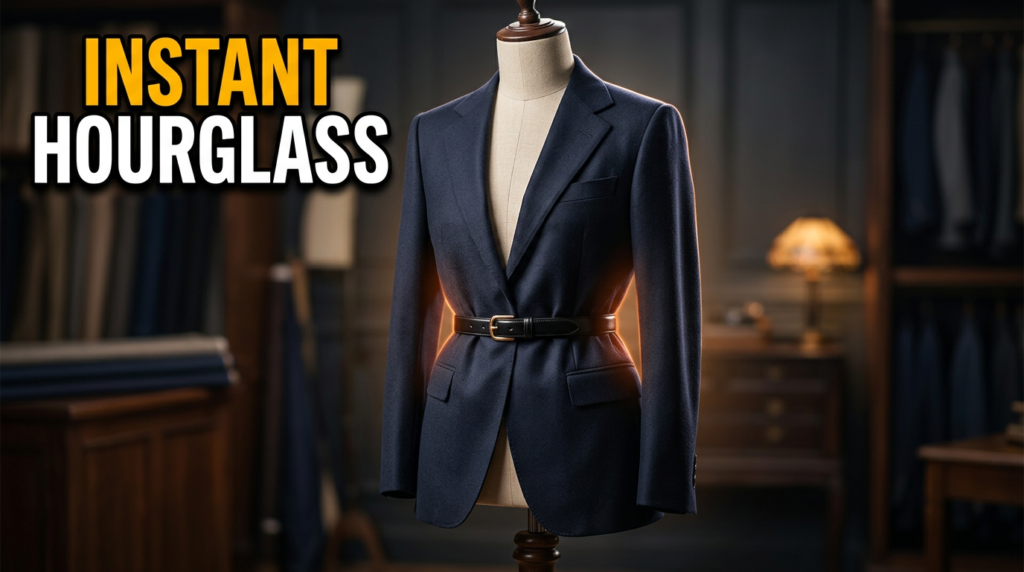
When a blazer hangs straight, it creates a long, rectangular shape. That can look cool and minimalist, but it can also swallow you whole — especially in an oversized fit. The moment you cinch the waist, however, you interrupt that long column and create contrast. Suddenly, the top half looks tailored instead of boxy, and your legs look noticeably longer. You have created an hourglass shape, which is almost universally flattering because it establishes a clear point of visual interest.
This is precisely why stylists always point to the same trick: define the waist, then balance it with something streamlined on the bottom. High-waisted trousers, classic cigarette pants, or even a mini skirt all work because they keep the whole silhouette looking intentional. The cinched waist becomes the hinge for the entire outfit.
That is also why this feels so different from simply wearing a blazer open. An open blazer is casual and relaxed. A cinched waist blazer is directional. It says you made a deliberate choice. And in fashion, that tiny difference changes absolutely everything.
How to Get the Cinched Waist Blazer Look Right
Getting this right is not just about throwing a belt over a jacket. There are three key details that make the difference between looking sculpted and high-fashion — or just lumpy and awkward.
1. The Shoulders Come First
This is the number one rule and it cannot be skipped. Even if the body of the jacket is relaxed or oversized, the shoulder seam needs to sit close to your natural shoulder. If the shoulders are drooping down your arms, cinching the waist will only make it worse. It creates a heavy, overpowering shape on top instead of that chic, sculpted finish.
This is why a “relaxed fit” blazer usually works far better for this look than an extremely oversized one from the men’s section. Look for a fit that is loose in the body but correct in the shoulders. That balance is everything.
2. The Hem Length Matters More Than You Think
Most of the time, a blazer that lands somewhere around your hip bone is the sweet spot. A blazer that is much longer can visually shorten your legs — and even a perfect waist cinch cannot save bad proportions. A hemline that cuts you off mid-thigh simply works against the elongating effect you are trying to create. Hip-bone length is consistently the most flattering and safest option.
3. What You Cinch With Is Where the Fun Starts
This is where you get to play. A slim leather belt will always look sharp and polished. A wider, corset-style belt creates more drama and a more pronounced hourglass. A fabric sash in a contrasting colour gives a softer, more relaxed result. Some people are even skipping the belt entirely — overlapping the front panels of the blazer and using pins to create a really organic, draped effect that feels incredibly modern and editorial.
Styling Versus Altering: Which One Do You Need?
There is an important distinction worth making here: styling is temporary, but altering is permanent.
For a temporary fix, lean into the no-sew hacks. Use safety pins on the inside to create makeshift belt loops for a ribbon. Use a little fabric tape to hold a draped front in place. These tricks are perfect for experimenting without any commitment, and they genuinely work.
But if you find a look you love and wear it constantly, you can make it permanent. A tailor can take in the side seams, add darts to the back, or sew in internal ties. It just depends on what you are after. Are you styling an illusion for a night out, or are you engineering a new shape for a piece you truly love? Right now, the illusion is easier and more accessible than it has ever been.
Why the Cinched Waist Blazer Works for Every Occasion
A cinched waist blazer works across so many different situations because it lives in that perfect space between formal and expressive. This is not just a trend — it is a practical solution for a modern wardrobe.
Belting a blazer over a dress or trousers instantly makes a work outfit look polished without feeling too corporate. For a dinner out, the same styling trick adds welcome structure to a delicate slip dress or a simple cami-and-jeans combination. At more formal events, a cinched blazer in a beautiful fabric often feels far more current than a traditional cocktail jacket.
That flexibility matters, because most people do not have separate wardrobes for every part of their lives. We want pieces that work harder. The cinched blazer is the ultimate wardrobe chameleon. Belt it over a t-shirt and jeans, and it reads as casual and cool. Belt it over a satin top, and it is ready for a night out. Wear it with wide-leg pants, and it is fashion-forward. Pair it with a pencil skirt, and it feels genuinely timeless.
More than versatility, though, this trick solves a problem so many people face: how to wear a blazer without feeling like you are hiding inside it. When you reshape the blazer to follow your own proportions, the whole outfit simply feels more powerful. It is the difference between wearing the clothes and letting the clothes wear you.
According to Harper’s Bazaar’s styling guide on blazer trends, the belted and cinched blazer silhouette has remained one of the most enduring and widely recommended styling moves across multiple fashion seasons — precisely because it works across body types, occasions, and personal aesthetics.
The Bigger Picture: What the Cinched Blazer Trend Actually Reveals
Here is the most surprising thing about this whole trend: it reveals something much bigger than fashion. It shows that we still want structure in our wardrobes, but we demand that our structure be flexible.
And that is why this style keeps evolving. First, it was just a belt. Then, it was about layering bodysuits and high-waisted bottoms underneath. Then came the no-sew hacks with internal cinches and fabric tape. Now, the whole idea is pushing toward something even bigger: modular clothing — garments designed to change their shape depending on your mood, your body, and the occasion.
That kind of adaptable design is genuinely significant. If one blazer can go from a loose fit to a sharp silhouette with just a hidden tie or a few pins, then fashion starts to feel less like a world of restrictive sizing and more like a system of inclusive design. That is a more sustainable way to think about clothes altogether — fewer, better pieces that offer more versatility for more bodies.
There is a cultural angle here too. For years, oversized, unstructured tailoring signalled a certain kind of cool, nonchalant confidence. Now, the act of cinching it back in signals control and intention. Neither is better — they are simply different ways of communicating. The fashion pendulum always swings between relaxed and defined, and the cinched waist blazer sits right in the middle of that swing.
Your Cinched Waist Blazer Checklist
Ready to try the look? Here is a simple, practical checklist to get it right every time.
- Start with shoulder fit — this is the foundation. If the shoulders do not sit correctly, nothing else will work. Do not skip this step.
- Aim for hip-bone length — this is the most balanced and flattering hem for the majority of body types.
- Choose your cinch — slim belt for a classic look, wider belt for more drama, fabric sash for something softer.
- Keep the underlayer close to the body — whatever you are wearing underneath, keep it fitted. This lets the newly defined waist be the clear focal point.
- Balance the volume below — pair the cinched blazer with something streamlined on the bottom, like slim pants or a fitted skirt.
- Experiment before committing — try a no-sew method first. Use safety pins or fabric tape. If you love the result and wear it consistently, then consider a permanent alteration with a tailor.
The real takeaway is not just a styling tip. It is a shift in perspective. Cinching your blazer is not about looking smaller. It is about looking shaped. And that is a very, very different thing. One is about restriction. The other is about design.
The Final Word
A great blazer does more than cover you up — it edits you. It is an architectural piece that tells the eye exactly where to look. And when you cinch the waist, you are taking a classic garment and teaching it to speak a more modern, more personal language.
So maybe the real question is not whether the blazer is “in” or “out.” Maybe it is about why we keep returning to the same idea: we want structure, but we need it to come with a little room to breathe. The cinched waist blazer, as it turns out, gives us exactly that.
FAQ Section
Q1: What is a cinched waist blazer?
A: A cinched waist blazer is a blazer that has been styled or tailored to nip in at the waist — either using a belt, a sash, internal ties, or no-sew techniques like safety pins and fabric tape. The result is a defined hourglass silhouette that looks polished, intentional, and far more tailored than a straight-hanging jacket.
Q2: How do you cinch a blazer at the waist without a belt?
A: There are several no-sew options. You can overlap the front panels of the blazer and secure them with safety pins on the inside for a draped, organic effect. Alternatively, fabric tape can hold a folded or gathered section in place. Some people also use a decorative pin or brooch on the outside for a more fashion-forward finish.
Q3: What body types suit a cinched waist blazer?
A: The cinched waist blazer is widely flattering because it creates a defined hourglass shape rather than imposing one. It works especially well for rectangle, inverted triangle, and apple body shapes by visually creating waist definition. For hourglass and pear shapes, it further highlights natural curves in a really polished way.
Q4: What should you wear with a cinched waist blazer?
A: Keep the bottom half streamlined. High-waisted trousers, cigarette pants, slim-fit jeans, a fitted pencil skirt, or even a mini skirt all work well. The goal is to balance the cinched waist with clean lines below so the whole silhouette reads as intentional and elongated.
Q5: Can you wear a cinched waist blazer to work?
A: Absolutely. A cinched blazer over tailored trousers or a fitted dress is one of the smartest work outfits you can build. It looks put-together and polished without being stiff or overly corporate. Choose a slim belt in a neutral tone for the most professional finish.