
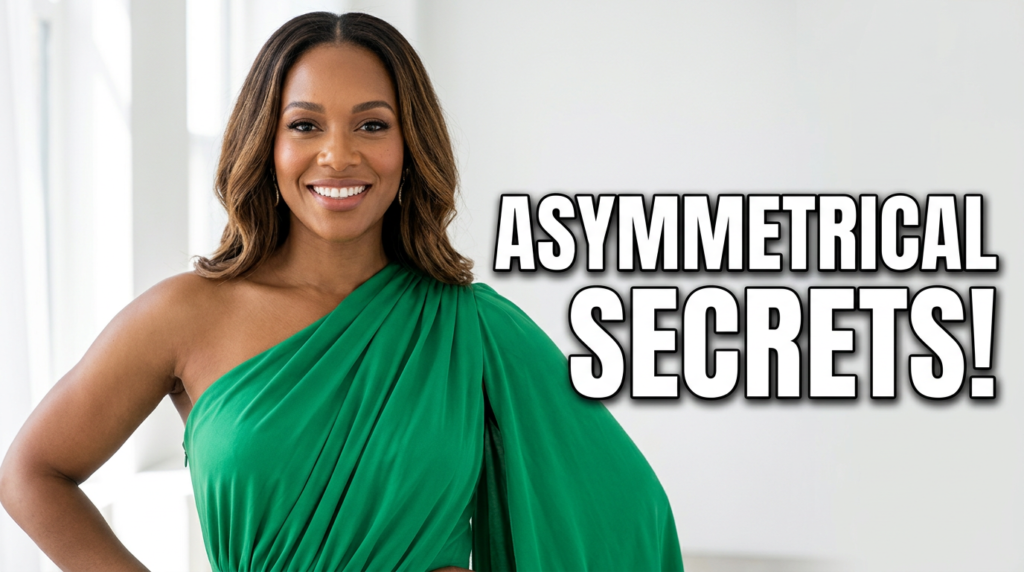
The Asym Dress: The One Style That Flatters Every Body Type
Everything you’ve learned about dressing for your “body type” is… well, not wrong, but way too complicated. For years, you’ve been told to measure your shoulders, waist, and hips, then squeeze yourself into a category like “pear” or “apple.” But the secret to looking and feeling amazing in a dress isn’t about memorizing a rulebook. It’s about finding the one style cheat code that works for a huge range of bodies: the asym dress.
The Problem With Body-Type Rules
Let’s be real. We’ve all been there: standing in a poorly-lit dressing room, surrounded by a mountain of dresses that looked incredible on the hanger but just don’t feel right on us. It’s exhausting. You have a closet full of clothes, but every time a special occasion pops up on the calendar—a wedding, a birthday, even just a sunny day that calls for something other than jeans—that familiar “I have nothing to wear” panic sets in.
So the search begins again. You scroll endlessly online, adding things to your cart only to let them expire. Or you hit the stores, armed with a vague idea, and end up just feeling defeated.
The biggest source of this frustration? The “rules.” For decades, we’ve been told to categorize our bodies: pear, apple, hourglass, rectangle, inverted triangle. The advice says you have to learn the specific cuts and necklines “allowed” for your shape. It’s meant to be helpful, but it often feels incredibly limiting. It turns the joy of fashion into a chore and makes you focus on your perceived flaws instead of celebrating your unique shape.
A Different Way to Think About Fit
But what if the secret isn’t to find a dozen different dress styles to fit a rigid set of rules? What if there’s a single, powerful silhouette that breaks all the rules and is practically designed to flatter almost everyone?
This isn’t about ignoring your beautiful, unique shape. It’s about finding a design principle so effective that it works in harmony with your body, not against it. It’s a style that has been a quiet disruptor in fashion for years, and now it’s taking center stage. It feels both timeless and totally modern—a way to look intentional and put-together without looking like you tried too hard.
The answer isn’t a magic color or a special fabric. It’s a line. A single, powerful, diagonal line.
Meet the Asymmetrical Dress
The asymmetrical dress is fashion’s best-kept secret for a widely flattering fit. At its core, an asymmetrical dress is all about intentional imbalance. Think one-shoulder necklines, uneven hemlines, diagonal draping across the body, or a slit that travels up one leg. It’s a design that’s perfectly imperfect.
And this isn’t just some fleeting trend; it has deep roots in fashion history. Designers like the revolutionary Madeleine Vionnet pioneered flowing, body-skimming cuts in the 1920s and ’30s. As the V&A explains, Vionnet’s bias-cut garments were draped expertly over the body, changing the entire shape of women’s fashion. She ditched rigid corsets and instead draped fabric to honor the body’s natural movement, often featuring elegant, asymmetrical lines.
So what’s the magic? Why does this one design principle work so well for so many? It’s a bit of visual psychology. Our eyes are naturally drawn to symmetry, and when that expectation gets interrupted, it creates a pleasing visual tension. Britannica’s overview of optical illusion points out that a lot of what we perceive comes down to how the brain processes and groups visual information, rather than the raw image itself. That’s essentially what’s happening here: instead of scanning horizontally across the body, which can sometimes highlight areas we might feel self-conscious about, the diagonal lines of an asymmetrical dress guide the eye to travel in a more vertical or diagonal direction. This simple trick can create an incredible illusion of length and height, helping you appear more streamlined. It breaks up the silhouette, so the eye doesn’t get “stuck” on any one part. It just gracefully scans, creating a look that is dynamic, fluid, and incredibly chic.
Asymmetry for Your Body
You might be thinking, “Okay, that sounds great in theory, but will it really work for my body?” Yes. And here’s how. The genius of the asymmetrical dress is that it’s not about hiding your shape, but creating balance and drawing the eye where you want it to go.
For pear-shaped bodies: If you have narrower shoulders and wider hips, an asymmetrical one-shoulder neckline is your new best friend. It draws the eye upward, highlighting your collarbone and shoulders and creating a beautiful sense of balance with your lower body.
For apple-shaped bodies: If you tend to carry your weight around your middle, look for dresses with diagonal draping or ruching that sweeps across the torso. This creates those powerful visual lines that lengthen and slim the midsection, skimming over the area rather than clinging to it.
For hourglass figures: Your shape is already balanced, so the goal is to highlight it. A one-shoulder design beautifully frames your décolletage, while soft, asymmetrical draping can accentuate your defined waist.
For athletic or rectangular shapes: If you have a straighter figure, asymmetry is a fantastic tool for creating the illusion of curves. Draping, ruching, and uneven hemlines add dimension and softness to your frame, breaking up a linear silhouette.
For petite frames: To avoid being overwhelmed by fabric, opt for shorter asymmetrical hemlines that show off your legs, like a high-low hem. Sticking to a single color will also create an uninterrupted vertical line, adding to the illusion of height.
For tall or bigger frames: You can absolutely handle more drama. Don’t be afraid of floor-length asymmetrical gowns, bold prints, or more architectural cuts. The length and structure of these dresses will complement your frame beautifully.
Styling the Asymmetrical Dress for Any Occasion
One of the best things about the asymmetrical dress is its incredible versatility. It’s not just for one type of event.
For a casual day out: Think brunch, shopping, or a relaxed weekend. Go for a short, flirty asymmetrical hem in a comfy fabric like cotton or jersey. A simple one-shoulder mini-dress looks amazing with clean white sneakers or flat sandals. Throw on a denim jacket and a crossbody bag, and you’ve got an effortlessly chic outfit.
For the office: Yes, you can wear asymmetry to work. The key is subtlety. Look for a midi-length dress in a solid, neutral color like navy or black, with a gentle, slanted hem. Choose a fabric with some structure, and layer a tailored blazer over top to add a touch of professional polish. Pair it with classic heels or sleek loafers.
For cocktail events: This is where the asymmetrical dress was born to shine. For dinner parties or a fancy date night, choose a dress in a luxe fabric like satin or velvet. A design with dramatic draping or a high-low hem makes a statement. Add a slim belt to accentuate your curves, and finish the look with strappy heels and a chic clutch.
For a wedding: As a guest, you want to look elegant and celebratory. A floral or pastel-colored asymmetrical dress is a perfect choice. A flowy midi or floor-length style with an uneven hem adds romance and creates beautiful movement on the dance floor. Pair it with elegant heels and delicate jewelry.
For a formal gala: Time to go for full-on drama. This is the moment for bold architectural cuts, a daring diagonal slit, or even a bold print. A stark black or white asymmetrical gown can be incredibly powerful. Look for heavy silks that hold their shape, and pair it with statement heels and one standout piece of jewelry, like dramatic chandelier earrings.
How to Accessorize an Asymmetrical Dress
Because the dress itself makes such a statement, the golden rule for accessories is to complement, not compete.
If you’re wearing a one-shoulder dress, a great trick is to wear a statement earring on your exposed side to create a perfect visual balance. For a dress with lots of draping, stick to minimalist jewelry like simple studs or a delicate bracelet.
When it comes to shoes, think about the hemline. A flowy, delicate hem looks best with elegant, strappy heels. Try to avoid pairing a light, airy dress with heavy, chunky shoes, as it can throw off the visual balance.
And for layering, keep it clean. A tailored blazer or cropped jacket works well with more structured asymmetrical dresses. For flowier styles, you can add a belt to maintain your waist definition.
Common Mistakes to Avoid
Even the most flattering dress can be styled in a way that doesn’t do it justice. Here are a few common mistakes to sidestep:
Wrong undergarments: This is the big one. For a one-shoulder dress, a standard bra is a no-go. You’ll need a good strapless, adhesive, or convertible bra. Make sure no straps or lines are showing.
Over-accessorizing: The dress is the star of the show. Piling on necklaces, bracelets, and bold earrings will create visual clutter that fights with the beautiful lines of the dress.
Ignoring the fit: An ill-fitting asymmetrical dress loses all its magic. The diagonal lines need to hang correctly, so if it’s pulling or sagging, a quick trip to a tailor can make a world of difference.
The asymmetrical dress is more than just a trend—it’s a shift in fashion perspective. It’s proof that you don’t need to follow a strict set of complicated rules to feel incredible in your clothes. By understanding the power of a single diagonal line, you can create length, movement, and balance, no matter your shape or size. It’s a style that is both forgiving and empowering, modern and timeless. It celebrates the idea that fashion should be about honoring your body, not hiding it.
Asymmetry is popping up everywhere, from high-fashion runways to everyday street style, and the black asymmetrical dress, in particular, is becoming a modern wardrobe staple. So go ahead and embrace the perfectly imperfect.
FAQ Section
What is an asymmetrical dress?
An asymmetrical dress is a dress built around intentional imbalance, such as a one-shoulder neckline, an uneven hemline, diagonal draping, or a one-sided slit, rather than a perfectly symmetrical cut.
Does an asymmetrical dress flatter every body type?
Yes, with the right details for your shape. One-shoulder necklines suit pear shapes, diagonal draping across the torso suits apple shapes, and uneven hemlines add curves to straighter frames.
What bra do I wear with a one-shoulder asymmetrical dress?
A standard bra won’t work. You’ll need a strapless, adhesive, or convertible bra so no straps or lines show through the exposed shoulder.
Can you wear an asymmetrical dress to the office?
Yes. Choose a midi-length asymmetrical dress in a neutral color like navy or black with a subtle, slanted hem, and layer a tailored blazer over it for a polished, professional look.
Why does an asymmetrical dress look so flattering?
The diagonal lines guide the eye vertically instead of horizontally, which creates the illusion of length and helps streamline the whole silhouette.
How do you accessorize an asymmetrical dress?
Keep it simple. A statement earring on the exposed shoulder balances a one-shoulder cut, while draped styles pair best with minimal jewelry like studs or a thin bracelet.