Satoshi Nakamoto Clothing: Honest Breakdown Nobody Says Out Loud
A hoodie that costs more than a month’s rent. A brand wrapped in the mythology of crypto’s most famous ghost. A story about rebellion, decentralization, and digital identity — sold at luxury prices. Satoshi nakamoto clothing sits at a genuinely interesting crossroads: where Bitcoin ideology meets high-end streetwear marketing. The concept is compelling. The question worth asking before you spend serious money is whether the product actually delivers what the story promises. This breakdown examines the narrative, the design language, the quality reality, and the verdict that most reviews skip entirely.
What Philosophy-Driven Streetwear Actually Sells You
To understand this category of brand, you first need to understand its language. Crypto-inspired fashion is not about slapping a Bitcoin logo on a t-shirt. The approach is far more deliberate and, honestly, far more intelligent than that.
The Brand Identity Built on Bitcoin’s Core Concepts
The identity of satoshi nakamoto clothing draws directly from Bitcoin’s foundational principles — anonymity, decentralization, and scarcity — and translates each one into a design and marketing decision. The aesthetic reflects this precisely. Think structured, oversized hoodies, jackets with padded panels, and graphics that resemble corrupted data rather than conventional branding. The color palette runs dark and minimal. The marketing avoids loudness entirely, favouring cryptic language about quiet rebellion and subtle defiance.
This is not accidental. The brand constructs a sense of entry into a private community. Wearing it functions as a kind of signal — a visual shorthand that says you understand something most people do not. As Vogue’s analysis of streetwear’s shift toward concept-driven identity branding documents, this philosophical approach to fashion marketing has become one of the most effective tools for building rapid cultural relevance among younger luxury consumers.
The scarcity principle mirrors Bitcoin’s limited supply model. Limited-quantity drops create urgency and exclusivity simultaneously. The minimalist branding and boxy silhouettes mirror the anonymity principle. Every design decision connects back to the source ideology, which is exactly what makes the concept so coherent — and so effective at commanding a premium price.
Deconstructing the Hype: Who Actually Builds These Brands
Behind the mystique of a brand built on anonymity, the founder profile is usually the opposite of what the marketing suggests.
The Operator Behind the Ghost
The person most likely to build a successful crypto-inspired luxury streetwear brand is not a true crypto believer coding in a basement. The realistic profile is a seasoned industry operator who understands precisely how to manufacture cultural relevance from the ground up. Consider the blueprint Rhuigi Villaseñor used to build Rhude — blending distinct cultural touchstones, leveraging strategic celebrity connections, and creating a brand identity that felt simultaneously niche and aspirational. That same playbook applies directly here.
Such a founder would recognise the raw energy of the crypto narrative — the mystery, the anti-establishment sentiment, the hunger for a new kind of identity — and repackage it for the luxury streetwear market. The mystique, therefore, is not organic. It is engineered, deliberately and skillfully, as a core product feature.
Knowing this does not automatically make the brand a scam. However, it reframes the story meaningfully. This is not a grassroots movement. It is a calculated business venture launched by an expert who understands that the story is the product. The rebellion, in that context, functions as a carefully designed marketing asset.
The Quality Reality: What You Actually Hold in Your Hands
This is where the satoshi nakamoto clothing concept faces its most direct test. A powerful story can sell a dream. However, you cannot fake the physical reality of a garment once you hold it.
The Signature Piece: What the Product Delivers
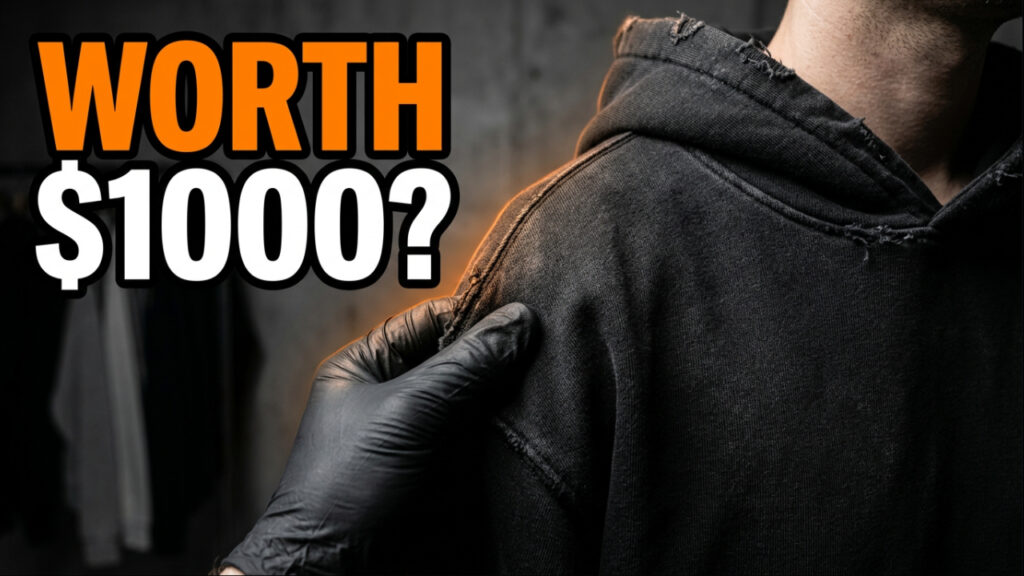
The signature piece in this category — a heavily distressed, washed-black heavyweight hoodie at a retail price around one thousand dollars — arrives with significant brand promises. The product copy talks about craftsmanship, intentional design, and durable heavyweight fabrics. The aesthetic delivers on first impression. The wash reads as a deep, sun-faded grey. The distressing is aggressive, with deliberate slashes and purposeful wear across key stress points. It looks exactly like a hoodie with a history, even though that history came from a factory rather than lived experience.
The physical reality, however, diverges sharply from the price point. The weight is the first shock. For a piece marketed as a premium heavyweight garment, the hand feel is surprisingly light. The material is soft, but lacks the dense structural integrity that genuine luxury fabrication delivers. A comparable piece from an established luxury streetwear brand at a similar price point feels substantially more substantial in the hand. Construction details — a slightly crooked neck label, for instance — might read as intentional rawness at lower price points. At this price, they read as quality control failures.
The honest assessment is this: the quality is not a lie in the sense that the product is wearable and reasonably well-made. However, the value proposition is severely skewed. As Who What Wear’s breakdown of luxury streetwear pricing versus construction quality confirms, the gap between narrative value and material value in this category is wider than almost any other segment of fashion. You pay for the concept. The physical garment does not justify the price on material grounds alone.
The Verdict: Genius Marketing or Expensive Narrative?
After examining the brand language, the founder profile, and the physical product, the honest answer sits somewhere uncomfortable.
What This Category of Brand Actually Is
This is not a scam in the literal sense. You receive a real product. However, it qualifies as what might fairly be called a narrative scam — a brand that masterfully exploits the language of rebellion, decentralization, and authenticity to sell a luxury product to a generation that genuinely hungers for meaning in their purchases.
The genius lies in the storytelling coherence. Every element of the brand identity connects logically to the source ideology. The scarcity model mirrors Bitcoin. The anonymity principle shapes the aesthetic. The anti-establishment message resonates with a real cultural frustration. The execution is exceptional.
The problem is the fundamental contradiction at the core of the proposition. The brand preaches decentralization but centralizes all profit in a conventional, top-down business model. It sells anti-consumerism at hyper-consumerist price points. It tells you to think differently, but only if you can afford the uniform. That disconnect between message and model is not incidental — it is the business strategy. Furthermore, the physical product does not close the gap. You pay luxury prices for a garment that delivers good-quality streetwear, not heirloom craftsmanship.
What This Means for You as a Buyer
Understanding the mechanics of satoshi nakamoto clothing and brands like it makes you a significantly more informed buyer in the broader luxury streetwear market.
The practical question before any purchase in this category is straightforward: are you buying the object or the story? If the story genuinely resonates — if wearing a piece that signals your relationship with crypto culture and digital identity carries real personal value — then the purchase makes a kind of internal sense. Many luxury purchases operate on this logic. A Rolex tells time no better than a Casio. The price pays for meaning, history, and signal.
However, if you expect the price to reflect material quality and construction value equivalent to other thousand-dollar garments, this category will disappoint consistently. The fabric weight, construction detail, and structural integrity simply do not compete with what established luxury houses or even premium independent tailors deliver at the same price point.
The smartest approach is to treat concept-driven streetwear as what it genuinely is: wearable art with a strong cultural statement and moderate physical quality. Buy it if the statement genuinely reflects who you are. Do not buy it expecting the material substance to match the price tag, because it will not.
FAQ — Satoshi Nakamoto Clothing
Q1: What is satoshi nakamoto clothing and what does it represent?
A: Satoshi nakamoto clothing refers to a category of crypto-inspired, philosophy-driven streetwear that draws on the identity and principles of Bitcoin’s anonymous creator — decentralization, scarcity, and anonymity — as core design and branding concepts. The aesthetic typically features oversized silhouettes, minimal branding, dark colorways, and limited-quantity drops that mirror Bitcoin’s supply model.
Q2: Is the quality worth the price for crypto-inspired luxury streetwear?
A: Honestly, the quality rarely justifies the price on material grounds alone. Most pieces in this category deliver good-quality streetwear construction — soft fabrication, competent stitching, strong aesthetic execution — but not the dense structural integrity or craft-level finishing you would expect from other garments at the same price point. You pay primarily for the concept and cultural signal, not the raw materials.
Q3: How does the limited-drop model work for these brands, and should it influence my purchase decision?
A: Limited drops create artificial scarcity that mirrors Bitcoin’s capped supply model — it is a deliberate design choice, not a production constraint. This model drives urgency and resale value but does not reflect superior quality. If a piece sells out, treat that as a marketing signal rather than a quality indicator before deciding whether to pay resale premiums.
Q4: How does satoshi nakamoto clothing compare to established luxury streetwear brands like Rhude?
A: Rhude and similar established brands built their reputations over years through consistent celebrity adoption, editorial coverage, and genuine quality progression. Crypto-inspired streetwear brands borrow the same playbook but compress the timeline through stronger narrative urgency. In terms of physical quality, established luxury streetwear brands generally deliver superior construction and fabric weight at comparable price points.
Q5: What fabrics should I look for when buying a premium streetwear hoodie at this price point?
A: At the thousand-dollar price point, you should expect a minimum of 400gsm fabric weight in a heavyweight fleece or French terry construction. Look for double-stitched seams at all stress points, a ribbed hem and cuffs with consistent tension, and hardware — zippers, grommets — with solid metal rather than plastic construction. If a hoodie in this price range feels lighter than a mid-range $150 piece, the price reflects branding rather than material value.
Q6: Are these brands targeting crypto investors specifically, or a broader streetwear audience?
A: The primary audience is broader than active crypto investors. The brand targets anyone who identifies with the cultural values crypto represents — anti-establishment sentiment, digital-native identity, distrust of centralised systems — regardless of whether they actually hold Bitcoin. The aesthetic is designed to signal alignment with those values to a street-fashion audience, not to crypto traders specifically.
Q7: What should I check before buying any philosophy-driven streetwear brand at luxury prices?
A: Check three things. First, look for independent reviews that assess physical quality separately from brand narrative — most brand-adjacent content only discusses the story. Second, examine fabric weight and construction detail in any available unboxing content. Third, compare the price against what established brands charge for equivalent construction quality. If the gap between narrative premium and material quality is large, adjust your expectations accordingly before committing.
Q8: Will crypto-inspired streetwear hold resale value over time?
A: Resale value in concept-driven streetwear depends entirely on the brand’s ability to maintain cultural relevance and sustained demand. Brands that successfully transition from hype cycle to established cultural institution — as Supreme did over two decades — retain and grow resale value. Brands that rely primarily on a single cultural moment without building broader fashion credibility tend to see resale values drop sharply once the initial hype cycle ends.

Muhammad Awais is the founder of PeakRank Agency LLC, a white-label link building company helping SEO agencies and SaaS brands grow organic traffic through editorial guest posts and contextual link placements. With hands-on experience as a Senior SEO Specialist and Link Builder, he manages a vetted network of 2,000+ quality websites across multiple industries. His focus is on niche-relevant, white-hat link building that delivers real, long-term results.