Oriental Fougère Fragrance for Men: 5 Things You Should Know
Most men pick a cologne the same way — grab something familiar, spray it, and hope for the best. The result is usually a fragrance that smells fine but never quite feels personal. If that sounds familiar, the problem isn’t your nose. The problem is that nobody ever explained the underlying structure of masculine scent. Once you understand the oriental fougère fragrance for men, every cologne purchase starts to make sense — and your next one will actually feel like you.
The Hidden Blueprint Behind Classic Men’s Cologne
There is a design principle behind the world’s most beloved masculine fragrances. It isn’t random. It isn’t just marketing. It’s a carefully constructed balance of two opposing forces — and once you can identify it, you’ll recognize it in dozens of bottles you’ve walked past a hundred times.
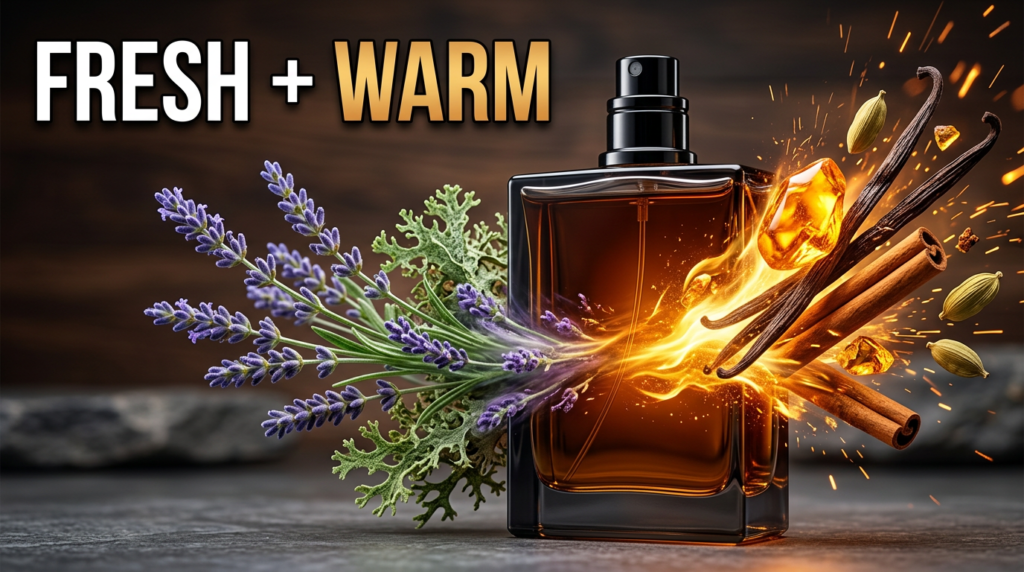
That principle is the oriental fougère accord. It combines the clean, herbal structure of a classic fougère with the deep warmth of oriental notes. The result is a fragrance that manages to feel fresh and warm, structured and sensual, all at once. That tension is the entire appeal.
Why the Fougère Family Changed Masculine Perfumery
The story begins in 1882. A Parisian perfume house called Houbigant released a fragrance named Fougère Royale, created by perfumer Paul Parquet. At the time, most men’s cologne fell into two simple camps: sharp citrus or plain floral water. Parquet did something completely different. He built an artistic impression of what a fern-filled forest might smell like — even though ferns themselves carry almost no natural scent.
To construct that imaginary forest, he blended the crisp, herbal sharpness of lavender with the earthy depth of oakmoss. Then he added coumarin — a brand-new synthetic molecule first isolated from the tonka bean. Coumarin smells sweet, slightly hay-like, and faintly of almonds. As Vogue’s deep-dive into fragrance history notes, the development of synthetic molecules like coumarin in the late 19th century completely transformed the palette available to perfumers, opening up entirely new scent categories that hadn’t existed before.
That trio — lavender, oakmoss, and coumarin — became the classic fougère accord, and it essentially defined what a “masculine” fragrance smelled like for the next hundred years.
What Makes It “Oriental”: The Second Layer of the Formula
The fougère backbone alone produces something clean, green, and quietly powerful. However, perfumers eventually asked a different question: what happens if you add heat?
That’s how the oriental fougère was born. By layering warm, resinous oriental notes — golden amber, dark vanilla, cinnamon, cardamom, and deep woody bases — on top of the fougère structure, perfumers created a hybrid that carried contradictions beautifully.
The Two Accords Working Together
Think of it as a conversation between two distinct personalities:
The fougère backbone says: “I’m clean, I’m organized, I’m reliable.” It brings lavender’s fresh herbal sharpness, oakmoss’s earthy green depth, and coumarin’s creamy warmth.
The oriental layer responds: “But I’m also confident, warm, and far more complex than I appear.” It adds amber’s resinous glow, vanilla’s dark sweetness, and spice notes that create genuine intrigue.
Together, they produce a fragrance with enough freshness for daytime wear and enough warmth and spice to carry through an evening. That versatility is exactly why this category has dominated masculine perfumery for generations.
Oriental Fougère Fragrance for Men: Real Examples Worth Knowing
Understanding the theory is useful. However, recognizing this blueprint in real fragrances is where that knowledge becomes genuinely practical.
Jean Paul Gaultier Le Male is one of the most recognizable oriental fougères in existence. It leans heavily into the sweet oriental side — a powerful hit of vanilla and mint — but its core rests on a commanding lavender note that gives it unmistakable fougère DNA before the warmth takes over.
Tom Ford Beau de Jour takes a more refined approach. It opens with a burst of pure, classic lavender — almost barbershop-direct — and then gradually reveals an amber and patchouli base underneath. The contrast between that cool, professional opening and the warm, confident dry-down is precisely what makes it so effective.
Azzaro Pour Homme, launched in the 1970s, remains a textbook example of this structure. Its sharp opening of lavender and aromatic herbs gives way to a warm, complex base of amber, musk, oakmoss, and tonka bean. Few fragrances demonstrate the fresh-meets-warm principle more cleanly.
Dior Sauvage continues to reinterpret the formula for modern audiences. Its famous opening — a blast of pepper and ambroxan — sits against a prominent lavender note and a warm, woody amber base. As Harper’s Bazaar’s fragrance guide points out, the reason aromatic fougères like Sauvage dominate contemporary men’s fragrance is precisely because they occupy the sweet spot between fresh and warm, making them suitable across seasons and occasions.
How to Test and Choose the Right One for You
Knowing the blueprint is only half the work. The other half is learning how to evaluate these fragrances on your own skin before committing.
The 20-Minute Rule
Never judge an oriental fougère in the first ten seconds. The opening spray delivers the fresh, aromatic fougère part of the formula — lavender, herbs, citrus topnotes. That’s real, but it’s only the beginning. You need to wait for the dry-down, which takes around 20 minutes on skin. That’s when the amber, vanilla, and spice notes emerge and blend with the initial freshness. Spray it on your wrist, walk away, come back — what you smell at that point is the actual fragrance you’ll be wearing.
Three Questions to Ask Yourself
Before purchasing any fragrance in this family, work through these:
Do you generally enjoy clean, herbal scents like lavender? If sharp, soapy, or barbershop freshness appeals to you, the fougère backbone will feel natural rather than foreign.
Do you want fresh but not cold? A pure citrus cologne fades fast and reads as simple. An oriental fougère has more depth, more development, and significantly more staying power.
Do you like warmth — amber, vanilla, subtle spice? If those notes appeal to you even slightly, this family will reward you. They never overpower in a well-constructed oriental fougère — they simply add dimension.
If all three resonate, the oriental fougère category is almost certainly your sweet spot.
What This Fragrance Communicates — and When to Wear It
Fragrance is a form of communication. A sharp, pure fougère signals clean professionalism. A heavy oriental alone signals opulence, even intensity. The oriental fougère sits deliberately in the middle ground.
Think of it as the scent equivalent of a tailored blazer worn over a cashmere sweater. It’s structured enough to read as polished and put-together. It’s warm enough to feel approachable and genuinely human. It communicates quiet confidence — the kind that doesn’t announce itself but leaves an impression.
Best Occasions for This Fragrance Family
This category works across a wider range of occasions than almost any other:
- Office and daytime wear — The fougère freshness keeps it professional without being clinical
- Evening and social settings — The oriental warmth adds depth that a daytime citrus cologne can’t match
- Cooler months — Amber and spice notes project better in autumn and winter temperatures
- Year-round versatility — Lighter oriental fougères like Beau de Jour work even in spring
The one honest trade-off: very heavy oriental fougères can feel dense in intense summer heat. In those conditions, reach for the lighter end of the spectrum rather than a deep vanilla-amber-heavy composition.
Final Takeaway: The Most Useful Thing to Know Before Buying
The oriental fougère isn’t a niche or complicated category. It’s actually the most wearable structure in men’s fragrance — which is exactly why it has stayed relevant for over a century. Understanding that it’s built on two deliberate contrasts — clean lavender-oakmoss-coumarin against warm amber-vanilla-spice — gives you the ability to evaluate any new fragrance more clearly. You’re no longer just smelling a blur of notes. You’re reading a structure.
The next time you test a men’s cologne, trace those two layers. Find where the freshness lives and where the warmth begins. When both feel balanced and neither overwhelms the other, you’ve found a well-made oriental fougère — and very likely, your next signature scent.
FAQ’s
Q1: What exactly is an oriental fougère fragrance for men?
A: An oriental fougère for men is a hybrid fragrance category that combines the clean, aromatic structure of a fougère — built on lavender, oakmoss, and coumarin — with the warm, resinous depth of oriental notes like amber, vanilla, and spice. The result is a scent that feels fresh and warm simultaneously, making it one of the most versatile structures in masculine perfumery.
Q2: What does “fougère” mean in perfumery?
A: Fougère is the French word for fern. However, fougère fragrances don’t literally smell like ferns — ferns have almost no natural scent. The term describes an imaginary, artistic interpretation of a mossy forest floor, built primarily from lavender, oakmoss, and coumarin. Houbigant’s Fougère Royale, released in 1882, established this accord as its own fragrance category.
Q3: What is the difference between an aromatic fougère and an oriental fougère?
A: An aromatic fougère keeps the clean, herbal lavender-oakmoss-coumarin structure relatively pure and light. An oriental fougère takes that same backbone and layers in warm oriental elements — amber, vanilla, wood resins, and spices — creating a richer, warmer, and more complex result. Dior Sauvage leans aromatic; Jean Paul Gaultier Le Male leans oriental.
Q4: Which season is best for wearing an oriental fougère?
A: Oriental fougères work well across all seasons, but they particularly excel in autumn and winter. The warm amber and spice notes project beautifully in cool air. In summer, lighter versions — such as Tom Ford Beau de Jour — remain appropriate, while deeply sweet, vanilla-heavy compositions can feel heavy in intense heat.
Q5: How long does an oriental fougère fragrance typically last on skin?
A: Most oriental fougères offer strong longevity, typically between six and ten hours on skin, depending on the concentration (EDT vs EDP) and individual skin chemistry. The oriental base notes — amber, resins, vanilla — are inherently long-lasting and continue to project even after the fresh top notes fade.