Most Comfortable Mary Janes — And Why Most “Comfort” Shoes Are a Lie
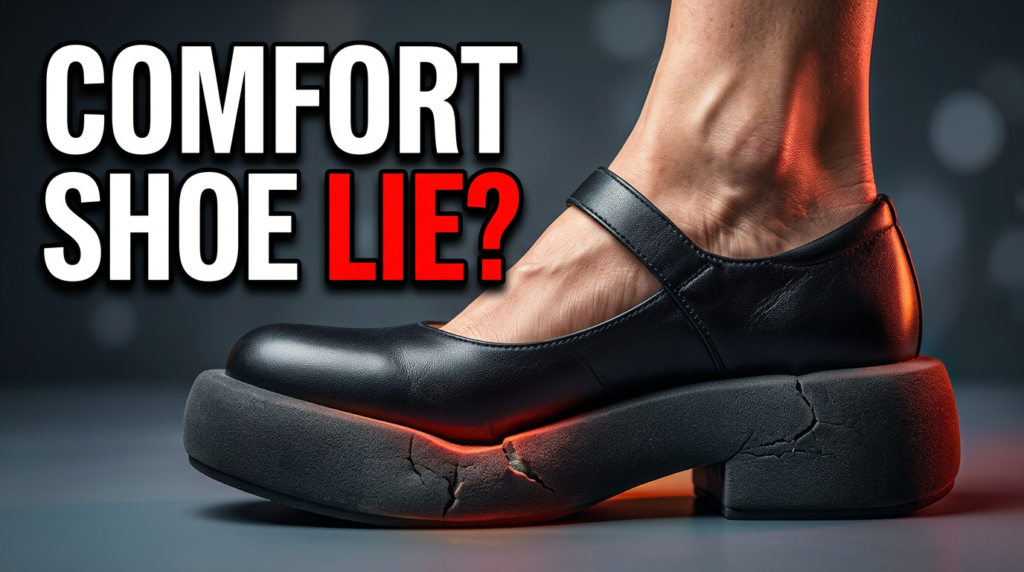
What if some of the most “comfortable” shoes on the market are actually leading your feet toward weakness and pain?
That plush, pillowy sole you sink into — what if it’s not the solution you think it is? It’s a marketing angle that has convinced millions of people that softness equals support. But the reality is far more complicated.
If you’ve been searching for the most comfortable mary janes — or any everyday comfort shoe — this is something you genuinely need to understand before you buy.
The footwear industry has been selling a very comfortable story for decades. Here’s where it holds up, and where it completely falls apart.
The Comfort Cycle Nobody Talks About
The cycle is a familiar one.
Your feet hurt. You go to a store, and a salesperson hands you a shoe that feels like a cloud — thick, squishy sole, maybe a supportive arch. It feels like an instant fix. And for a little while, it might be.
But this approach, while it can provide real relief, sometimes acts more like a band-aid than an actual solution. For some people, it creates a cycle where their feet become less resilient and more dependent on the next shoe — and the next.
We’re told our feet are the problem. That they’re flawed and need correcting.
But what if the problem isn’t just our feet? What if it’s also the shoes?
Myth #1 — More Cushioning Is Always Better
The first idea worth questioning: more cushioning always means better protection.
We’ve been trained to think a soft, thick sole protects our joints. It makes intuitive sense. But the science tells a more complicated story.
Think about trying to run on a thick, soft mattress — you’d feel wobbly and unstable almost immediately. Something similar can happen inside an overly cushioned shoe. Your feet are packed with nerves, designed to feel the ground and tell your body how to react. When you wrap them in thick foam, that sensory feedback gets muffled.
It’s like trying to read braille with winter gloves on.
While some studies suggest cushioned shoes can help with stability in older adults, other research indicates that thick, unstable soles can actually interfere with the body’s natural balance system.
The Most Counterintuitive Part
All that plush foam doesn’t automatically reduce impact force. The evidence here is surprisingly mixed.
Some biomechanics research has found that “maximalist” shoes — the super-cushioned kind — can change how people move, sometimes leading to an increase in peak impact forces. One theory: when your body can’t feel the ground properly, it may instinctively land harder, searching for a stable surface the foam is hiding.
This is still a debated topic. But it challenges the simple idea that more foam equals less force.
And then there’s the lifespan issue. Foam breaks down and compresses — often unevenly. That soft, level platform you bought eventually becomes a lumpy, unpredictable surface, subtly altering your mechanics with every single step.
Myth #2 — Your Arches Always Need Rigid Support
The second pillar of the comfort myth: arch support.
We’ve been told our arches are prone to collapse and need to be propped up by a rigid structure. If you have foot pain like plantar fasciitis, a stiff orthotic or “stability” shoe is usually the very first thing recommended.
A common analogy used by critics is putting your arm in a cast. Support a structure from the outside, and the muscles meant to support it from the inside don’t have to work as hard.
Whether arch supports actually cause significant muscle weakening is still debated — some studies show no negative effects, others suggest it’s a potential risk. The honest answer is: it depends on the person and the situation.
Here’s the nuance that often gets lost.
For specific medical conditions — advanced flatfoot, certain forms of arthritis, diabetic foot complications — custom orthotics and supportive footwear are genuine medical tools. They work. The problem arises when this medical approach gets treated as a one-size-fits-all solution for everyday aches and pains.
Foot pain has many causes: tendon issues, arthritis, nerve entrapment, simple overuse. For many people, it’s related to weak or deconditioned muscles in the feet. By immediately placing rigid support under the arch, we might be providing short-term relief while missing a real opportunity to address the root cause — building actual foot strength.
Orthotics can be a valuable tool to calm down irritated tissues. But they’re often better viewed as a temporary aid while you work on the real fix.
As Healthline’s podiatry guide notes, the effectiveness of arch support varies widely depending on an individual’s foot structure and the underlying cause of their pain — which is exactly why a blanket recommendation rarely works for everyone.
Myth #3 — The Tapered Toe Box Is Just a Style Choice
This might be the most obvious issue. And yet we see it and accept it every single day.
Look down at your bare foot. Now look at most of your shoes.
See the difference?
For decades, modern footwear has been designed with a narrow, tapered toe box that simply doesn’t match the natural shape of a human foot. Your toes are meant to spread out when you walk, giving you a wide, stable base. But most traditional shoes squeeze them together — and this isn’t just about discomfort. It actively affects how your foot functions.
Forcing your toes into a cramped space is a major contributing factor — alongside genetics — to problems like bunions, hammertoes, and Morton’s neuroma.
When your big toe is pushed inward, it can’t act as the stable anchor it’s supposed to be for pushing off. When your smaller toes are squished, they can’t grip and help with balance.
The direct scientific link between narrow toe boxes and broader issues like back pain is still being studied. But biomechanically, it makes complete sense. Change how you walk from the ground up, and those changes send ripple effects all the way to your knees, hips, and lower back.
That nagging ache you feel might not be starting where you think it is.
What to Actually Look for in the Most Comfortable Mary Janes
So if popular shoe designs can be part of the problem, what’s the solution?
For many people, true long-lasting comfort doesn’t come from artificially propping up the foot. It comes from letting the foot learn to support itself. It comes from building strength.
This is exactly where shoe design actually matters — and it’s why finding the most comfortable mary janes means looking well beyond the marketing. The best options tend to share three key features:
1. A wide, anatomically shaped toe box One that lets your toes spread out naturally. Many modern Mary Jane styles — particularly from brands focused on foot health — now offer a rounded toe box that mirrors the natural foot shape rather than compressing it.
2. A flexible sole One that allows your foot to bend and move through its natural range of motion. A stiff sole might feel protective, but it limits the foot’s ability to do its job properly.
3. A low heel drop Where the heel and forefoot sit at a similar height, promoting alignment closer to being barefoot. This is increasingly common in Mary Jane styles designed for genuine all-day wear.
Byrdie’s footwear comfort guide highlights that the most wearable everyday shoes tend to prioritize natural foot shape over aggressive cushioning — a principle that applies directly to finding a Mary Jane that actually feels good after a full day on your feet.
One Important Caveat
This is not a magic bullet.
If you’ve spent years in traditional shoes, your feet may have become genuinely weak. Jumping straight into a minimal, flexible shoe and walking all day is a well-known path to soreness and injury — think stress fractures or Achilles tendon problems.
The transition needs to be gradual. Think of it like starting a new workout program, but for your feet.
Start with short walks. Build up slowly. Listen to what your body is telling you. For people with certain medical conditions, a fully minimal shoe may never be the right choice. The goal isn’t to follow a rigid doctrine — it’s to find what allows your feet to be as strong and functional as they can be.
The Real Meaning of Comfort
The easy story is that our feet are fragile and need constant coddling.
The more nuanced truth is that for many of us, our feet are incredibly capable structures — shaped, and in some cases weakened, by the very shoes we thought were helping them.
By questioning the ideas we’ve been sold about cushioning, arch support, and shoe shape, you can start making more informed choices. You can begin to see your feet not as a problem to be solved with an insole, but as a foundation to be strengthened.
The most comfortable shoes — Mary Janes included — are the ones that work with your foot’s natural design, not against it. It’s about seeking strength, not just softness.
FAQ
Q1: What makes the most comfortable mary janes different from regular ones? The most comfortable mary janes tend to have a wider toe box that allows your toes to spread naturally, a flexible sole that moves with your foot, and a low heel drop. These features support the foot’s natural function rather than compressing or over-cushioning it.
Q2: Are mary janes good for all-day wear? It depends entirely on the construction. Mary Janes with stiff, narrow toe boxes can cause real discomfort over long hours. Look for styles with a rounded toe, a cushioned footbed, and an adjustable strap for the best all-day experience.
Q3: Are cushioned mary janes actually more comfortable? Not always. Heavy cushioning can muffle the sensory feedback your feet need to balance properly. A moderate, responsive sole often feels better over longer periods than an ultra-plush one that compresses unevenly.
Q4: Can mary janes cause foot problems? They can — particularly if they have a narrow or pointed toe box that forces your toes together. Look for Mary Janes with a wide toe box and adequate room across the forefoot to avoid issues like bunions or toe pain over time.
Q5: What should I look for when buying the most comfortable mary janes for wide feet? Look for styles labeled “wide fit” or those with a naturally rounded toe box. Brands that prioritize foot health — like Birkenstock, Dansko, or Naot — often offer Mary Jane styles with wider widths and adjustable straps that accommodate wider feet welQ6: Are flat mary janes better than heeled ones for comfort? Generally, yes. Flat or low-heeled Mary Janes arusually fine, but anything higher puts more pressure on the forefofatigue over a long day.

Muhammad Awais is the founder of PeakRank Agency LLC, a white-label link building company helping SEO agencies and SaaS brands grow organic traffic through editorial guest posts and contextual link placements. With hands-on experience as a Senior SEO Specialist and Link Builder, he manages a vetted network of 2,000+ quality websites across multiple industries. His focus is on niche-relevant, white-hat link building that delivers real, long-term results.