How Sandals Fashion 2018 Turned the Ugliest Shoes Into the Most Coveted Trend
In fashion, beauty is the bottom line. For decades, the rules were pretty simple: elegance, sleek lines, flattering shapes. So how did we get here? A world where clunky, orthopedic, and just plain weird-looking sandals started stomping down the most exclusive runways and stylish streets?
The story behind sandals fashion 2018 wasn’t an accident. It wasn’t some bizarre, fleeting trend that fashion insiders cooked up to mess with everyone. It was a quiet rebellion, a huge shift in our values, and the strange science of what we choose to wear. This is about more than just shoes — it’s about the moment we all decided that comfort could be cool, and that being yourself was way more important than fitting in. It’s the story of how ugly became beautiful.
What Made Sandals Fashion 2018 Such a Flashpoint
The year 2018 was a turning point. It was the summer that sandals stopped trying to be delicate, barely-there accessories. All of a sudden, footwear wasn’t just a practical thing you put on for warm weather — it was the main event. And the sandals themselves were… odd.
Designers and shoppers went all-in on shapes that were anything but subtle. There was an explosion of chunky “dad” sandals, orthopedic-looking slides, and unapologetically clunky platforms. Styles once reserved for practical jobs — hiking, gardening, or working in a hospital — were suddenly major fashion statements.
High fashion has always flirted with the weird, but this felt different. This wasn’t just happening in some avant-garde collection in Paris. It was all over Instagram feeds, in suburban malls, and on city streets. The “ugly-chic” aesthetic was going mainstream. It was a strange new world where a “bad” shoe could actually make a good outfit feel more interesting and more you.
But to really get how we got here, we have to rewind and look at the origin stories of the shoes that started it all — functional, practical footwear that was never, ever meant to be fashionable.
The Origin Story: From Health Food Store to High Fashion
Let’s talk about the two undisputed kings of ugly footwear: Birkenstock and Crocs. Neither got their start in the world of high fashion. In fact, they were born from the exact opposite impulse.
Birkenstock: 250 Years of Foot Health
The Birkenstock story begins in Germany, with the family name first appearing in church archives as a “cobbler” back in 1774. For generations, the family business wasn’t about style — it was about foot health. In the late 1800s, Konrad Birkenstock pioneered one of the first flexible, contoured footbeds designed for mass production. That was a revolutionary idea at a time when most shoes had flat, hard soles. His whole goal was wellness.
Fast forward to the 1960s, and his descendant Karl decided to build a shoe around that orthopedic footbed. The result was the Madrid — Birkenstock’s first sandal. When it launched, the fashion world wasn’t exactly banging down their door. So Karl took his shoes to doctors and health professionals, who actually got it. For decades, Birkenstocks were the unofficial shoe of a certain counter-culture: hippies, academics, and anyone who chose comfort over conformity. They were a symbol of non-fashion.
Crocs: Born on a Boat in 2002
Then you have Crocs. Their story is much more recent. The popular anecdote is that in 2002, three friends on a sailing trip came across a clog made from a unique, lightweight, non-slip foam. They licensed a design from a Canadian company called Foam Creations and saw its potential as the perfect boating shoe — durable, easy to clean, and grippy on wet surfaces. It was never intended to be a fashion item.
The first customers were boaters, gardeners, chefs, and nurses — people on their feet all day who needed pure function. Like Birkenstocks, Crocs became a symbol of utility. By all traditional standards, they were ugly. And for a long time, that’s all they were.
But something was about to change. The very things that made these shoes “ugly” — their bulkiness, their orthopedic vibe, their functional roots — were about to become their greatest strengths.
The Runway Rebellion That Changed Everything
The leap from functional footwear to high fashion didn’t happen overnight. It started with a few key, rebellious moments from influential designers who saw brilliance where everyone else saw bad taste.
One of the biggest moments came in 2012. Phoebe Philo — the creative director of the impossibly chic French fashion house Céline — sent models down her Spring 2013 runway in Birkenstock-style sandals lined with colorful mink fur. The fashion press instantly nicknamed them the “Furkenstock.” It was a shocking, brilliant collision of extreme luxury and humble, orthopedic comfort. As Vogue has documented extensively, Philo’s era at Céline redefined what desirable fashion actually looked like. For the first time, a shoe associated with health food stores was being sold as a high-fashion object. It was a middle finger to the old rule that beauty had to be painful.
Then, in 2016, it was Crocs’ turn. The provocative British designer Christopher Kane — known for his rebellious streak — sent models down his Spring 2017 runway wearing Crocs covered in raw, precious stones. Kane himself called it one of his “most controversial” collaborations, saying he loved to go places other designers wouldn’t. This wasn’t a one-off joke; it was about turning the ordinary into the extraordinary.
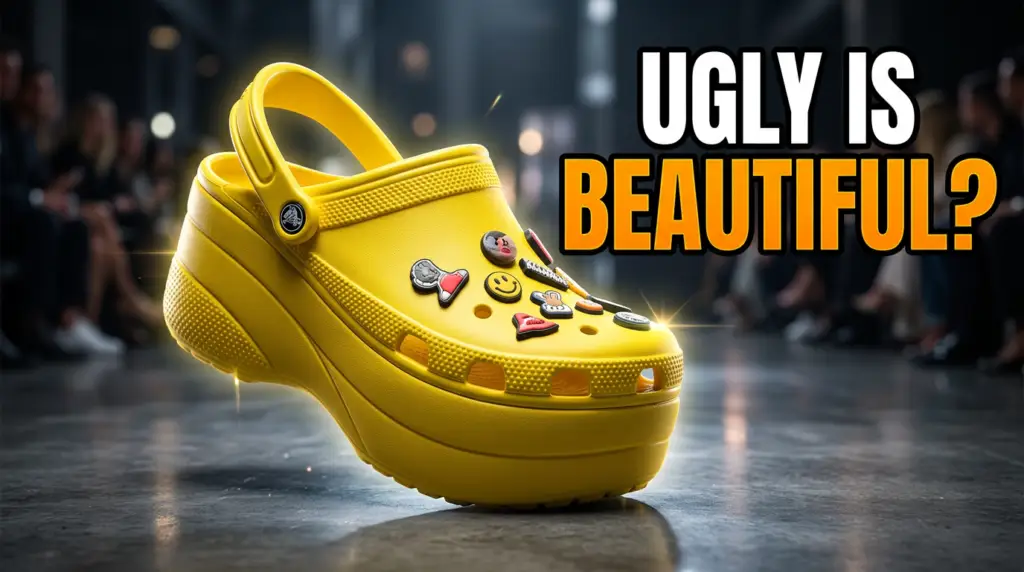
A year later, Balenciaga took it even further. For their Spring 2018 show, they debuted a nearly four-inch platform version of the Croc clog. Suddenly, these “ugly” shoes weren’t just on the runway — they were status symbols, worn by celebrities and fashion insiders who were in on the joke. The very definition of what was fashionable was being torn down and rebuilt from the ground up, with comfort and irony at its very center.
The Science Behind Why “Ugly” Became Cool
So, why did this happen? Why did we all collectively decide to embrace shoes that our parents might wear for gardening? The answer is a perfect storm of social shifts and straight-up psychology.
Comfort as a Statement
First, and most obviously, there was a massive cultural move toward comfort. After years of being squeezed into restrictive clothes and impractical shoes, people were just tired of being uncomfortable. This “comfort-first” movement is part of a bigger focus on wellness, self-care, and just being authentic. Clothing that actually supports your body and your life is now seen as smart design, not lazy. Wearing something comfortable isn’t a compromise anymore — it’s a statement of self-respect.
Confidence in the Unconventional
But comfort alone doesn’t explain why something “ugly” becomes a status symbol. That’s where psychology kicks in. Wearing something unconventional signals confidence. It says: I don’t need to play by the old rules of beauty. I’m secure enough to choose what I like, break the mold, and let my personality do the talking. In a world of perfectly polished social media feeds, wearing something proudly “ugly” feels like a small act of rebellion. It shows you dress for yourself — not for likes.
The Mere-Exposure Effect
This also taps into a psychological idea called the “Mere-Exposure Effect.” The concept is simple: the more we see something, the more we tend to like it. When those ugly sandals first hit the runways, they were jarring. But as they showed up again and again on celebrities and influencers, our brains got used to them. The unfamiliar became familiar, and the ugly slowly started to look… normal.
For the people who got on board early, there was the thrill of being a trendsetter — that little ego boost you get from taking a risk that pays off.
Exclusivity Through Weirdness
Ugly fashion also creates a weird kind of exclusivity. As Harper’s Bazaar has noted, when a designer like Balenciaga drops a bizarre-looking shoe, it gets people talking. The very weirdness makes it feel more exclusive — a sense of if you know, you know. It helps build a modern tribe of people who get the irony and appreciate the statement. It’s a way of standing out while also signaling that you belong to a certain fashion-forward group.
The Bigger Picture: What the Ugly Sandal Really Changed
The rise of the ugly sandal wasn’t just a flash in the pan — it fundamentally changed our relationship with fashion. It normalized comfort in the luxury world, which opened the door for other “ugly” but functional items like chunky dad sneakers and technical Gorpcore jackets to become high-fashion staples.
Designers started putting a real priority on wearability, trying to find that sweet spot between how something looks and how it feels to move through the world in it. The line between “stylish” and “functional” completely dissolved.
What the ugly sandal really did was help democratize fashion. It broke down the old, stuffy rules about what’s beautiful and who gets to make that call. It proved that style isn’t just about looking good — it’s about feeling good, and more importantly, feeling like yourself. The whole movement was a rebellion against the idea that you have to suffer to be stylish. It was a declaration that well-being, freedom of movement, and self-expression actually matter.
The story of the ugly sandal is the story of how we stopped dressing for other people and started dressing for ourselves. It marks a shift from a world where fashion told us how to live, to a world where our lives tell us how we want to dress. That clunky, once-reviled sandal didn’t just get trendy — it became a symbol of a new kind of freedom. And that’s an idea that will never go out of style.
FAQ Section
Q: What was special about sandals fashion 2018? A: Sandals fashion 2018 marked the mainstream explosion of “ugly-chic” footwear — chunky dad sandals, orthopedic slides, and platform clogs went from niche runway moments to streetwear staples almost overnight. It was the year clunky officially became cool.
Q: Why did ugly sandals become a trend? A: A mix of cultural comfort-seeking, psychology, and runway rebellion. Designers like Phoebe Philo and Balenciaga reframed bulky, functional shoes as status symbols. The psychological “Mere-Exposure Effect” — where repeated visibility makes things more appealing — did the rest.
Q: Are Birkenstocks considered fashionable? A: Yes. Birkenstocks went from being a counter-culture comfort shoe to a high-fashion staple after Céline’s “Furkenstock” moment in 2012. By 2018, they were firmly planted in the style mainstream.
Q: Did Balenciaga really make platform Crocs? A: They did. For their Spring 2018 show, Balenciaga debuted a nearly four-inch platform Croc clog that became one of the most talked-about shoes of the season — and a major symbol of the ugly-chic movement.
Q: What is the “ugly-chic” aesthetic in fashion? A: Ugly-chic refers to intentionally clunky, unconventional, or function-first pieces styled in a high-fashion context. Think platform sandals, orthopedic slides, chunky dad shoes — items that reject traditional beauty standards in favour of comfort and self-expression.
Q: Is the ugly sandal trend still relevant today? A: Absolutely. What started as a trend in sandals fashion 2018 permanently shifted how the industry thinks about comfort vs. style. Chunky sandals, Birkenstocks, and platform clogs remain consistent sellers and regularly reappear on runways and street style blogs.
Q: What shoes defined the ugly sandal trend? A: The key players were Birkenstock’s classic Arizona sandal, Crocs (especially the platform versions), chunky “dad” sandals with thick velcro straps, and orthopedic-style slides. All of them prioritised function over traditional aesthetics — which is exactly what made them iconic.