Dinner Suit vs Business Suit: The 5 Differences That Actually Matter
There’s no feeling quite like it. You’ve spent a good amount of money on a new suit, you show up feeling great, but something is just a little off. That’s usually because you’ve been told that a business suit and a dinner suit are basically the same thing. They’re not, and understanding dinner suit vs business suit differences is the first secret to looking powerful, not just “dressed up.” Here are the five things that will make sure your next suit makes you look like you own the room, rather than like you’re just renting it for the night.
We’ve all felt that sting of being out of place, especially after investing time and money to look our best. Usually, the problem isn’t the suit itself; it’s the language the suit is speaking. This guide covers the five critical secrets that separate a powerful business suit from an elegant dinner suit. By the end, you’ll walk into any store or tailor with the confidence to buy something that isn’t just correct, but strategic, and you’ll learn how to skip the costly mistakes that turn a suit purchase into a regret.
Dinner Suit vs Business Suit: Why the Occasion Comes First
A suit is a tool, and the first secret is using the right tool for the job. The most common mistake is thinking “a suit is a suit.” Guys buy one dark suit, often black, and assume it’s a skeleton key for every event, from a huge job interview to their best friend’s black-tie wedding.
This is why you see men looking visibly uncomfortable in otherwise formal settings. The Dinner Suit vs Business Suit distinction is more important than many people realize. When you wear a standard business suit to a black-tie event, it can look like you didn’t quite understand the dress code, signaling a lack of familiarity with formal events. Conversely, wearing a tuxedo to a typical office is a major faux pas, since it can make you look out of touch with professional norms, as though you’re playing a character instead of being a professional. It’s distracting, and it sends the message that you don’t know the rules of the environment you’re in.
Here’s the solution: recognize that these two garments speak different languages. A business suit is your professional armor, built for daytime and professional settings to project competence and credibility. A dinner suit, or tuxedo, is for celebration. The style takes its American name from the millionaire district of Tuxedo Park in New York, where it caught on for small dinner parties in the early 20th century, and it’s designed primarily for evening events to show respect for the occasion and give off an air of elegance. Secret number one is simple: before you even think about color or fit, ask yourself what language you need to speak. Is it the language of business, or the language of celebration? Wikipedia
Secret #2: The Fabric Talks Before You Do
The second secret is hidden in plain sight: the fabric. Most guys pick a suit based on color, and many default to black, thinking it’s the safest, most versatile choice. This can be a critical error.
That “all-purpose” black suit often ends up not being quite right for anything. During the day, some black fabrics can look harsh or carry an odd sheen under office lights, feeling more appropriate for a funeral than a boardroom. At night, that same business-weight suit lacks the specific luxurious details a true black-tie event calls for. The fabric itself is broadcasting the suit’s intended purpose.
So, here’s the secret: a business suit’s power often comes from its durable, hard-working fabric. The Smithsonian describes exactly this kind of piece in its collection: a sack or lounge suit, a business suit made of wool, that dominated men’s fashion throughout the 20th century and into the 21st. These suits typically use materials with a clean, matte finish, like worsted wool or flannel, designed to look crisp from morning to evening. An elegant dinner suit, on the other hand, is built for the night. It often uses more luxurious fabrics that come alive under artificial light, like fine wool-silk blends, mohair, or even velvet. The goal isn’t just durability; it’s drama and sophistication. The secret isn’t just the color, it’s the texture. A business suit should generally have a professional, matte texture, while a dinner suit often has a touch of luxury you can see and feel. Wikipedia
Secret #3: The Devil Is in the Details — Lapels and Buttons
Now for secret number three, which carries the most obvious visual cues. This is what separates the men who know from the men who are guessing. The average person might not know why one dark suit looks ceremonial and another looks corporate, but they can see the difference.
This is where you can get exposed. Imagine two men in perfectly tailored black suits. One looks ready for a gala; the other looks like he just left a meeting. The difference is the shine. Trying to pass off a business suit at a black-tie event, even a black one, can scream inexperience, because you’re missing the key signifiers.
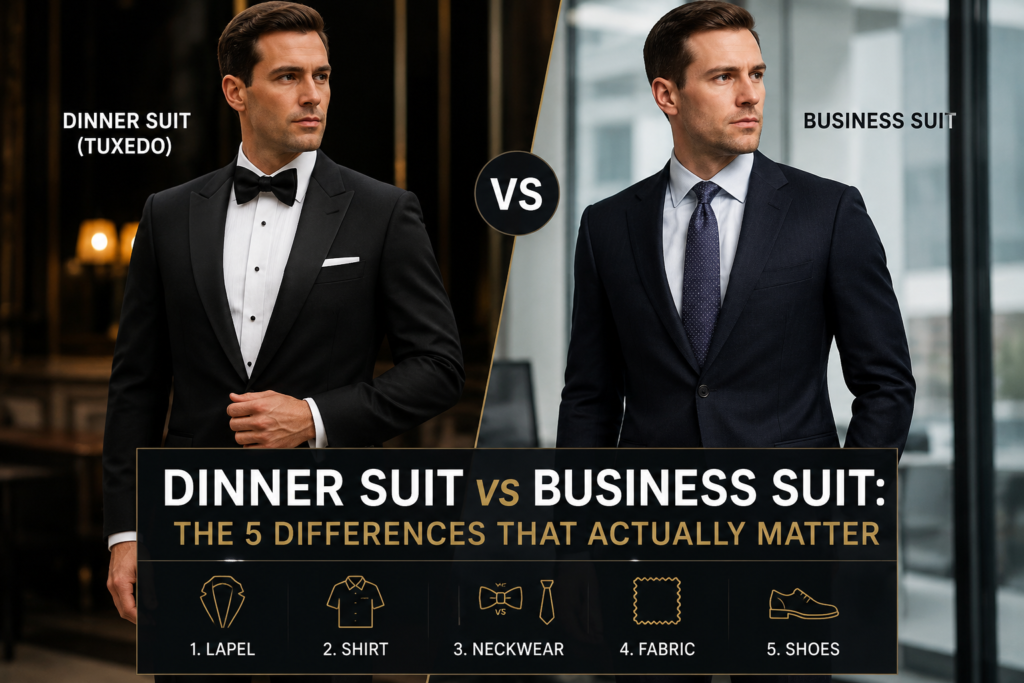
The secret is this: a traditional dinner suit, or tuxedo, is defined by lapels faced with a contrasting, shiny material, either satin or a ribbed fabric called grosgrain. While some minimalist, fashion-forward designs skip this detail, that flash of satin remains the classic, unambiguous code for formal evening wear. Tailors also often cover the buttons on a traditional dinner jacket in the same material, to create a cohesive look. A business suit, in contrast, has “self-fabric” lapels made from the exact same material as the rest of the jacket, along with standard horn or plastic buttons. The lapel style sends a signal too: dinner suits traditionally feature more formal peaked lapels or a rounded shawl collar, while most business suits stick with a standard notch lapel.
Secret #4: The Foundation — Shirts, Ties, and Trousers
Now that you can spot the difference between a business suit and a dinner suit just by the lapels, it helps to know that what goes under the jacket matters just as much for holding the look together. Here’s how the foundation works.
The fourth secret is about respecting the uniform. A huge mistake is thinking that as long as the jacket is right, the rest is interchangeable. Guys will wear a long necktie with a tuxedo, or they’ll pair their dinner jacket with a standard button-down office shirt.
This instantly sabotages the outfit, much like putting budget tires on a performance car undermines the whole thing. Classic black-tie rules treat a regular long necktie worn with a tuxedo as one of the most jarring errors you can make. You might see it done at some modern weddings or less strict events, but it’s still a visual clash that signals you’re a tourist in the world of formalwear.
The solution is knowing that the two suits carry separate, strict accessory rules.
Dinner suit accessories: A dinner suit calls for a black bow tie, ideally one you tie yourself, correctly paired with a specific white dress shirt, often with a pleated or bib front and made for studs instead of buttons. Proper tuxedo trousers skip belt loops entirely; side adjusters or suspenders hold them up instead, and they traditionally carry a satin stripe down the leg that matches the lapels.
Business suit accessories: A business suit, however, is your canvas. You wear it with a standard collared shirt, and it’s designed to work with a long necktie, though it can also go without one. The trousers are typically plain and worn with a belt, although higher-end suits may use side adjusters here as well. These accessory sets are not interchangeable.
Secret #5: The First Purchase Rule — Versatility Before Specialty
Our fifth and final secret is the most strategic, and it will save you the most money and frustration. The biggest financial mistake a young professional can make is buying their first “serious” suit for a hypothetical future event. They buy a black suit for its perceived formality, or worse, a tuxedo, thinking they’ll be “ready for anything.”
This is a costly misstep, because you’ve spent a lot of money on a specialty tool when you really needed a multi-tool. A tuxedo is a scalpel, designed for a specific operation. You might use it once a year, if that. Meanwhile, you still don’t own the single most essential garment in a man’s professional wardrobe.
So here is the ultimate secret: buy for your real life first. For most people, the first suit purchase should be a business suit. It’s the cornerstone of your professional life and will serve you for the vast majority of occasions, including job interviews, daily work, cocktail parties, weddings, and funerals. And what color? Our strongest recommendation is navy. A navy suit is arguably the most versatile garment you can own, looking great day or night and pairing with both black and brown shoes. Your second suit should probably be charcoal grey, another versatile workhorse. Only after you own these two foundational pieces should you even consider buying a dinner suit, and only once you know you’ll have occasions to wear it. Build your foundation with versatile tools before you ever think about buying a specialized one.
The Five Secrets, One More Time
Let’s bring it all together. Here are the five secrets, one more time.
One: know the occasion. Is it for business, or for celebration?
Two: judge a suit by its fabric. Look for durable and matte during the day, and more luxurious at night.
Three: look for the satin. If the lapels are shiny, it’s traditionally a tuxedo; if they’re not, it’s a business suit.
Four: respect the uniform. A bow tie belongs with a dinner suit, and a long tie belongs with a business suit.
Five: buy versatile before you buy special. That navy business suit is likely the most important clothing investment you’ll make.
Now you have the knowledge to walk into any store and buy a suit that doesn’t just fit your body, but fits the occasion perfectly. You’re not just buying a suit; you’re investing in confidence.
FAQ Section
What is the main difference between a dinner suit vs business suit?
A business suit is built for daytime, professional settings, in durable matte fabrics like worsted wool. A dinner suit, or tuxedo, is built for evening celebration, with satin or grosgrain lapels and more luxurious fabrics like mohair or velvet.
Can I wear a business suit to a black-tie event?
It’s best avoided. A standard business suit lacks the satin lapels and formal accessories a black-tie dress code expects, and it can signal you didn’t understand the invitation.
What color suit should I buy first, business or dinner?
A navy business suit should always come first. It works for interviews, daily work, weddings, and funerals, and it’s far more versatile than a tuxedo you might only wear once a year.
Why do tuxedos have shiny lapels?
The satin or grosgrain facing is the traditional signal for formal evening wear. It’s what separates a dinner suit from a regular dark business suit at a glance.
Can a navy suit work for both day and evening events?
Yes. Navy is one of the most versatile suit colors available, looking sharp during the day and pairing well with both black and brown shoes for evening occasions.
Do I need both a business suit and a dinner suit?
Eventually, yes, but not right away. Build your wardrobe with a navy business suit first, then charcoal grey, before considering a dinner suit for genuinely formal occasions.
What shirt goes with a dinner suit versus a business suit?
A dinner suit pairs with a white pleated or bib-front shirt made for studs. A business suit pairs with a standard collared dress shirt, worn with or without a tie.
Is a black suit the same as a tuxedo?
No. A plain black business suit still has self-fabric lapels and standard buttons. A tuxedo is defined by its satin or grosgrain lapel facing, regardless of color.