
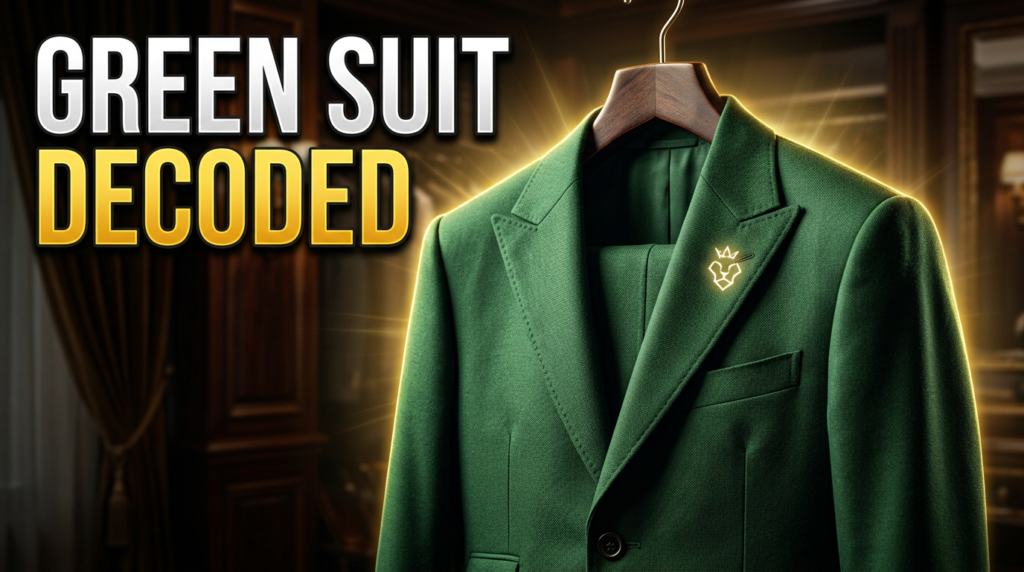
The Blue Ivy Carter Green Suit Decoded — Fashion, Power, and Legacy
A young woman steps out in a perfectly tailored forest green skirt suit. The internet stops. Fashion editors weigh in. Headlines call it a standout moment. But the Blue Ivy Carter green suit wasn’t just a stylish outfit at a Kelly Rowland concert — it was a multi-layered message. It spoke about power, dynasty, and a carefully managed introduction to the world. To really understand why this look hit so hard, you have to look past the fabric and see the strategy beneath it.
The Psychology of Color: Why Forest Green Sends Such a Powerful Signal
First, let’s talk about the color itself. This wasn’t just any shade of green. It was deep, rich, and forest-toned — a color that doesn’t scream for attention. Instead, it holds it.
Color psychology assigns green a powerful set of associations. It connects to nature, growth, and harmony. People wearing green tend to register as emotionally steady, balanced, and approachable. It projects calm confidence rather than aggression.
Old Money Green vs. Brat Green
But there are important levels within green itself. Historically, deep, rich greens were difficult and expensive to produce, which made them a subtle signal of wealth and status. This isn’t the flashy green of new money. It’s the quiet, assured green of old money — the color of a classic luxury car, a perfectly manicured estate, a traditional bank logo.
Right now, pop culture is obsessed with a very different shade of green. In particular, the hyper-modern, almost acidic ‘Brat Green’—made famous by Charli XCX—carries strong associations with rebellion, chaos, and digital disruption. By contrast, Blue Ivy’s forest green represents a far more deliberate aesthetic. Rather than chasing shock value, it evokes a sense of timelessness, sophistication, and maturity. As a result, it stands as the clear opposite of the Brat Green trend: classic, enduring, and refined
By choosing this specific shade, her team positioned her not as a fleeting trend, but as something more permanent. The color says stability and legacy in a world obsessed with whatever’s newest. That single choice communicates volumes before anyone even looks at the cut.
The Language of the Suit: A Century of Female Power Dressed in Tailoring
The color is only half the message. The choice to wear a suit — specifically a tailored skirt suit — carries just as much weight.
For over a century, the suit served as the uniform of male authority. It spoke the language of boardrooms, Wall Street, and political office. Its history in women’s fashion, therefore, has always been a story of deliberate subversion.
How the Power Suit Became Female Armor
That story started as a genuinely radical act. In the 1870s, actress Sarah Bernhardt scandalized polite society by wearing custom-made suits she called her “boy’s clothes.” Decades later, Coco Chanel introduced tailored suits to free women from painful corsets, offering something practical and newly elegant. During both World Wars, suits became standard as women entered the workforce in unprecedented numbers.
The modern power suit as we recognize it today emerged in the 1980s. With broad shoulders and sharp lines, it became a tool for women to claim authority in male-dominated spaces. Designers like Giorgio Armani created what many called a new form of feminine armor. As Smithsonian Magazine has explored in its coverage of fashion as a vehicle for social and political expression, clothing has long served as one of the most direct ways individuals communicate identity and power to the world around them.
Wearing a suit said plainly: “I am here. I am serious. I am powerful.”
What It Means When Blue Ivy Wears It
So what happens when a young woman like Blue Ivy puts on a suit? It flips all that history. It takes a symbol of adult, traditionally male power and reclaims it entirely. The contrast is striking — the youth of the wearer against the mature silhouette of the clothes. This is clearly not a kid playing dress-up. The tailoring is too precise for that. It’s a deliberate alignment with the vocabulary of authority, long before the world would typically expect her to claim it.
Furthermore, this didn’t happen in isolation. Beyoncé has used power suits throughout her career to signal her own evolving authority — from pinstripe skirt suits to the matching pastel power suits in the Apeshit visual. Blue Ivy adopting that same visual language sends a crystal-clear message: she isn’t just inheriting fame. She’s inheriting a specific brand of powerful, female-led imagery.
The Carter Dynasty: Understanding the Strategy Behind the Appearance
This green suit wasn’t a random outfit choice on a casual night out. It was one precise move in a decades-long game of chess. To fully grasp its impact, you have to see it inside the larger context of the Carter brand.
Beyoncé and Jay-Z aren’t simply musicians. They’re two of the most sophisticated brand architects of their generation. Their entire public strategy rests on excellence, privacy, and carefully controlled access. They don’t overshare. They don’t chase headlines. Each album drop functions as a cultural event. Photographs, in turn, read like carefully curated portraits. Meanwhile, every outfit serves as a statement.
Blue Ivy’s Gradual, Intentional Introduction
Blue Ivy’s public appearances have always been rare and always intentional. Audiences have seen her on red carpets, in music videos, and eventually on stage during the Renaissance World Tour. Each appearance represented a managed reveal — a gradual and deliberate introduction to the world on the Carter family’s own terms.
This green suit marks a significant chapter in that ongoing story. It signals a clear shift: she’s no longer simply the famous daughter of Beyoncé and Jay-Z. She’s stepping into her own public identity, one that has been carefully shaped by the strategic minds behind the Carter brand.
The setting added another layer of meaning. The low-key, family-first atmosphere of Kelly Rowland’s concert made the appearance feel personal and grounded. Paired with a suit communicating mature power, the combination was deliberate genius. It announced she’s growing up and poised — while still protected within the family circle.
As Variety has noted in its coverage of next-generation celebrity branding and public image management, the Carters have long understood that a carefully managed public debut carries far more weight than constant media exposure.
The Bigger Trend: A New Blueprint for Celebrity Power
When you zoom out from this single moment, a broader shift comes into view. The old model of fame — built on shock value, constant social media exposure, and reality TV chaos — is starting to look increasingly outdated.
A new blueprint is being written, particularly for the children of the ultra-famous. This model favors rare, high-impact appearances over constant noise. It’s about building a brand so strong it doesn’t need to shout. North West, daughter of Kim Kardashian and Kanye West, offers another example. Her appearances at fashion weeks and her bold aesthetic choices position her as a future creative force — also communicating through clothing, also operating within a curated public narrative.
The Blue Ivy Carter green suit represents the most refined version of this new model. It suggests something genuinely valuable: you can grow up in the most intense public spotlight imaginable without being consumed by it. You can build a global profile while protecting your privacy. You can turn restraint itself into a power move.
In an age of total over-saturation, mystique has become one of the rarest—and most valuable—currencies a public figure can possess. Rather than revealing everything at once, the Carters carefully give the public just enough, delivering each appearance in perfectly polished doses. As a result, they are not only maintaining interest but also cultivating a sense of long-term intrigue around Blue Ivy. Moreover, this measured approach helps protect her from the fleeting nature of viral fame. Instead of preparing her for fifteen minutes of attention, they are steadily building the foundation for a lifetime of influence and cultural relevance.
The suit wasn’t a trend. It was a lesson. And it’s proof that sometimes the loudest statements come dressed in absolute quiet confidence.
FAQ — Blue Ivy Carter Green Suit
Q1: What was the Blue Ivy Carter green suit, and where did she wear it?
A: Blue Ivy Carter wore a forest green tailored skirt suit to a Kelly Rowland concert, attending alongside her mother Beyoncé and grandmother Tina Knowles. The appearance generated significant media attention for both the precision of the tailoring and the mature, polished look. Fashion observers widely praised it as a standout moment for the young star.
Q2: What does the color of Blue Ivy’s green suit symbolize?
A: Forest green carries strong associations with stability, old-money wealth, and quiet authority. Historically, deep greens were expensive to produce and therefore signaled high status. In the context of current pop culture trends, the choice deliberately contrasted with the “Brat Green” aesthetic, positioning Blue Ivy as classic and enduring rather than trend-driven.
Q3: Who designs the outfits Blue Ivy Carter wears in public?
A: The specific designers behind Blue Ivy’s outfits are rarely confirmed publicly, which is itself a reflection of the Carter family’s deliberate approach to privacy. However, given the precision of the tailoring noted by fashion commentators, the pieces are widely believed to be custom or luxury designer pieces.
Q4: How does Blue Ivy’s fashion connect to Beyoncé’s public image strategy?
A: Beyoncé has used tailored suits and power dressing throughout her career as visual statements of authority. Blue Ivy adopting the same visual language signals an intentional continuity — a passing of a specific brand of powerful, female-led imagery from one generation to the next within the Carter family narrative.
Q5: Why do the Carters control Blue Ivy’s public appearances so carefully?
A: The Carter brand has always prioritized privacy, mystique, and carefully controlled visibility. As a result, Blue Ivy’s rare and intentional public appearances carry greater cultural impact. Rather than chasing short-term viral attention, this strategy helps build lasting influence and long-term brand value.