What Not to Wear to a Black Tie Event — 5 Mistakes That Scream You’re Clueless
You got the black tie invitation. You’ve mentally planned the outfit. But there’s a real chance you’re about to make a mistake that tells everyone in the room you’ve never done this before.
These aren’t minor style slip-ups. They’re the unspoken rules that separate the guys who get it from the guys who clearly don’t. Knowing what not to wear to a black tie event is just as important as knowing what to actually put on.
Black tie is more than a dress code — it’s a statement of respect. It started taking shape in the late 19th century when men were looking for something more comfortable than the ultra-rigid white-tie tailcoat. It was popularized by British elites and, as the story goes, by the well-heeled residents of Tuxedo Park, New York — which is how the dinner suit got its American name.
The whole point of black tie is to create a uniform, baseline level of elegance. When you nail the dress code, you’re not just dressing for yourself. You’re honoring your host and the event. Getting it wrong sends a quiet signal that you either didn’t know the rules — or just didn’t care. In a room full of people who made the effort, you don’t want to be that guy.
So, here are the five biggest mistakes to avoid.
Mistake #1 — The Black Suit Impostor
The most common and glaring mistake is wearing a black business suit and hoping no one will notice. Let’s be crystal clear: a black suit is not a tuxedo. At a proper black tie event, it’s like showing up to a Formula 1 race in a minivan. They might both have four wheels, but they are not built for the same job.
The difference is all in the details, and the key detail is satin. A tuxedo is defined by its satin or grosgrain facings. Look at the lapels. On a dinner jacket, they’re covered in a sleek, lustrous fabric that catches the evening light. Traditionally, they’ll be a sharp peak lapel or a sweeping shawl collar. The notched lapel — standard on 99% of business suits — is technically considered too casual for formalwear, even though you see them on tuxes everywhere these days.
This satin treatment continues. Tuxedo buttons are covered in it, and a single satin stripe called a galon runs down the side of the trousers. Your business suit is for the boardroom. The tuxedo is for the ballroom. If the invitation says “black tie,” a tuxedo is what’s expected. If you don’t own one, rent one — and get a good one. A high-quality rental looks just as sharp as an owned tux. But everyone will spot the guy in the office suit.
Mistake #2 — Getting the “Tie” Part Wrong
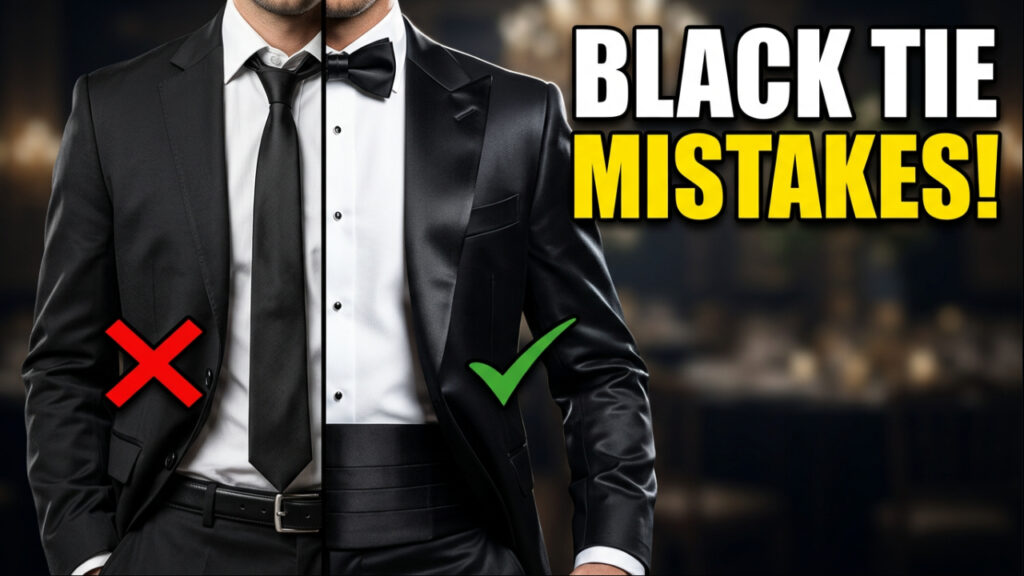
The dress code is pretty explicit: it calls for a black bow tie. It’s not really a suggestion. Yet, so many guys show up in a regular long necktie — and that’s a fundamental error.
A long tie is for business. A bow tie is essential for black tie because it leaves the front of the formal shirt visible, showing off the pleats or bib and the studs, which are the true hallmarks of evening wear.
But it’s not just about wearing a bow tie. It’s about wearing the right one. The biggest mistake here is the pre-tied, clip-on bow tie. It might seem easy, but it’s completely lifeless. A clip-on is perfectly symmetrical and flat, lacking all the character of a real, self-tied bow. A self-tied bow has a slight, organic imperfection that signals genuine style. Learning to tie one is a rite of passage — it takes about ten minutes and it’s a skill you’ll have for life.
Also, make sure the fabric of your bow tie matches the facing on your lapels. Satin lapels call for a satin bow tie. Grosgrain lapels call for grosgrain. It creates a seamless, intentional look. And honestly, at the end of the night, there’s no cooler look than a man with his bow tie untied and hanging around his collar. That’s the look of Frank Sinatra, of James Bond. You simply can’t get that classic, rakish moment with a clip-on.
According to Vogue’s menswear style guides, the self-tied bow tie remains one of the strongest markers of genuine formal dressing — a small detail that separates real elegance from costume.
Mistake #3 — The Wrong Shirt and Wrong Shoes
This is where what not to wear to a black tie event gets quietly specific. Building your look on the wrong foundation — the wrong shirt and the wrong shoes — gives away a rookie instantly. Anyone who knows menswear will spot them.
The shirt: Your standard white office shirt isn’t a formal shirt. A proper evening shirt has a few key features. First, it doesn’t have a normal button placket — it has holes for studs, which are elegant, decorative fasteners that are a clear step up from plastic buttons. The front of the shirt often has a decorative bib with pleats or a textured piqué cotton called Marcella. Second, an evening shirt needs French cuffs, which you fold back and secure with cufflinks. A regular button-cuff shirt won’t cut it. The collar should be a classic turn-down style that frames the bow tie perfectly. Wing collars, while you’ll see them, are traditionally reserved for the more formal white-tie code — and can sometimes feel a bit like prom.
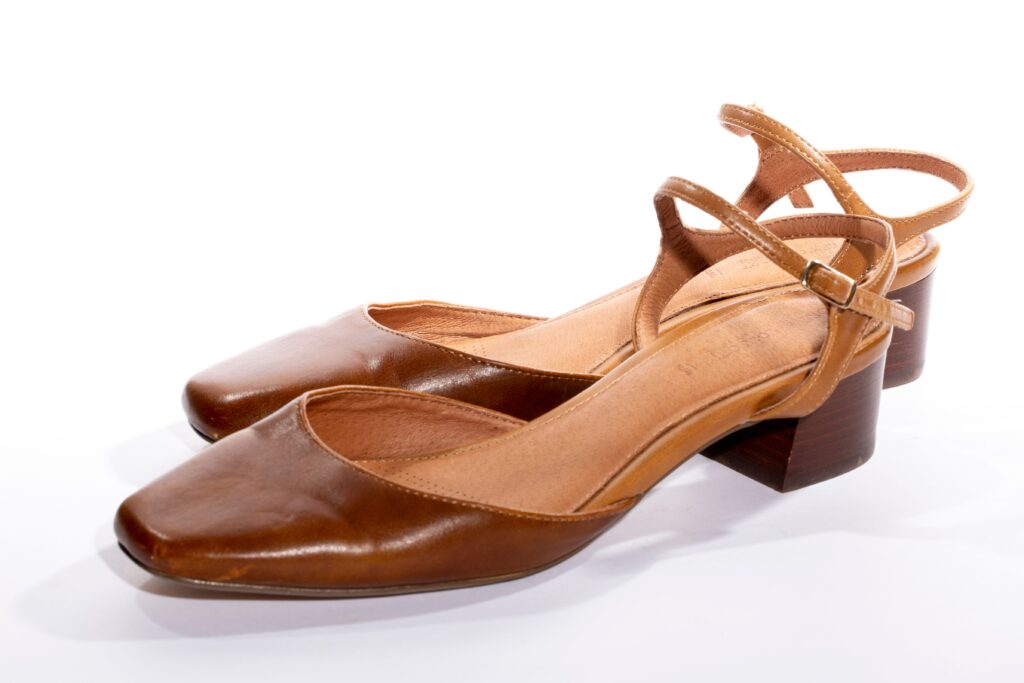
The shoes: Brown shoes? Absolutely not. Scuffed, matte leather office oxfords? Nope. Black tie calls for a level of shine that matches the satin on your tux. The gold standard is black patent leather shoes — either in a sleek oxford or a traditional opera pump. That high-gloss finish is designed for the evening. If patent isn’t your thing, the only other truly acceptable option is black calfskin oxfords polished to a mirror shine. Anything else — loafers, brogues, decorated shoes — is too casual and ruins the clean aesthetic entirely.
Mistake #4 — Belt Blunders and Waist Coverage Confusion
The fourth mistake happens right at the midsection. Two big errors: wearing a belt, and leaving your waist uncovered.
First, the golden rule — you never wear a belt with a tuxedo. Proper tuxedo trousers don’t even have belt loops. They’re designed to have a clean, unbroken line and are held up by side-adjusters or suspenders. A belt visually cuts you in half, adds bulk, and introduces a casual element that simply doesn’t belong. Some cheaper off-the-rack tuxedos now come with belt loops, but that’s a manufacturing flaw — not an invitation to wear a belt.
Second, your waist must always be covered. That little triangle of white shirt showing between your jacket button and your trousers is a major style foul. It breaks up the clean V-shape the tuxedo is designed to create.
To fix this, you have two classic options: a cummerbund or a low-cut evening waistcoat. You wear one or the other — never both. The cummerbund, a pleated silk sash, is the most traditional choice. And remember: the pleats should always face up. A waistcoat is also a great option, but it must be an evening waistcoat — low-cut in a U or V shape to show off the shirt bib. Don’t even think about using the vest from your three-piece business suit. It’s daywear, and it looks completely out of place.
Mistake #5 — Accessory Anarchy
The final mistake is what could be called accessory anarchy. With black tie, less is always more. The goal is quiet elegance. Overdoing it with accessories — or choosing the wrong ones — can make an expensive outfit look cheap.
One of the most commonly noted faux pas is wearing a wristwatch. The old-school etiquette rule says that a gentleman at a formal event shouldn’t appear concerned with the time, as checking your watch implies boredom or somewhere better to be. Traditionally, a pocket watch was the only acceptable choice. Now, in the modern era, this rule has relaxed considerably. A slim, elegant dress watch is widely considered acceptable today. Just leave the chunky smartwatch or dive watch at home.
Beyond the watch, keep everything else minimal. Your cufflinks and shirt studs should be simple and classic — think onyx, mother-of-pearl, or plain silver or gold. Avoid novelty cufflinks entirely. A pocket square, if you wear one, should be a simple white square of linen or silk with a clean, straight fold. And your socks? Black, over-the-calf, fine silk or merino wool. No patterns, no bright colors, and definitely no athletic socks.
As Harper’s Bazaar notes in its guide to black tie dressing, the hallmark of truly formal style is discipline — looking impeccable through restraint rather than through flashy distractions.
Dressing Black Tie the Right Way
So, here’s the quick breakdown: don’t wear a black suit, get the tie right, nail the shirt and shoes, cover your waist correctly, and keep the accessories simple.
Mastering black tie isn’t about following old, stuffy rules for their own sake. It’s about understanding the why behind them. It’s a sign of respect, a nod to tradition, and a way to make sure you look and feel your absolute best. Once you know these rules inside and out, you can start to have fun and bend them intelligently — think a midnight blue tux, or a velvet dinner jacket.
By avoiding these common mistakes, you won’t just save yourself from looking out of place. You’ll be adding to the glamour of the evening, showing respect for your host, and presenting yourself as someone who genuinely gets it. You’ll look like you belong there — not like you’re just visiting for the night.
FAQ Section
Frequently Asked Questions
Q1. What not to wear to a black tie event as a man?
Avoid a regular black business suit, long neckties, standard office shirts, brown shoes, belts, and chunky accessories. A proper tuxedo with the right shirt, bow tie, and shoes is always expected.
Q2. Can I wear a regular suit to a black tie event?
No. A regular suit — even a black one — is not a tuxedo. Black tie events require a dinner jacket with satin or grosgrain lapels, matching trousers with a satin stripe, and the correct formal accessories.
Q3. Is it okay to wear a pre-tied bow tie to a black tie event?
Technically it’s acceptable, but a pre-tied clip-on lacks the natural, organic character of a self-tied bow. For true black tie style, a self-tied bow tie is always the better choice.
Q4. Can I wear a belt with a tuxedo?
No. Proper tuxedo trousers don’t have belt loops for a reason. They’re designed to be worn with side-adjusters or suspenders, keeping the line clean and unbroken. Wearing a belt is a clear black tie mistake.
Q5. What shoes should I wear to a black tie event?
Black patent leather oxfords or opera pumps are the gold standard. If patent isn’t your preference, black calfskin oxfords polished to a mirror shine are the only other acceptable option. Brown shoes, brogues, or loafers are never appropriate.