Is Microneedling Worth It? The Science Most Guides Skip
If you have been scrolling past before-and-after photos and clinic ads long enough, you have probably asked the same question: is microneedling worth it, or is this just another expensive trend the beauty industry is selling hard? The honest answer is that both things exist at once — real, measurable science on one side, and dangerous marketing shortcuts on the other. This guide breaks down exactly what happens to your skin during the procedure, where professional treatment separates sharply from DIY devices, and which skin concerns the evidence actually supports. No filler, no cheerleading.
What Microneedling Actually Does to Your Skin
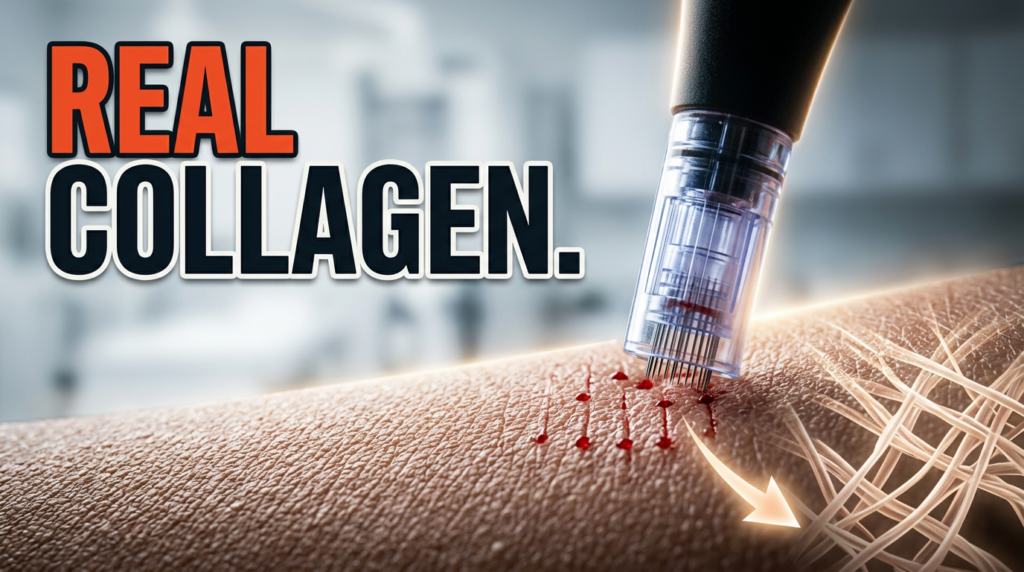
Microneedling works through a process called Collagen Induction Therapy. A professional uses a motorized device with sterile, hair-thin needles to create thousands of tiny, controlled punctures in the skin. Those micro-injuries sound counterproductive. However, they are the entire mechanism.
Your skin registers those punctures as wounds and triggers its full repair response. It floods the area with growth factors and signals the cells to produce brand-new collagen and elastin — the two structural proteins responsible for firmness, bounce, and overall skin density. As the body ages, natural collagen production slows significantly. Microneedling essentially tells the body to restart that process in a targeted zone.
The Clinical Evidence Behind the Results
The science here is not vague. Clinical studies consistently show that a series of microneedling sessions produces measurable improvement in atrophic acne scars, fine lines, and skin texture. Some research has specifically documented a dramatic increase in both collagen and elastin levels after completing a treatment course. These are quantifiable biological outcomes — not Instagram filters.
Where the “Scam” Actually Lives
The science behind microneedling is solid. The scam is not the treatment itself — it is the marketing that convinces people a $20 at-home roller delivers the same outcome as a professional procedure. It does not. The difference comes down to needle mechanics, sterility, and depth.
Professional devices use motorized pens with single-use, sterile cartridges. These stamp the skin vertically, creating clean, precise micro-channels. At-home derma rollers work differently. The needles sit on a wheel that rolls across the face, which means the motion creates angled, arc-shaped tears rather than clean punctures — closer to a pizza cutter dragging across skin than a controlled stamp.
The Three Risks Nobody Mentions on Social Media
Infection is the most serious risk. The skin exists as a barrier for a reason. Poking thousands of open channels into it and then applying a tool that cannot be properly sterilized at home creates a direct pathway for bacteria. Reusing a roller — even after rinsing it — can drive bacteria deep into fresh micro-channels, causing infections, breakouts, and, in worst cases, permanent damage.
Needle depth matters enormously for real results. Professional treatments targeting acne scars typically use needles between 1.5 and 2.5 millimeters to reach the dermis, which is where collagen actually forms. Most at-home rollers use needles between 0.25 and 0.5 millimeters — short enough to improve serum absorption slightly, but nowhere near deep enough to trigger meaningful collagen remodeling.
Hyperpigmentation risk increases sharply when untrained users attempt longer needles at home, particularly on deeper skin tones. Without proper technique and depth control, the inflammatory response can trigger post-inflammatory hyperpigmentation rather than improvement.
Professional vs. At-Home: A Real Comparison
Understanding the difference between these two options removes a lot of confusion about why results vary so wildly online.
Professional in-office microneedling targets correction. It addresses depressed acne scars — specifically rolling and boxcar types — deeper wrinkles, and significant texture problems. A trained provider customizes needle depth across different facial zones. Results build progressively across a treatment series, typically three to six sessions spaced four to six weeks apart. The trade-off is cost, usually between $200 and $700 per session depending on location, and a few days of redness and sensitivity afterward.
At-Home Devices: What They Can and Cannot Do
At-home microneedling with a short-needle stamping device — not a roller — does have a limited, legitimate use case. With needles at 0.25 millimeters, the main benefit is enhanced absorption of active skincare ingredients like vitamin C serums or hyaluronic acid. Some users also notice a temporary plumping effect and a brief improvement in skin radiance.
However, at-home devices cannot restructure deep acne scars. They cannot address significant wrinkle depth. They will not deliver the collagen remodeling that requires dermis-level needle penetration. Treating them as equivalent to professional treatment is where expectations — and sometimes skin — break down.
Think of the distinction this way: professional microneedling works like a structured training program that physically rebuilds tissue over months. At-home rolling is closer to light daily stretching — useful as a supplement, not a replacement.
Who Microneedling Is Actually Right For
The treatment works best for a specific set of concerns, and knowing whether yours qualifies saves both money and disappointment.
Professional microneedling makes strong sense if your primary concern is atrophic acne scarring. The evidence for improving rolling and boxcar scar depth is particularly strong, with multiple clinical studies showing significant measurable improvement. It also works well for gradual fine line reduction and skin texture refinement — not a dramatic facelift, but a real, progressive improvement in firmness and surface quality over several months.
The Skin of Color Advantage
One important clinical distinction: because microneedling does not rely on heat the way most laser treatments do, it carries a lower risk of post-inflammatory hyperpigmentation on deeper skin tones. Providers with experience in treating Fitzpatrick skin types IV through VI regularly use it as a preferred alternative to ablative laser resurfacing. As Elle’s in-depth breakdown of skin-of-color treatment options confirms, microneedling’s thermal-neutral mechanism makes it one of the more inclusive options in professional skin correction.
There are also cases where microneedling is the wrong choice. Active acne, rosacea, eczema, or any open skin infection all disqualify someone from treatment. Puncturing active breakouts spreads bacteria and inflammation, making the underlying condition worse rather than better.
RF Microneedling: The Advanced Version
RF microneedling adds radiofrequency heat energy directly through the needle tips during the procedure. This combination boosts skin tightening and collagen production beyond what standard microneedling achieves alone. It addresses deeper scars and early skin laxity more aggressively. The cost is higher, and the downtime is slightly longer, but for the right candidate, the results justify the difference.
The Honest Takeaway on Whether It’s Worth It
Microneedling is not a miracle, and it is not a scam. It is a tool — one with genuine clinical backing — that delivers real outcomes when applied correctly by a skilled provider to the right skin concerns.
The version that damages skin, disappoints users, and fuels the skepticism is the at-home roller marketed as a professional-grade solution. That gap between what the science supports and what cheap devices promise is where most of the confusion lives.
Before booking any appointment, ask the right questions: What device does the clinic use? What needle depth is appropriate for your specific concern? How many sessions does a realistic treatment plan involve? A provider who answers those questions clearly and honestly is worth the investment. One who promises dramatic results after a single session probably is not.
Start with a consultation, bring a list of your specific skin concerns, and set a multi-session timeline. That approach gets results. Everything else is noise.
FAQ — Is Microneedling Worth It
Q1: Is microneedling worth it for acne scars specifically?
Yes — for atrophic acne scars, particularly rolling and boxcar types, microneedling has among the strongest clinical evidence of any non-laser treatment. Multiple studies document measurable improvement in scar depth and skin texture after a series of sessions. Icepick scars respond less predictably and may require additional or alternative treatments.
Q2: How many microneedling sessions does it take to see real results?
Most people require three to six sessions spaced four to six weeks apart to see significant improvement. Collagen takes time to rebuild — visible changes typically emerge gradually over two to three months following the first session, not immediately after. Expecting results after one treatment leads to disappointment.
Q3: What is the difference between microneedling and RF microneedling?
Standard microneedling creates micro-channels to stimulate collagen mechanically. RF microneedling adds radiofrequency heat energy delivered through the needle tips, which boosts skin tightening and deeper collagen remodeling. RF microneedling is more effective for deeper scars and mild skin laxity, but it also costs more and involves slightly more downtime.
Q4: Does microneedling hurt?
Most clinics apply a topical numbing cream thirty to forty-five minutes before the procedure. With numbing, most patients describe the sensation as pressure or mild prickling rather than sharp pain. Sensitive areas — around the forehead and nose — tend to feel more intense. Without numbing, the discomfort is significant.
Q5: Is at-home microneedling with a derma roller safe?
Short-needle stamping devices (0.25mm) used with obsessive hygiene carry limited risk and offer modest benefits like improved serum absorption. Rolling-wheel derma rollers are a different category — the dragging motion creates skin tears rather than clean punctures, and multi-use devices cannot achieve clinical sterility, creating real infection risk.