Bondage Lingerie: The Engineering and Psychology Behind the Look
Most people see bondage lingerie and immediately focus on the aesthetic — the straps, the buckles, the deliberate tension between coverage and exposure. But that reaction misses the more interesting story. This style sits at a precise crossroads between fashion design, structural engineering, and human psychology. Understanding how it actually works — and what it does to the person wearing it — changes the way you see the entire category. This guide breaks all of that down, from the historical roots of structured garments to the modern design decisions that determine whether a harness feels empowering or just uncomfortable.
The Structural History Behind Bondage-Inspired Fashion
Long before harness-style lingerie appeared on runways, the corset was already solving a similar design problem. From the 16th century onward, the corset became a dominant force in European fashion — not simply to cinch the waist, but to build a specific, idealized silhouette. Designers used boning, originally made from whalebone or reed and later replaced by steel, slotted into vertical channels within strong, non-stretch fabrics like cotton coutil. The result was essentially architecture for the human body.
From Rigid Boning to Modern Straps
Lacing the corset tight allowed for a precise, adjustable fit that could dramatically alter posture and shape. Comfort, in the modern sense, was not the priority. Control was. That language of control — structure, adjustment, visual tension — forms the direct foundation of today’s bondage lingerie aesthetic.
Fast-forward to contemporary harness and strap designs, and the same core engineering principles remain. However, the vocabulary has shifted. Straps, buckles, and lace-up panels now replace rigid boning, and the goal is almost always aesthetic rather than physical confinement. As Vogue’s editorial history of corsetry and structured fashion explores, the line between historical shaping garments and modern provocative lingerie is far thinner than most people expect.
The Engineering That Makes Bondage Lingerie Actually Work
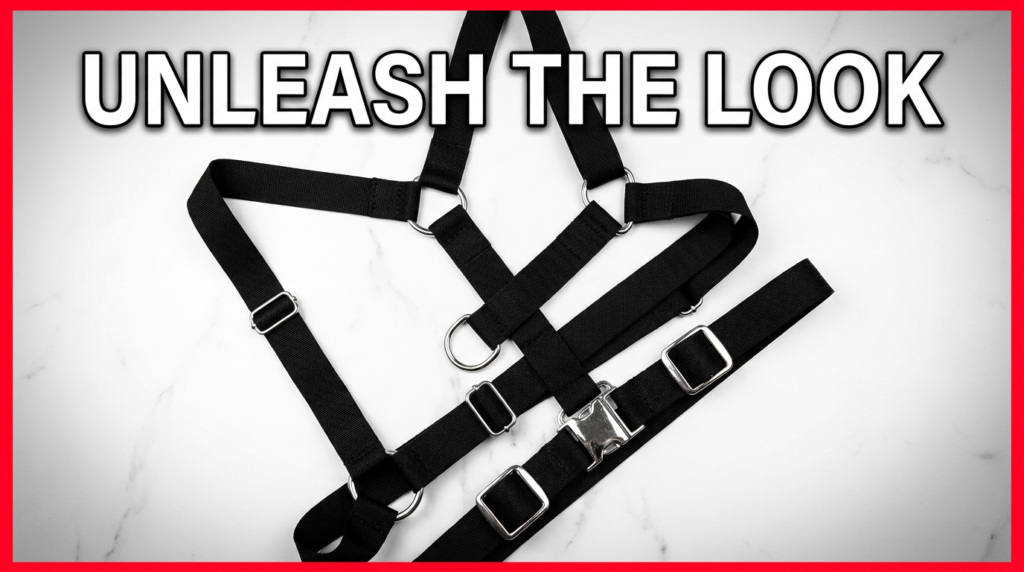
The visual drama of straps and harnesses only lands when the fit is precise. This is where the real design challenge lives. High-quality structured lingerie includes multiple points of adjustment — sliding buckles, lace-up sections, and adjustable shoulder and body straps — because the garment must sit completely flush against the skin to create clean, intentional lines.
Why Fit Defines the Entire Experience
When the fit works, the garment frames the body deliberately. Every strap sits where the designer intended. The geometry reads clearly. When the fit fails, the same piece becomes a mess of digging hardware, awkward bunching, and straps that slip constantly. That gap between empowered and uncomfortable comes down almost entirely to adjustability and construction quality.
The details that create the visual impact are the same details that determine wearability. Soft-finished edges prevent chafing. Smooth hardware prevents scratching. Multiple sizing points on buckles allow the wearer to tune the fit across different areas of the body independently. In poorly made versions, these details disappear — and the garment works against the body rather than with it.
The Psychology of Wearing Bondage Lingerie
The structural engineering explains how the garment is built. The psychological engineering explains why wearing it feels different from putting on a standard bodysuit. A useful framework here is enclothed cognition — the idea that clothing carries symbolic meaning that the wearer genuinely internalizes.
A well-referenced 2012 study found that participants who wore a coat they believed belonged to a doctor performed better on attention-based tasks than those wearing the same coat but told it belonged to a painter. The specific study has faced replication challenges, but the core principle — that the symbolic weight of clothing influences how the wearer thinks and feels — holds up across a significant body of research.
How Structured Garments Change Self-Perception
Bondage-inspired pieces apply this principle through visual tension. Thin straps carve geometric lines across the body. Harnesses define the waist and shoulders. Open panels create stark contrast between skin and fabric. These visual cues change how the body reads — to others, and to the wearer looking in a mirror.
The materials reinforce this psychological effect. Lace delivers a softer, more romantic register. Faux leather and structured elastics shift the tone toward something harder and more deliberately rebellious. Latex, with its glossy, second-skin finish, comes with its own demanding care requirements — and that high-maintenance quality adds psychological weight. Choosing to wear it becomes an intentional act.
The physical sensation also feeds back into the mind. The slight pressure of straps, the awareness of hardware, the subtle change in posture — these constant physical signals reinforce the symbolic meaning of the garment. The result is that wearing structured bondage lingerie doesn’t just change how you look. It changes how you carry yourself.

How Bondage Aesthetics Moved Into Mainstream Fashion
One of the most significant shifts in recent fashion history is the journey of bondage-inspired aesthetics from niche subcultures into mainstream visibility. What started in fetish communities eventually reached high-fashion runways, and then filtered into everyday streetwear.
Vivienne Westwood, Alexander McQueen, and the Runway Shift
Designers like Vivienne Westwood and Alexander McQueen were the key early architects of this transition. Both used the visual vocabulary of restraint — straps, harnesses, structured bondage silhouettes — and recontextualized them as high fashion statements. Today, corset tops worn as outerwear and harnesses layered over t-shirts appear across every price point, from luxury boutiques to fast-fashion retailers.
This mainstream adoption carries consequences worth understanding. On one hand, wider accessibility removes stigma and allows people to engage with the aesthetic without entering subculture spaces. On the other hand, the original cultural context gets diluted. The BDSM community — where consent, safety, and clear communication form the foundation of every practice — created the visual language that fashion now borrows freely. Harper’s Bazaar’s coverage of bondage-inspired fashion’s runway evolution notes this tension directly: the style transfers easily; the ethics behind it do not transfer automatically.
A harness as fashion is not a signal of consent. The visual language and the cultural meaning are separate. Understanding that distinction matters both for wearing the style and for interpreting it on others.
How to Explore Bondage Lingerie Without Getting It Wrong
The smartest entry point into this style is not the most extreme piece available. It starts with understanding the engineering and prioritizing quality over intensity.
Start With One Statement Piece
Begin with a single, well-made item — a corset-style belt, a top with lace-up detailing, or a simple harness bodysuit. One strong piece makes a clear statement without requiring a full commitment to the aesthetic.
Prioritize Adjustability Above Everything
Look specifically for garments with buckles, sliders, or lacing systems that allow independent adjustment across different body zones. A static garment with no adjustment points forces the body into a fixed shape. A well-engineered piece fits around the body as it actually is.
Inspect the Construction Details Carefully
Check whether edges are soft-finished or sharp. Test whether hardware is smooth or likely to scratch. Look at how straps are attached at their anchor points — reinforced stitching and solid D-rings indicate quality; single-stitch connections and lightweight plastic hardware indicate the opposite. These details determine whether the piece stays wearable beyond the first hour.
Always Test Movement Before Committing
Sit down. Walk across the room. Bend forward. If the garment restricts breathing, digs in at the hips, or slides out of position within the first few minutes, it will be significantly worse after an hour of wear. Quality structured lingerie moves with the body. Poor construction fights against it.
Finally, respect the material requirements. Delicate lace and high-maintenance latex both require specific care. Treating these pieces as investments — in both cost and attention — extends their lifespan considerably.
The Future of Structured Lingerie Design
The next generation of bondage-inspired fashion is solving the friction between visual intensity and genuine comfort. Higher-end and technical brands have begun applying innovations like thermal-molded underwires, laser-cut edges that eliminate seam pressure entirely, and 3D-knitted structures that sculpt the body without any rigid internal framework.
Some designers now approach bra and harness construction using load-distribution principles similar to those in structural engineering — specifically, distributing weight across the full torso rather than concentrating it on shoulder straps. The visual result can remain just as dramatic. The physical experience becomes substantially more comfortable.
The direction is clear: provocative fashion is moving toward adaptive fit rather than rigid costuming. The look stays. The discomfort, increasingly, does not have to.

What Bondage Lingerie Actually Says About Fashion
Ultimately, bondage lingerie works because it takes the language of structure and restraint and re-engineers it into a tool for confidence and identity. The most compelling versions are not the most extreme. They are the most precisely built. The straps sit exactly where they should. The hardware lies flat. The geometry reads cleanly. When all of that comes together, the garment does something a simple bodysuit cannot — it changes how the wearer occupies space, physically and psychologically.
The question worth sitting with is this: when a piece of clothing makes you feel genuinely powerful, is that because of the way it looks — or because of what it shifts inside you? With bondage-inspired fashion, the honest answer is almost always both.
FAQ — Bondage Lingerie
Q1: What exactly is bondage lingerie?
A: Bondage lingerie refers to intimate apparel that borrows the visual aesthetic of BDSM — including harnesses, straps, buckles, and structured frameworks — without necessarily functioning as restraint equipment. The focus is on the look and psychological effect rather than physical confinement.
Q2: Is bondage lingerie meant to be worn only in private?
A: Not necessarily. Many bondage-inspired pieces — corset belts, harness tops, lace-up bodysuits — appear regularly in mainstream fashion as outerwear or layering pieces. The context and styling determine whether a piece reads as intimate apparel or a fashion statement.
Q3: How is bondage lingerie different from regular lingerie?
A: Standard lingerie focuses primarily on coverage, support, or decoration. Bondage lingerie uses structured straps, geometric cutouts, hardware, and frameworks to create visible tension and a deliberate aesthetic effect. The engineering is more complex, and adjustability plays a much larger role.
Q4: What materials are most common in bondage-inspired pieces?
A: The most common materials include faux leather, structured elastics, nylon webbing, neoprene, lace, and latex. Each material delivers a different visual register — faux leather reads harder and more rebellious, while lace softens the aesthetic considerably.
Q5: How do I know if a bondage lingerie piece fits correctly?
A: Straps should lie flat against the skin without digging in or sliding. Hardware should rest smoothly without pressing into the body. You should be able to sit, walk, and breathe without restriction. If any adjustment point has reached its limit and the fit still feels wrong, the sizing is off.
Q6: Are there body types that bondage lingerie suits better?
A: No specific body type is required. The key variable is fit, not shape. Because quality pieces include multiple adjustment points, they can be tuned to suit a wide range of body proportions. What matters most is selecting the correct size range and using the adjustability the garment provides.
Q7: What is the connection between bondage lingerie and BDSM?
A: Bondage lingerie borrows the visual language — straps, restraint-adjacent hardware, structured silhouettes — from BDSM aesthetics. However, wearing the style carries no inherent behavioral or social signal. The fashion and the practice are distinct, and assuming otherwise misreads both.
Q8: How should bondage lingerie be cared for?
A: Care depends entirely on the material. Faux leather and structured elastics generally require hand washing and air drying flat. Latex needs specialist latex cleaner, complete avoidance of oil-based products, and storage away from direct light. Lace pieces are typically best handled with a mesh laundry bag on a delicate cycle. Always check the care label specific to each garment.