The Best Blush for Pale Skin: A Foolproof Guide to a Natural, Healthy Flush
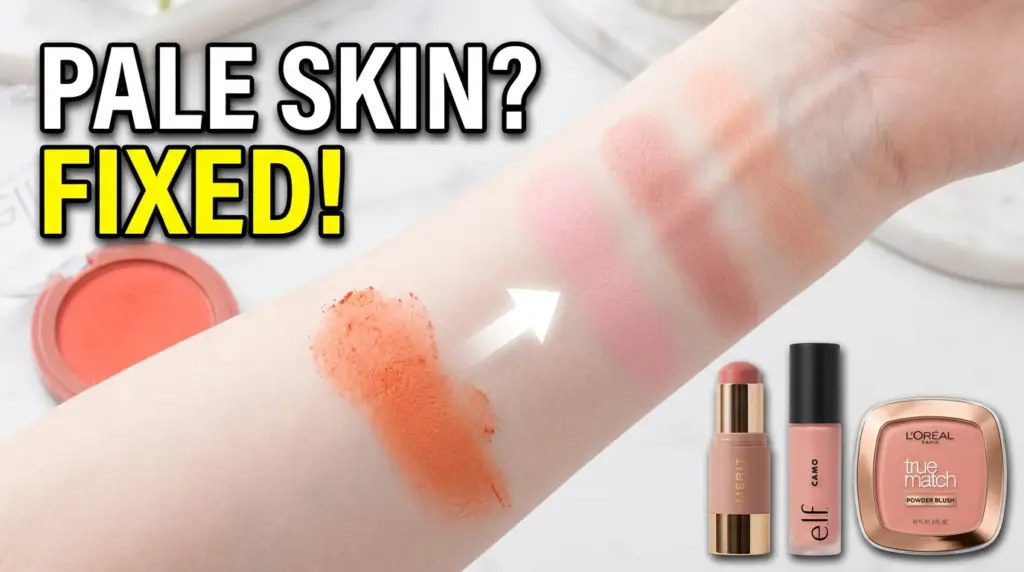
Finding the right blush when you have pale skin can feel like a truly impossible task. You see a gorgeous shade in the pan, you get all excited, you put it on — and it’s just… wrong. It’s way too bright, it’s muddy, or worst of all, it turns into a weird, patchy orange. It’s one of the biggest frustrations for those of us with fair complexions.
So many viral products that look amazing on everyone else just don’t work for us. But there’s actually a real science to finding your perfect, natural-looking flush. A reason why so many shades miss the mark — and a foolproof way to get it right every single time.
This guide breaks it all down. We’re going to dive into why so many blushes fail on pale skin, and cover everything from undertones to formulas to application. By the end, you won’t just have a list of products to trust — you’ll have the knowledge to walk into any store and confidently pick the right shade for you. “Best Blush for Pale Skin“
Why Blush Looks Wrong on Pale Skin
So, why is this so hard? The issue isn’t just about being “pale.” It really comes down to two key things: contrast and undertone.
Contrast first. Pale skin is basically a low-contrast canvas. Since there isn’t a ton of deep, natural pigment in the skin, any color you add shows up instantly and dramatically. A shade that looks like a “soft pink” in the compact can suddenly become a neon stripe on a fair cheek with just one tap of your brush. The color itself isn’t the problem — it’s the intensity.
The whole point of blush isn’t just to add color. Creating the illusion of life and health — a realistic flush — is really the goal. On pale skin, that natural flush is incredibly subtle. That’s why you always hear the advice to use lighter, more muted shades. We’re aiming to enhance, not completely overpower our faces.
Now for the most important part: undertones. This is the piece of the puzzle that most people miss, and it’s the secret to everything. Your skin isn’t just “fair” — it has a subtle hue just beneath the surface that’s either cool, warm, or neutral. This undertone completely dictates how colors will interact with your skin.
According to Byrdie’s guide to skin undertones, understanding whether you’re cool, warm, or neutral is one of the most impactful things you can do for your entire makeup routine — not just blush.
How to Find Your Undertone: Three Simple Tests
Don’t worry — there are a few simple tests you can do right now.
The Vein Test
Take a look at the veins on the inside of your wrist in natural daylight. If they look mostly blue or purple, you likely have a cool undertone. If they appear more green or olive, you probably have a warm undertone.
The Jewelry Test
Think about which metal makes your skin just sing. If silver, platinum, or rose gold jewelry gives your skin a vibrant, healthy look, you’re probably cool-toned. Gold is what makes warm-toned skin glow beautifully. And if you can pull off both without even thinking about it, you’re in the lucky neutral camp.
The White Fabric Test
Grab a pure white t-shirt and something off-white or cream. Hold each one up to your face — with no makeup on — in natural light. Pure white making your skin look rosy and bright while cream washes you out? That’s a cool undertone. On the flip side, if pure white dulls your complexion but cream gives you a healthy glow, you’re warm. Looking equally fine in both means you’re probably neutral.
Once you know your undertone, the world of blush just opens up. You’re not guessing anymore — you’re making a smart choice based on actual color theory.
The Best Blush for Pale Skin: Your Shade Cheat Sheet
Now that you’ve figured out your undertone, here’s your go-to guide. These are the exact shade families that are pretty much guaranteed to flatter pale skin, broken down by undertone.
Cool Undertones: Pink, Mauve, and Dusty Rose
If your skin has a natural pink, red, or blueish hint to it, you want blushes that share those same cool undertones. Your new best friends are shades like baby pink, soft rose, dusty mauves, and even delicate lavenders or plums. These colors mimic the way your skin would naturally flush in the cold.
A sheer baby pink can look so incredibly natural and youthful. A dusty, muted mauve is sophisticated and practically foolproof — the slight grayness keeps it from ever looking too bright.
Some great ones to check out:
- L’Oréal True Match Blush in Baby Blossom — a perfect pastel pink
- Merit Flush Balm in Cheeky — a great cool pink for that dewy, flushed-from-within look
- Persona Superblush in Carmel — a pastel purple that can actually neutralize sallowness and look surprisingly natural on very fair, cool skin
Don’t be afraid of purplish tones. On very cool, pale skin, they can read as completely natural.
Warm Undertones: Peach, Coral, and Apricot
If your skin has more of a golden, peachy, or yellow hue, lean into blushes that share that same warmth. Think light peaches, soft corals, and apricots. These shades blend into warm-toned pale skin beautifully and give a sun-kissed, healthy look.
A common mistake for warm-toned pale skin is going too brown (which looks muddy) or too pink (which clashes with your natural golden tones). A light peach is one of the safest and most flattering options out there.
Some great picks:
- Tower 28 BeachPlease Cream Blush in Rush Hour — a gorgeous sun-kissed warmth
- Makeup by Mario Soft Pop Plumping Cream Blush in Rose Crush — a lovely warm rosy shade
Neutral Undertones: The Best of Both Worlds
Neutral-toned pale skin has the most flexibility. You can pull off shades from both categories — soft roses look beautiful, and so do muted peaches. The key is balance: any shade that isn’t extremely cool or extremely warm will likely be your sweet spot.
A universally flattering option is often a neutral pink or a dusty rose. A great example is the Violette_FR Bisou Blush in Louise, described as a perfect neutral pink that works all year round.
Cream vs. Powder vs. Liquid: Which Formula Is Right for You?
Picking the right shade is only half the battle. The formula you choose has a huge impact on the final look.
Powder Blush
Powder blush is the classic. It’s usually best for normal to oily skin and gives a soft, diffused finish. For pale skin, the key is finding a finely milled powder. A chalky, thick powder will just sit on top of your skin and look obvious. Look for formulas described as “velvety” or “baked” — like the famous Milani Baked Blushes, which have a luminosity that keeps them from looking flat.
Cream Blush
Cream blush has exploded in popularity for good reason. It’s amazing for dry or mature skin and is the secret to that “glowing from within” look. Creams melt into the skin, giving you a dewy, skin-like finish that looks incredibly natural. Because you usually apply them with your fingers or a sponge, you can build up the color slowly and sheerly — which is perfect for pale skin. The Merit Flush Balm and Westman Atelier Baby Cheeks sticks are perfect examples of this beautiful, blendable formula.
Liquid Blush
Liquid blushes, or stains, are the most pigmented of the bunch. For pale skin, a single tiny dot can often be enough for both cheeks. They’re fantastic for longevity and can give a beautiful, watercolor-like flush — but you have to work fast.
If you’re a beginner with pale skin, start with a cream or a buildable powder. If you do want to try liquids (like the popular e.l.f. Camo Liquid Blush), put a tiny dot on the back of your hand first, pick it up with a brush or sponge, and then apply it. This gives you way more control.
As Vogue’s beauty editors note, the formula matters just as much as the color — especially for fair skin tones where any misstep reads immediately.
Application Tips That Change Everything
You can have the perfect shade and the perfect formula, but if you put it on wrong, it can still look off. For pale skin, application is truly everything.
Start with Less Product
Rule number one: less is more. Always start with the absolute tiniest amount of product. One gentle tap of your brush into a powder, or one small dot of cream. You can always add more — it’s so much harder to take blush away once it’s on your face.
Get the Placement Right
Placement matters. The old advice to smile and pop the blush on the apples of your cheeks? It can create two bright circles that actually drag your face down. For a more modern, lifted look, apply blush a little higher on your cheekbones — starting from about the center of your eye — and blend it upward and outward toward your temples. This draws the eye up and lifts your whole face.
For a youthful, sun-kissed effect, take whatever is left on your brush and lightly dust it across the bridge of your nose.
Blend Until It Disappears
And finally: blend, blend, then blend some more. The goal is for no one to see where your blush starts or ends. It should seamlessly melt into your skin. Take a clean, fluffy brush and diffuse the edges until it looks like a soft, ethereal halo of color.
Putting It All Together
Here’s the foolproof method, simplified:
- Figure out your undertone — cool, warm, or neutral
- Pick from the right shade family — cool pinks and mauves for cool tones, soft peaches and corals for warm tones, rosy pinks for neutrals
- Choose a formula that suits your skin type — a silky powder for a soft-focus look, or a cream for a dewy glow
- Apply with a light hand, place it high on the cheekbones, and blend until it looks like it’s part of your skin
The secret to the best blush for pale skin isn’t one single magic product. It’s a method. It’s about understanding your own skin and working with it, not against it. When you do that, blush stops being scary and starts being what it’s supposed to be: the quickest way to look alive, healthy, and absolutely radiant.
FAQ
Q: What is the best blush for pale skin that doesn’t look too bright? A: The best blush for pale skin tends to be muted, sheer shades — think dusty mauve, soft baby pink, or light peach. Heavily pigmented or neon-toned blushes show up dramatically on fair skin, so reach for buildable formulas and apply with a very light hand.
Q: Should pale skin use warm or cool blush? A: It depends on your undertone, not just your skin depth. Cool-toned pale skin looks best with pink, rose, and mauve blushes. Warm-toned pale skin is more flattering with peach, coral, and apricot shades. If you’re neutral, you can wear both.
Q: Why does blush look orange on my pale skin? A: This usually means there’s a mismatch between your undertone and the blush’s undertone. If you have cool-toned pale skin and you’re using a warm peachy or bronze blush, it’ll read as orange. Stick to blushes that share your skin’s undertone family.
Q: Is cream or powder blush better for pale skin? A: Both can work beautifully, but cream blush is often more beginner-friendly for pale skin because it’s easier to build up slowly and sheerly. Powder works great too — just look for finely milled, non-chalky formulas that don’t sit heavily on the skin.
Q: What’s the best drugstore blush for pale skin? A: Great drugstore picks include the L’Oréal True Match Blush in Baby Blossom (a pastel pink perfect for cool tones), the Milani Baked Blushes (luminous and buildable), and the e.l.f. Camo Liquid Blush (highly pigmented, so use sparingly).