I Ditched Foundation for a Mineral Sunscreen Tint—Here’s What Actually Happened
I used to think that for my skin to look this even, this clear, and this healthy, I needed some kind of full-coverage, heavy-duty foundation. Turns out, I was completely wrong. For the past month, the only thing I’ve been wearing on my skin every single day is a mineral sunscreen tint. It has completely changed my relationship with my skin and my makeup bag. Here’s exactly how I ditched my foundation for good, and why you might be able to as well.
The Foundation Rut: My “Before” Story
Let’s be real for a second. The daily ritual of putting on foundation is a total love-hate thing. For years, it was my security blanket. I wouldn’t even pop out to the grocery store without a little something to cover up my redness, a few old acne marks, and just that general unevenness that comes with being human. I was convinced a flawless complexion came out of a bottle. But honestly, I was getting tired of it. Tired of the time it took every morning. Tired of worrying if it looked cakey by 3 PM. And tired of that feeling that my skin just couldn’t breathe.
Then there was the bigger issue: sun protection. I knew I was supposed to wear sunscreen every day, but layering a thick SPF under foundation felt heavy, greasy, and just gross. Sometimes I’d rely on the sad little SPF 15 in my foundation, knowing deep down it wasn’t really cutting it. As dermatologists point out, makeup with SPF isn’t a substitute for actual sunscreen, mainly because people don’t apply nearly enough of it, or apply it evenly enough, to get the protection stated on the label. I felt trapped. To get the even skin tone I wanted, I had to wear foundation. But to properly protect my skin, I needed a sunscreen that didn’t make my foundation feel like a mask. I was chasing that “no-makeup makeup” look, but my routine was anything but minimal. There had to be a better way.
Introducing the Skincare-Sunscreen Hybrid
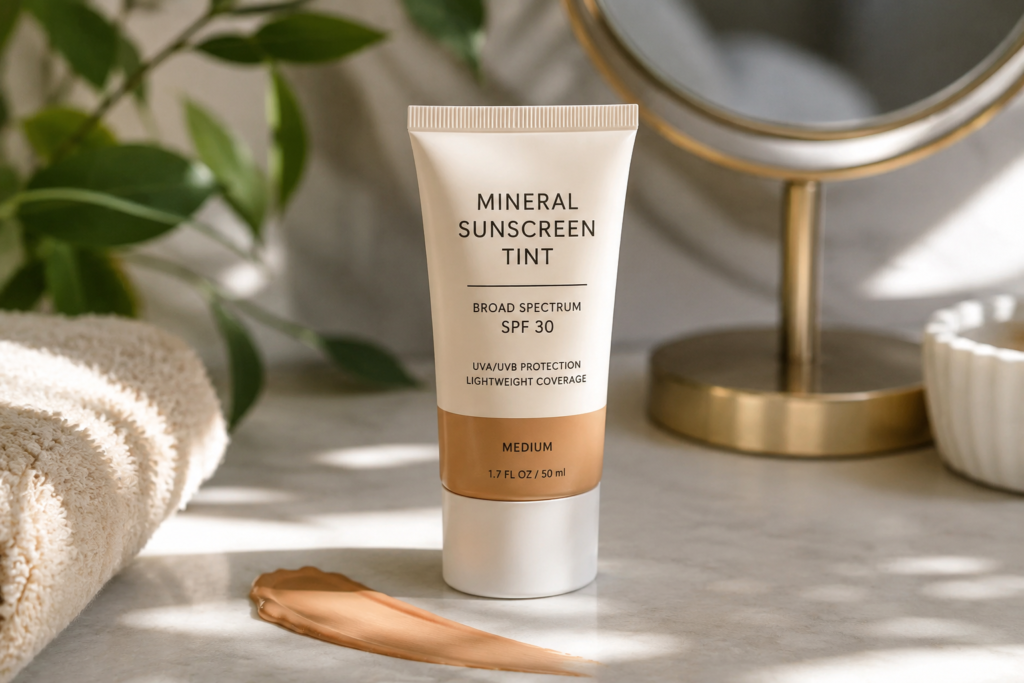
My search for a better way led me down a deep rabbit hole of skincare, and I came out with a tinted mineral sunscreen. Now, I know what you might be thinking: isn’t that just a greasy, sheer product that doesn’t really cover anything? That’s what I thought too. But the formulas available today are on a completely different level, and the science behind a good mineral sunscreen tint is what makes it work so well.
First, the sun protection part. A true mineral sunscreen uses physical blockers, Zinc Oxide and Titanium Dioxide. These are minerals that sit on top of your skin and create a physical shield to reflect and scatter harmful UV rays. Zinc Oxide is especially great because it offers broad-spectrum protection against both UVA rays, the aging ones, and UVB rays, the burning ones. It’s also known for being gentle, which is perfect if you have sensitive or acne-prone skin.
But here’s the secret sauce, the part that makes a mineral sunscreen tint a real foundation replacement: Iron Oxides. These are natural pigments that give the sunscreen its tint. But they do so much more than just add color. Studies have shown that iron oxides help protect your skin from high-energy visible light… Research from the National Institutes of Health shows tinted sunscreens with iron oxides significantly reduce melasma relapse compared to non-tinted formulas.
So while a standard non-tinted sunscreen offers some protection from visible light, a mineral sunscreen tint with iron oxides gives you enhanced protection. It’s a multitasker that simplifies your routine by combining sun protection, skincare benefits, and coverage all in one step. You’re not just covering up imperfections, you’re actively protecting your skin from some of the things that cause them in the first place.
Seeing Is Believing: The Demonstration
Okay, talk is cheap. On one side of my face, I have nothing. Just clean, moisturized skin. There’s some mild redness around my nose, a little uneven tone on my cheeks, and my pores are doing their thing. This is the canvas that used to make me reach for foundation every single morning.
Now, for the magic. To get the full SPF protection listed on the bottle, the rule of thumb is the “Two-Finger Rule.” You apply two full-length strips of sunscreen to your index and middle fingers to cover your face and neck. A lot of people make the mistake of dabbing on a tinted product like it’s concealer, but that leaves you seriously under-protected. So go in with the full amount.
The texture of a good mineral sunscreen tint feels like a lightweight serum, not some thick, pasty sunscreen from back in the day. As you blend it in, the first thing you notice is there’s no white cast. Iron oxide pigments blend seamlessly into the skin, and according to Byrdie, brands have significantly expanded their shade ranges in recent years so more people can find a good match.
The redness around the nose is basically gone. The overall tone of the skin looks so much more even and balanced. It doesn’t erase freckles or make you look like you’re wearing a mask; it just looks like your skin, but perfected. It gives an amazing, healthy glow without being greasy. The finish is a natural, satin finish. It blurs pores without clogging them. Many of these formulas are non-comedogenic and even include ingredients like niacinamide or hyaluronic acid to help hydrate and soothe skin all day.
Why a Mineral Sunscreen Tint Beats Foundation
So why has this one product made expensive foundations feel totally obsolete? It comes down to what they’re designed to do. Foundation is designed to cover. Its job is to sit on your skin and hide what’s underneath. A mineral sunscreen tint is designed to perfect and protect. It works with your skin, not against it.
Since making the switch a month ago, the biggest change has been in hyperpigmentation. Stubborn dark spots from old breakouts that once needed concealer have actually started to fade, because a sunscreen with iron oxides offers better protection against the visible light that can contribute to those spots. It’s not just covering the problem anymore, it’s helping skin heal. In fact, many dermatologists now recommend these types of formulas for people struggling with melasma.
On top of that, skin just feels healthier. It can breathe. At the end of the day, when you wash your face, it doesn’t feel irritated or congested, just soft. Traditional foundations can be heavy, but these new-gen sunscreens are so lightweight they often feel like nothing at all. You may notice fewer random breakouts too, perhaps because zinc oxide helps calm the skin, or because your skin feels happier without a thick layer of makeup. Either way, it’s a win.
It Plays Well With Other Makeup
Now for the ultimate test: can you still wear your other makeup? Yes, absolutely. In fact, a mineral sunscreen tint creates the most beautiful, smooth canvas. A touch of cream blush pressed onto the cheeks blends out beautifully, no pilling, no patchiness. The sunscreen sets down perfectly underneath.
A tiny bit of concealer works fine in the inner corners of the eyes where dark circles tend to show. The key is to always layer on top, never mix anything into your sunscreen, since that can dilute the SPF and mess with your protection. A little brow gel, a swipe of mascara, and that’s a complete five-minute face. It looks fresh, natural, and put-together, while a high SPF shields your skin from UV rays and provides extra defense against visible light.
So there you have it. Officially breaking up with foundation made skin look better, feel better, and stay more protected than ever before. The goal shouldn’t be to cover skin, but to care for it so well that hiding it doesn’t feel necessary anymore. A great mineral sunscreen tint lets you do exactly that. It simplifies your routine, offers broader protection, and delivers a beautiful, natural finish that lets your real skin shine through.
FAQ Section
Can a mineral sunscreen tint really replace foundation?
For many people, yes. A mineral sunscreen tint evens out skin tone, blurs pores, and adds a healthy glow, while foundation mainly covers imperfections. If you need heavy coverage for specific concerns, you may still want concealer on top.
Does mineral sunscreen tint leave a white cast?
Modern formulas with iron oxides eliminate the chalky white cast that older mineral sunscreens often created, and brands now offer expanded shade ranges to match more skin tones.
How much mineral sunscreen tint should I apply for proper SPF protection?
Follow the Two-Finger Rule: apply two full-length strips of product across your index and middle fingers to cover your face and neck fully. Dabbing on a small amount like concealer won’t give you the SPF listed on the label.
Is a mineral sunscreen tint good for acne-prone or sensitive skin?
Yes, mineral sunscreens using zinc oxide are generally gentle and non-comedogenic, making them a good fit for sensitive or breakout-prone skin.
Can I wear blush, concealer, or mascara over a mineral sunscreen tint?
Yes. Layer other makeup on top rather than mixing it in, since mixing products into your sunscreen can dilute its SPF protection.