French Designer Clothes Beyond Chanel: The Brands Worth Knowing
Forget the five-figure price tags you see on Instagram. Those are basically museum pieces.
If you want that real, effortless style from the streets of Paris — the kind you can actually wear and afford — it’s closer than you think. Most people hear “French fashion” and jump straight to Chanel, Dior, and Hermès. Those names carry serious reverence. However, they also come with runway shows and jaw-dropping prices.
Here’s the truth about french designer clothes: the real magic of Parisian chic isn’t locked away in exclusive boutiques. It’s hiding in plain sight on the racks of brands that won’t give you a panic attack at checkout.
For so long, the dream of a French wardrobe felt unattainable. But French style isn’t one story. It’s two completely different worlds. On one side, there’s the super-rare universe of haute couture. On the other, there’s the vibrant, modern, and wearable world of brands that stylish French women actually live their lives in.
Capturing that Parisian vibe is less about having a blank check. It’s more about making smart, intentional choices. So here’s a breakdown of the myth — and a rebuild with brands you can actually welcome into your closet.
The French Designer Clothes Myth: Haute Couture vs. Real Life
First, understanding where to shop means understanding the landscape.
The names that made Paris the fashion capital — Chanel, Dior, Louis Vuitton — are true titans. They represent a tradition where clothing is art, status, and a pillar of French identity. Coco Chanel changed everything for women with her simpler, more liberating designs. After the war, Christian Dior’s “New Look” cemented Paris as the epicenter of glamour.
These houses built their legacies on haute couture. That means custom-made, painstakingly handcrafted fashion with thousands of hours poured into a single garment. It signals prestige and preserves a historic craft.
But here’s the secret: that’s not what most stylish French people are wearing.
The style you admire on the streets of Montmartre or in the cafes of Le Marais isn’t couture. Instead, it’s prêt-à-porter — ready-to-wear. It draws inspiration from the luxury tradition but makes it work for modern, everyday life. Think clean lines, a sophisticated neutral palette, perfectly tailored basics, amazing coats, and polished dresses.
The goal isn’t to look flashy or ostentatiously wealthy. The goal is to look effortlessly put-together.
This distinction matters more than anything else. Because while the grand old houses built the mythology, a new generation of brands has perfected the art of delivering the look of Paris to the rest of the world. As a result, Parisian style is now more accessible than ever.
As Vogue has documented in its Parisian style guides, the shift from couture fantasy to wearable reality is one of the most significant movements in modern French fashion.
Decoding the Accessible French Aesthetic
So what does this accessible French style actually look like?
It’s a masterclass in restraint. Mainstream fashion often leans into loud logos and fleeting trends. The French approach, however, is entirely different. It’s about silhouette and fabric over branding. Structure, texture, and a sense of permanence define the look. Even when a piece feels current, the overall outfit stays controlled, timeless, and personal.
This philosophy has found a huge audience — especially as shoppers hit what you might call “fast-fashion fatigue.” There’s a growing desire for something more sustainable. Not just for the planet, but for our closets too. People want to buy fewer, better things. They want clothes that feel intentional, not disposable.
Contemporary French brands have become the perfect answer to that need.
They sit in a fantastic middle ground often called “accessible luxury.” Yes, it’s pricier than fast fashion. But it’s a world away from the astronomical prices of high-end designer labels. This is where French fashion becomes truly relevant for most people. It offers a genuine way to buy into the aesthetic, the quality, and the feeling of Parisian style — without needing a private appointment on the Avenue Montaigne.
5 French Designer Clothes Brands Worth Adding to Your Wardrobe
1. Sézane — The Quintessential Parisian Benchmark
You really can’t talk about accessible French fashion without mentioning Sézane. It has become a global gateway to the Parisian look, and for very good reason.
The vibe is a perfect mix of romantic, feminine, and a little bit vintage. Sézane is known for its buttery-soft knitwear, beautifully detailed blouses, and a range of shoes and handbags that always feel both current and classic. The quality usually justifies the mid-range price. As a result, its pieces feel like smart wardrobe investments rather than impulse buys.
It’s not exactly a hidden gem anymore. But as a starting point for building a Parisian-inspired wardrobe, nothing beats it.
2. Rouje — For the Romantic It-Girl
If you love the feminine, vintage heart of Sézane, you’ll fall hard for Rouje.
Founded by Jeanne Damas — the ultimate French It-girl — Rouje feels like a love letter to a romanticized Paris. The brand is known for floral wrap dresses, flirty cardigans, and high-waisted denim. Together, these pieces perfectly channel a Jane Birkin-esque vibe. Where Sézane feels polished, Rouje leans into a slightly more effortless, sensual allure.
Its price point is often more accessible than Sézane’s too. Signature pieces like the Gabin dress have become cult favorites for a reason. They deliver that specific brand of French cool instantly.
3. A.P.C. — The Minimalist Foundation
If your style leans more toward clean, timeless classics, A.P.C. is your sanctuary.
Founded in 1987, A.P.C. was the go-to brand for that understated, intellectual Parisian look long before many others became household names. It’s celebrated for high-quality minimalist basics — especially its raw Japanese selvedge denim, which is a legend among fashion purists.
A.P.C. focuses on the building blocks of a perfect wardrobe. Think the classic trench coat, the perfect t-shirt, and iconic leather goods like the Half-Moon and Grace bags. The aesthetic isn’t about trends. Instead, it’s about impeccable cut, amazing fabric, and quiet confidence.
It sits at a higher price point than Sézane. However, it’s ideal for anyone who wants to invest in pieces they’ll wear for a decade — not just a season.
4. Sandro and Maje — The Chic Sister Brands
Sandro and Maje are often mentioned together, and for good reason. These sister brands perfectly define Parisian accessible luxury. Founded by sisters Evelyne Chétrite and Judith Milgrom respectively, they share a similar price point. But each has its own distinct personality.
Maje is the slightly more bohemian, feminine, and sometimes rock-and-roll sister. Think delicate printed dresses, chic little cardigans, and leather jackets with a tough-but-pretty edge. It’s playful, vibrant, and perfect for feminine looks with a bit of attitude.
Sandro, on the other hand, leans into a sharper, more tailored aesthetic. Structured coats, sophisticated suits, and clean minimalist dresses define its collections. If Maje is the romantic, Sandro is the cool, collected one.
Together, they cover everything — work, weekends, and everywhere in between.
5. Polène — Quiet Luxury in Accessories
No French wardrobe is complete without the right accessories. In the world of affordable luxury bags, Polène is an undisputed star.
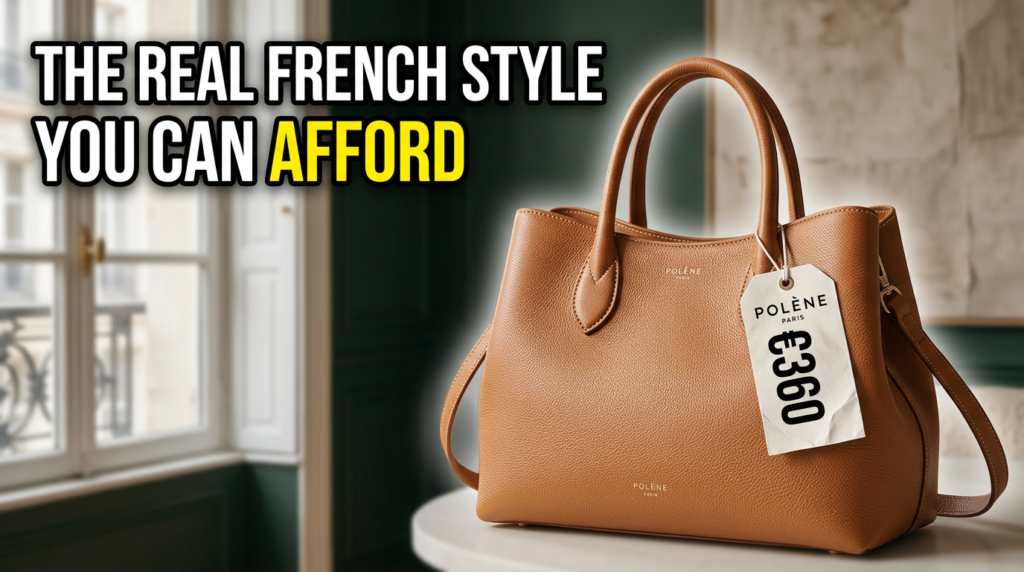
This Parisian brand has built a massive following for its sculptural, architectural leather bags. They look and feel far more expensive than they are. Designed in Paris and handcrafted in Spain using high-quality leathers, Polène bags are the definition of quiet luxury. There are no loud logos — just beautiful design and craftsmanship.
Models like the crescent-shaped Numéro Dix, the elegant Numéro Un, and the practical Cyme tote have all become cult favorites. Most bags are priced between roughly €160 and €620. That makes Polène one of the smartest accessory investments you can make.
As Harper’s Bazaar has highlighted in its accessible luxury guides, Polène represents exactly the kind of considered investment that defines modern Parisian dressing — beautiful, lasting, and free from logo obsession.
Why This Shift in French Fashion Matters
Discovering these brands is about more than finding an alternative to Chanel. It reflects a bigger shift in how we approach style altogether.
The rise of this powerful middle market has democratized French chic. It proves that elegance isn’t about a price tag. Instead, it’s about a mindset — choosing quality over quantity, investing in timeless pieces, and building a wardrobe that gives you quiet, solid confidence.
This movement is also redefining what French fashion even means. For decades, the global image was dominated by elite, often intimidating heritage houses. Now, however, the story is being written by a much wider range of brands — some minimalist, some romantic, some classically tailored.
That’s genuinely empowering for anyone who loves fashion. You don’t need to chase the most famous or most expensive names to capture the Parisian spirit. You can find it in a gorgeous Sézane knit, a minimalist A.P.C. tote, or a romantic Rouje dress. Moreover, you get to mix and match pieces that truly speak to your personal style — not just a brand’s status.
Capturing that Parisian essence is far more about making smart choices than having a blank check. It’s about knowing the difference between the fantasy of haute couture and the beautiful reality of modern, wearable clothes. It’s about finding brands that genuinely care about quality, timelessness, and having a real point of view.
The real secret to French style? It isn’t a secret at all. It’s a philosophy — dressing with intention, with confidence, and with a true appreciation for pieces that make you feel like the best version of yourself.
FAQ
Q: What are the best french designer clothes brands that are actually affordable? A: Sézane, Rouje, A.P.C., Sandro, Maje, and Polène are among the best accessible options. They deliver genuine Parisian quality and aesthetic at a fraction of the cost of heritage houses like Chanel or Dior.
Q: Is Sézane considered a designer brand? A: Sézane sits in the accessible luxury category. It’s above fast fashion in quality and design, but far more affordable than traditional French designer houses. Most people consider it one of the best entry points into authentic Parisian style.
Q: What makes french designer clothes different from other fashion? A: French designer clothes focus on clean silhouettes, quality fabrics, and timeless pieces over trend-chasing. The emphasis is on looking effortlessly put-together rather than flashy or logo-heavy.
Q: Are A.P.C. clothes worth the price? A: For those who prioritise quality, minimalism, and longevity, A.P.C. is absolutely worth the investment. Its pieces — especially the denim and leather goods — are built to last for years and stay stylish across seasons.
Q: What is “accessible luxury” in French fashion? A: Accessible luxury refers to brands that sit between fast fashion and high-end designer pricing. In French fashion, this includes Sandro, Maje, Sézane, and Rouje. They offer high quality and genuine Parisian aesthetic at a realistic price point.
Q: Are Polène bags worth buying? A: Yes. Polène bags offer sculptural, high-quality leather design at a very reasonable price. They’re widely regarded as one of the best quiet luxury accessories available — perfect for those who want an investment-looking bag without the designer price tag.
Q: What is the difference between Sandro and Maje? A: Maje leans more bohemian, feminine, and playful — great for floral dresses and cardigans with an edge. Sandro is sharper, more tailored, and slightly androgynous — ideal for structured coats and clean minimalist pieces. Both sit at a similar accessible luxury price point.