Your Ultimate Guide to Kaftan Cotton Dresses
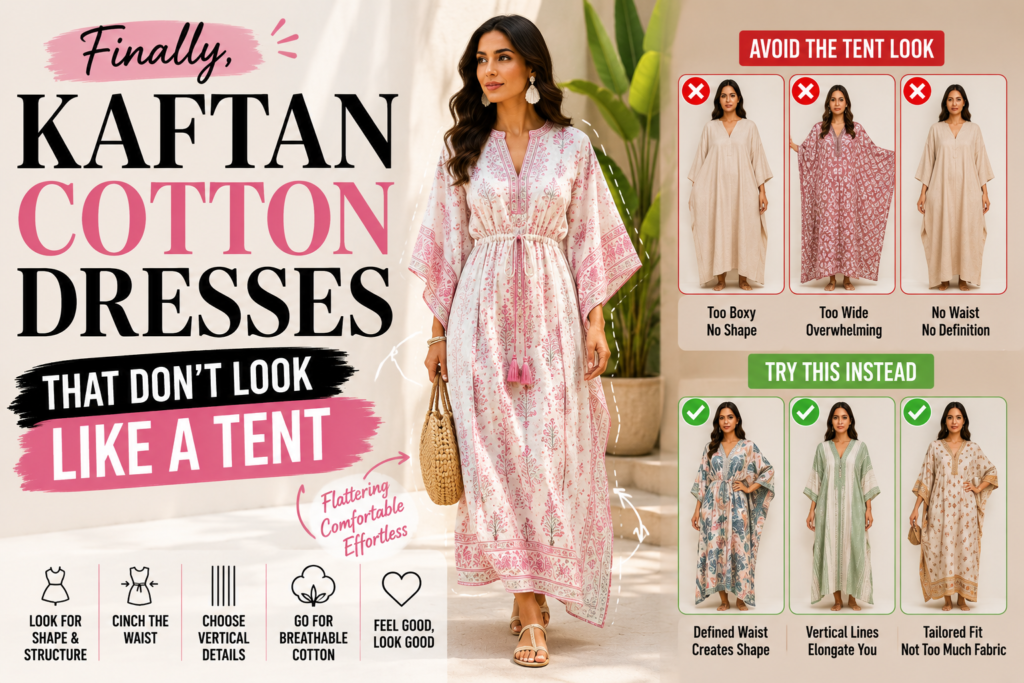
You know that feeling. It’s a warm day, and you just want to feel comfortable and effortlessly chic. Kaftan cotton dresses seem like the perfect answer, right? But let’s be honest, there’s a very fine line between looking like a goddess and feeling like you’re just wearing a fancy tent. The secret to nailing that look isn’t about having a certain body type; it’s about knowing the secrets to the dress itself.
If you’ve ever bought a kaftan picturing a glamorous beach moment, only to feel a bit shapeless and lost in all that fabric, you’re in the right place. That all ends today. This guide walks through everything you need to know to find the perfect kaftan cotton dresses that not only flatter your unique shape but also work for pretty much any occasion you can think of. It covers how to spot quality fabric, how to find the perfect silhouette for your body, and a set of go-to styling tips that can take one kaftan from a casual beach cover-up to a stunning evening outfit. By the end, you’ll be a kaftan expert, ready to wear this amazing piece with total confidence.
It All Starts with the Fabric
The first and most important secret is all in the fabric. You see “cotton” on the label, but not all cotton is created equal. A cheap, flimsy fabric will hang limply, wrinkle like crazy, and feel stuffy, which completely defeats the whole point of a kaftan. The trick is to become a little bit of a fabric detective.
So what should you look for? The perfect kaftan feels breathable and soft. For that amazing comfort in warm weather, look for 100% cotton, a cotton-linen blend, or a cotton-rayon blend. And if sustainability is your thing, keep an eye out for GOTS-certified organic cotton, which is a great indicator of responsible production.
Fabric weight is another big deal. A lightweight cotton, something under 120 GSM, is perfect for those scorching hot days or for throwing over a swimsuit. Heavier weaves, on the other hand, give you a bit more structure and are fantastic for cooler evenings or a more dressed-up vibe.
Now, how do you spot quality in the store? First, just touch it. The fabric should feel soft, not rough or starchy. Second, give it a quick sniff. A strong chemical or vinegar-like smell is a huge red flag for leftover processing agents that could irritate your skin. A quality piece should just smell neutral. Then, look closely at how it’s made. The seams should be generous, with at least a 1.2 cm allowance to prevent tearing. Even better are French seams, which are a true sign of a well-made garment. Check the hem, too, since it should be blind-stitched or hand-rolled, not just a simple machine zigzag that can unravel after a few washes. Finally, good brands are transparent. They’ll tell you exactly what the fabric is, like “62% organic cotton, 38% lyocell,” not just some vague term like “premium material.”
Finding the Right Fit for Your Body
The next secret is realizing that a kaftan can look good on literally everyone; the key is just choosing the right cut for your proportions. So many of us feel overwhelmed by the sheer volume of fabric, which can end up hiding your shape completely. The answer isn’t to size down; it’s to find a silhouette that works with your natural lines. Remember, a kaftan should flow and drape. It should never be tight, since that would just ruin its effortless charm.
Here’s how to break it down by body type.
If you have an apple-shaped body, carrying more weight around the middle, the goal is to create some definition and make your torso look longer. V-neck styles are fantastic for this because they draw the eye up. A kaftan that comes with a belt, or lets you add one, is your new best friend. Cinch it just under the bust, at the narrowest part of your torso, to create a beautiful, flowing shape that just skims over your midsection.
For pear-shaped bodies, with hips wider than your shoulders, the goal is balance. Look for a kaftan that skims gracefully over your hips and thighs. Styles with interesting details or patterns on the top half are perfect for drawing the eye upward. Wide necklines or embellished shoulders can also work wonders for creating that balance.
If you’re an hourglass, with a well-defined waist, you want to show it off. Look for kaftans with a more fitted bodice or ones that come with a tie-waist or belt. A style that nips in at the waist before flowing out will celebrate your natural curves perfectly. It’s best to avoid really boxy, shapeless styles, since they’ll just hide your amazing silhouette.
For a rectangle or athletic body shape, the game is all about creating the illusion of curves. Kaftans with cinched waists, belts, or asymmetrical hemlines are your best bet for adding dimension. And don’t shy away from ruffles or bold prints, since they can also help create a curvier look.
If you have an inverted triangle shape with broader shoulders, you’ll want to add a little volume to your lower half to create balance. Sleeveless styles can be great, and designs with ruffles, patterns, or tiers at the bottom will do the trick beautifully.
For petite frames, the main thing is to not get swallowed by fabric. Shorter hemlines, anywhere from knee- to midi-length, tend to work best, since a full maxi-length kaftan can sometimes overwhelm a smaller frame. It’s all about proportion, and this same proportion principle shows up across other petite-friendly silhouettes, where a shorter, cleaner cut consistently reads better on a smaller frame than something floor-length. On the flip side, for taller women, a dramatic, floor-length kaftan can look incredibly striking and elegant.
Go-To Styling Tricks
Now for the really fun part: styling. This is where you can take one kaftan and create so many different looks.
Here are the top styling secrets.
Tip 1: A belt is your best friend. A belt is the quickest way to transform your kaftan. It instantly gives you shape. For a chic, city look, try a slim leather belt. For a softer, more romantic feel, a fabric sash is beautiful. And for a boho vibe, you can’t go wrong with a braided belt. Just place it at your natural waist, then gently blouse the fabric over it by about 4 to 5 inches. You get that flattering shape without giving up any of the comfort.
Tip 2: The art of the knot. This is such a clever trick for changing up the hemline and adding a playful, asymmetrical touch. For a casual, leg-baring look, just grab some fabric at one hip and tie a simple side knot. It creates this cool high-low effect that’s perfect for the beach. You can also tie a small knot at the front, around thigh-height, to shorten the front while keeping the length in the back.
Tip 3: Layer it like a pro. Think of your kaftan as a light duster coat. You can wear it open over a simple outfit, like a fitted tank top and some skinny jeans or leggings. This is a great way to get more wear out of your kaftan, especially during those in-between seasons. On cooler days, you can even layer a thin turtleneck underneath and pair it with boots for a surprisingly chic look.
Tip 4: The one-shoulder drape. Want something a little more high-fashion? Just slip one arm out of its sleeve and let the fabric drape across your body. It creates this elegant, toga-like silhouette that’s perfect for an evening event. As FIT’s Fashion History Timeline notes, the kaftan’s roots trace back to Persia and the Ottoman Empire, where it was worn as a loose, draped robe long before it became a Western fashion staple, so this kind of draping actually connects back to the garment’s original form. It’s unexpected, super stylish, and really shows off the beautiful flow of the fabric.
Tip 5: The right foundation. Finally, let’s talk about what’s going on underneath. Because kaftans are so loose and flowy, the right undergarments are key to a smooth silhouette. A good seamless slip or some lightweight shapewear can make a huge difference, preventing any clinging and making sure the fabric drapes just like it’s supposed to.
A Kaftan for Every Occasion
To show just how versatile a kaftan can be, here’s how to style one piece for three completely different occasions.
Look 1: The perfect beach vibe. This is the kaftan in its natural habitat. Wear it as a cover-up over your swimsuit, preferably in a light, breezy cotton gauze or a fun, sunny print. The key to making it look chic is all in the accessories. Pair it with simple flat leather sandals, a big woven straw bag for all your stuff, and a wide-brimmed hat for sun protection and that touch of glamour. Keep the jewelry simple, since a pair of gold hoops is all you need.
Look 2: The effortless brunch look. Now, take that same kaftan and make it city-ready. Cinch it with a belt to define your waist. If your kaftan is a solid color, you could even layer a light denim jacket over it for a little more structure. Swap the beach bag for a crossbody and the flat sandals for a pair of stylish wedges or block heels. Pull your hair into a casual topknot, throw on some oversized sunglasses and a pop of lipstick, and you’ve got a look that’s comfortable, chic, and perfect for brunch.
Look 3: The elegant evening look. Yes, you can absolutely dress up a cotton kaftan for a night out. The secret here is all about luxurious accessories. Style the kaftan with a metallic or embellished belt to create a more formal shape. Go for elegant shoes, like strappy stilettos or pretty embellished heels. Ditch the day bag for a sophisticated clutch. And jewelry is key here, since this is the time for dramatic statement earrings or a bold necklace. This mix of a comfortable cotton dress with high-impact, glam accessories creates a look that is both stunning and so easy to wear.
Wearing the Kaftan with Confidence
So there you have it: all the secrets to totally mastering kaftan cotton dresses. This guide has covered how to spot a quality piece that will actually last, how to find the perfect cut for your unique body type, and how to use a few simple styling tricks to make your kaftan work for any occasion.
The kaftan is so much more than just a dress. It’s a statement of comfort and effortless style. It’s one of the few pieces of clothing that truly celebrates the body without ever constricting it. Now you have all the tools you need to confidently choose a great kaftan and style it in a way that makes you feel incredible.
FAQ Section
1. What fabric should I look for in kaftan cotton dresses?
Look for 100% cotton, a cotton-linen blend, or a cotton-rayon blend. Lightweight cotton under 120 GSM works best for hot days, while heavier weaves offer more structure for cooler evenings or dressier occasions.
2. Do kaftan cotton dresses work for petite women?
Yes, as long as you choose the right length. Knee- to midi-length hemlines tend to work best on petite frames, since a full maxi-length kaftan can overwhelm a smaller body.
3. How do I add shape to a kaftan so it doesn’t look shapeless?
A belt is the easiest fix. Cinch it at your natural waist or just under the bust, then blouse the fabric slightly over it. This instantly creates definition without sacrificing the kaftan’s loose, comfortable fit.
4. Can kaftan cotton dresses be dressed up for evening?
Absolutely. Swap a casual belt for a metallic or embellished one, add strappy heels, carry a sophisticated clutch, and layer on statement jewelry. The same cotton kaftan can go from beach cover-up to evening-ready with the right accessories.
5. How can I tell if a kaftan is good quality before buying?
Touch the fabric to check it’s soft, not stiff or starchy, and give it a quick sniff to rule out a chemical smell. Look for generous seams, a blind-stitched or hand-rolled hem, and a brand that’s transparent about the exact fabric composition.
6. What body shape looks best in a kaftan?
Every body shape can wear a kaftan well; it just depends on choosing the right details. Apple shapes benefit from V-necks and a belt under the bust, pear shapes look best with interest on the top half, and hourglass shapes should look for a tie-waist or fitted bodice to show off their curves.