Best Makeup to Cover Up Rosacea That Actually Lasts All Day
Stop caking on foundation to cover your rosacea. Just stop. The best makeup to cover up rosacea isn’t the thickest, most full-coverage product you can find — it’s the one that works with your skin instead of against it. Most of us have been there: piling on heavy layers, desperate to hide the red. And what happens? By noon, it’s a cracked, cakey mess. The redness starts peeking through, looking even angrier, and the makeup feels heavy and obvious. It’s a losing battle — and the very thing you’re using to feel confident ends up making your skin more irritated.
For years, that was the cycle. More redness meant more makeup. It seemed logical. But the skin just kept getting more reactive, more sensitive, and harder to deal with. Then, during a really bad flare-up, a dermatologist shared something that completely changed how to think about makeup. She said the goal isn’t to bury your skin — it’s to outsmart the redness.
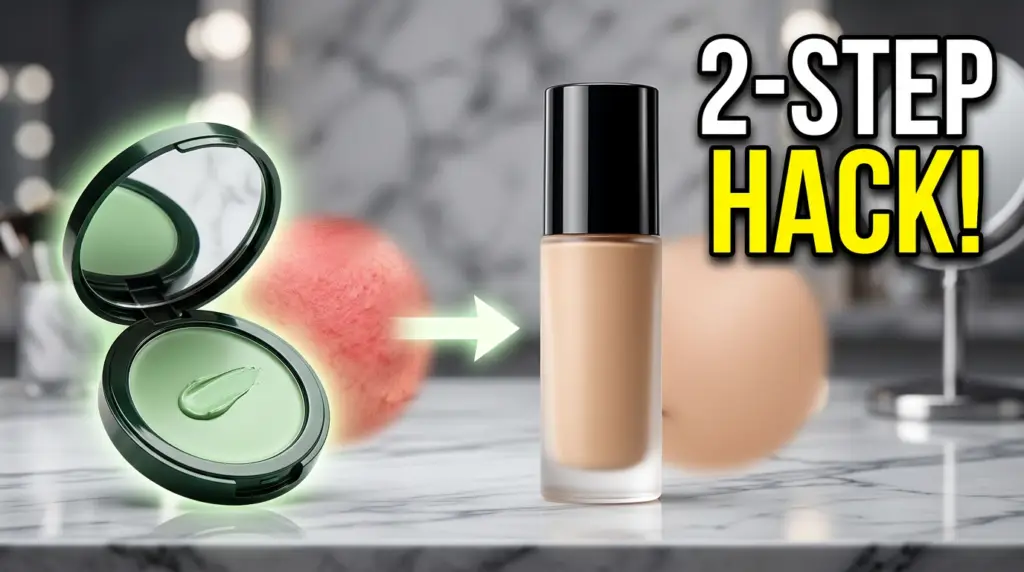
She shared an incredibly simple two-step trick: neutralize the red first, then perfect with a light, breathable layer. It’s less about how much makeup you use and more about the strategy. So here’s exactly what she taught — the hack that lets your skin breathe while still giving you that calm, even-toned look.
The Best Makeup to Cover Up Rosacea Starts with Proper Prep
Before any makeup goes on, the canvas needs preparing. A calm makeup result simply isn’t possible on agitated skin. One of the biggest mistakes people with rosacea make is starting with friction — aggressively washing the face, rubbing it dry, or using rough applicators. Any of these can trigger a flare-up before a single drop of foundation has even been touched.
Be Incredibly Gentle
The first real step is making peace with your skin. Start with a mild, soothing cleanser — something creamy and fragrance-free. According to the National Rosacea Society, alcohol and fragrance rank among the most commonly reported triggers, so reading labels carefully is non-negotiable. Ditch anything that leaves skin feeling tight or squeaky clean. When drying the face, simply pat gently with a soft towel. No rubbing, ever.
Hydrate and Protect
A well-hydrated face prevents makeup from clinging to dry patches and turning cakey. Look for a moisturizer with barrier-supporting ingredients like ceramides, niacinamide, or glycerin. A strong skin barrier is a less reactive one — so this step helps makeup look better right now and improves skin health long-term.
The Non-Negotiable: Sunscreen
Sun exposure consistently ranks as the number one reported trigger for rosacea. A mineral-based sunscreen with SPF 30 or higher is absolutely essential. Many dermatologists recommend mineral formulas with zinc oxide and titanium dioxide because they tend to cause less stinging than chemical filters on sensitive skin. Zinc oxide also carries natural soothing properties. Tinted moisturizers or primers with mineral SPF make an excellent multi-tasking option — and with rosacea, fewer products usually means less irritation.
This gentle prep phase isn’t just a suggestion. It’s the entire foundation of the approach, getting skin as calm as possible before color correcting begins.
Step 1: Neutralize the Redness with Color Correction
Skin prepped, calm, and protected. Now for the first part of the hack: neutralizing the redness. This is where a little color theory does the heavy lifting. Rather than packing on a thick beige concealer to erase the red, the goal is simply to cancel it out. On the color wheel, green sits directly opposite red — which means it visually neutralizes it.
This changes everything. A very thin, sheer layer of a green-tinted product can do most of the hard work, which means far less foundation is needed afterward. This one step prevents the heavy, mask-like look that so many people struggle to avoid.
Choosing the Right Green Corrector
Not all green correctors are created equal. A thick, mint-green paste isn’t what’s needed here. As noted by the National Rosacea Society, green-tinted makeup can help reduce the visible appearance of redness — especially when applied in light, sheer layers to keep the result looking natural rather than artificial.
There are two main options worth knowing about:
Green-tinted primers create a smooth base for makeup while subtly color-correcting. Look for silicone-free formulas wherever possible, and always avoid alcohol and fragrance. Some are also infused with calming ingredients like cica (centella asiatica), which is well known for soothing inflammation.
Color-correcting creams tend to be slightly more pigmented and work especially well on flare-up days. Some formulas, like the widely praised Dr. Jart+ Cicapair treatment, start out green and then shift to a beige tint — giving both correction and light coverage in a single step.
How to Apply It
Technique matters just as much as product choice here. Apply the neutralizing layer only where redness shows — for most people with rosacea, that means the center of the face: cheeks, nose, and chin. Using clean fingertips or a soft, damp sponge, gently pat the product into the skin. No swiping, no rubbing. A light pressing motion lays down the color without aggravating the skin further.
After this step, the angry red tones down to a calm, neutral canvas. The redness isn’t hidden yet — but it’s no longer screaming for attention. That’s the secret.
Step 2: Apply a Light, Breathable Layer of Foundation
Now that the redness has been neutralized, a heavy full-coverage foundation simply isn’t necessary. This is the second part of the hack: applying a thin, skin-like layer of foundation or concealer to even everything out. The goal is coverage that feels good on the skin, not a cover-up that suffocates it.
Choosing the Right Foundation
Product choice still matters here. Many people with rosacea find mineral makeup a strong option, since mineral foundations are often formulated without fragrance and other common irritants. As Byrdie points out, lightweight liquid formulas labeled oil-free and non-comedogenic are also excellent choices for reactive skin. Either way, reading the ingredient list carefully remains important — even products marketed for sensitive skin can contain unexpected irritants.
The Application Technique That Makes All the Difference
A soft brush or a damp sponge gives the lightest, most even application. The key motion is a gentle stippling or patting action — pressing the product into the skin rather than dragging or buffing it in circles. Heavy circular buffing stimulates the skin and can cause redness to flare right back up underneath the makeup.
Start with just one pump of foundation. Pick up a small amount and begin patting gently from the center of the face, blending outward. Far less product is needed now that the green corrector has already done its job. The aim here is simply a seamless skin tone, not a second skin.
For any stubborn spots still showing through, a small amount of concealer helps. A good rule: choose a concealer no more than one shade lighter than the foundation. Apply with a small, precise brush and gently tap to blend — never drag.
The result looks calm, even, and natural. It feels light. And there’s no mountain of product sitting on the skin.
Setting the Look and Adding Dimension
Why Blush Still Has a Place
A flat, one-dimensional face can look just as unnatural as a flushed one — so skipping blush entirely isn’t the answer. The trick lies in placement and color choice. Rather than applying blush on the apples of the cheeks, which are often the reddest area, try placing it higher on the cheekbones and sweeping it back toward the temples. This lifts the face without drawing attention to any remaining flush.
Color selection matters too. True reds and hot pinks tend to clash with rosacea undertones. Instead, muted mauves, peaches, and warm brownish tones add natural dimension without conflict. A cool-toned pink can also help neutralize any leftover warmth in the skin. As always, a soft brush and a light hand go a long way.
Setting for All-Day Wear
A light dusting of finely milled mineral powder locks in makeup and reduces shine without looking dry or cakey. For anyone who prefers a dewier finish, an alcohol-free hydrating setting spray is a great alternative — it melts all the layers together for a natural, skin-like result that holds throughout the day.
The Two-Step Recap
This approach has nothing to do with a miracle product. It’s a shift in strategy:
Step one — neutralize the redness with a sheer green corrector, applied only where needed, using a gentle patting motion.
Step two — perfect the skin with a light, breathable layer of foundation and, where necessary, a small amount of concealer. Press and pat, never buff.
The result feels comfortable, looks natural, and actually lasts. More importantly, the skin stays happier throughout the day. Dealing with rosacea is genuinely frustrating — but the makeup routine doesn’t have to add to that frustration. Working with the skin instead of against it makes all the difference.
FAQ SECTION
Q1: What is the best makeup to cover up rosacea without making it worse?
The best makeup to cover up rosacea starts with a green color-correcting primer or cream applied in a thin, sheer layer to neutralize redness, followed by a lightweight, fragrance-free foundation patted gently onto the skin. This two-step approach gives a natural, lasting result without irritating reactive skin.
Q2: Should I use full-coverage foundation for rosacea?
Not necessarily. Heavy, full-coverage foundations can feel uncomfortable on rosacea-prone skin and often crack or look cakey by midday. A better approach is to use a green color corrector first to cancel out redness, then layer a lightweight foundation on top. The result tends to look more natural and last longer.
Q3: Does green primer really work for rosacea?
Yes. Green sits opposite red on the color wheel, which means it visually neutralizes redness when applied as a thin layer. The National Rosacea Society has noted that green-tinted makeup can reduce the appearance of redness effectively when used in light, sheer applications.
Q4: What ingredients should I avoid in makeup if I have rosacea?
The most commonly reported irritants for rosacea-prone skin include alcohol, fragrance, and certain chemical sunscreen filters. Look for products labeled fragrance-free, alcohol-free, and non-comedogenic. Mineral formulas with zinc oxide tend to be gentler and are often recommended by dermatologists.
Q5: What type of foundation finish is best for rosacea?
A satin or natural finish tends to work best. Matte foundations can look dry and emphasize texture, while very dewy finishes can draw attention to uneven tone. A natural, skin-like finish combined with a light mineral setting powder gives the most balanced result for rosacea skin.
Q6: Can mineral makeup help cover rosacea?
Many people with rosacea find mineral makeup a comfortable option because it is often formulated without common irritants like fragrance, alcohol, and oil. However, not all mineral products are created equal — checking ingredient lists is still important, as some can contain sensitising additives.
Q7: How do I stop my rosacea makeup from looking cakey by midday?
The most effective way is to use less product overall by prepping well and using a green corrector before foundation. Proper moisturising before makeup prevents it from clinging to dry patches, and setting with a finely milled mineral powder or a hydrating setting spray helps the layers melt together for a longer-lasting, natural finish.