Non Traditional Engagement Rings and the Future of How We Say Yes
The classic engagement ring — a round diamond on a thin platinum band — dominated for nearly a century. It was the default. The expected. But that single, universal ideal is fading fast. Non traditional engagement rings are taking over, driven by new technology and a genuine shift in what couples care about. This isn’t just a style update. It’s a fundamental change in what an engagement ring means. The next decade will bring 3D-printed settings, lab-grown diamonds, bold sculptural bands, and colored gemstones that feel nothing like the rings that came before them. Here’s what that actually looks like.
Why Couples Are Rejecting the Default Ring
For generations, choosing a ring followed a predictable script. Tradition dictated the process, and that meant a very specific look. But today’s couples ask different questions.
Rather than focusing only on the four C’s, they ask about ethics. They also care less about size and more about the story behind the piece. Ultimately, they look beyond the default and search for something that genuinely reflects who they are.
The Two Forces Behind the Shift
Two main forces drive this transformation. First, a deep desire for personal expression — couples want a ring that tells their story, not a showroom’s story. Second, the technology to actually make that possible has finally arrived. Together, these forces push bridal jewelry away from one-size-fits-all tradition and toward something closer to personal art.
Some of the most popular rings today are the ones that don’t look like engagement rings at all. That’s not an accident. It’s the point.
Lab-Grown Diamonds and the Tech Revolution in Gemstones
The first, and perhaps most disruptive, change is happening at the molecular level. Lab-grown diamonds have rapidly gained ground, and the numbers back it up. The global lab-grown diamond market reached nearly $30 billion in 2025 and projects to exceed $60 billion by 2035.
So why the surge? Price plays a major role. A lab-grown diamond costs anywhere from 60% to 90% less than a mined diamond of identical quality. That single fact lets couples choose a significantly larger or higher-quality stone for the same budget.
How Scientists Engineer a Better Diamond
The deeper story involves precision and control. Scientists grow diamonds using methods like High Pressure High Temperature (HPHT) or Chemical Vapor Deposition (CVD) — processes that recreate the conditions deep inside the earth with remarkable consistency. This precision gives designers the ability to grow diamonds specifically sized and shaped for geometric emerald cuts or soft oval silhouettes.
Laser-cutting technology then adds details that traditional tools could never achieve. Facets come out so clean they produce a cinematic sparkle. Unique shapes and micro-details that once required hand-finishing now emerge with stunning accuracy.
Beyond price and sparkle, this technology aligns with changing values. Brands like Pandora have already shifted to using only lab-grown diamonds in their new diamond collections. However, the conversation is becoming more nuanced — questions about energy consumption and production transparency are now part of the discussion. Responsible jewelers respond with greater disclosure, and consumers are asking for it.
As Vogue’s guide to lab-grown diamond engagement rings notes, this shift represents more than a budget choice — it reflects a generation redefining what luxury means.
3D Printing and the Rise of Radical Personalization
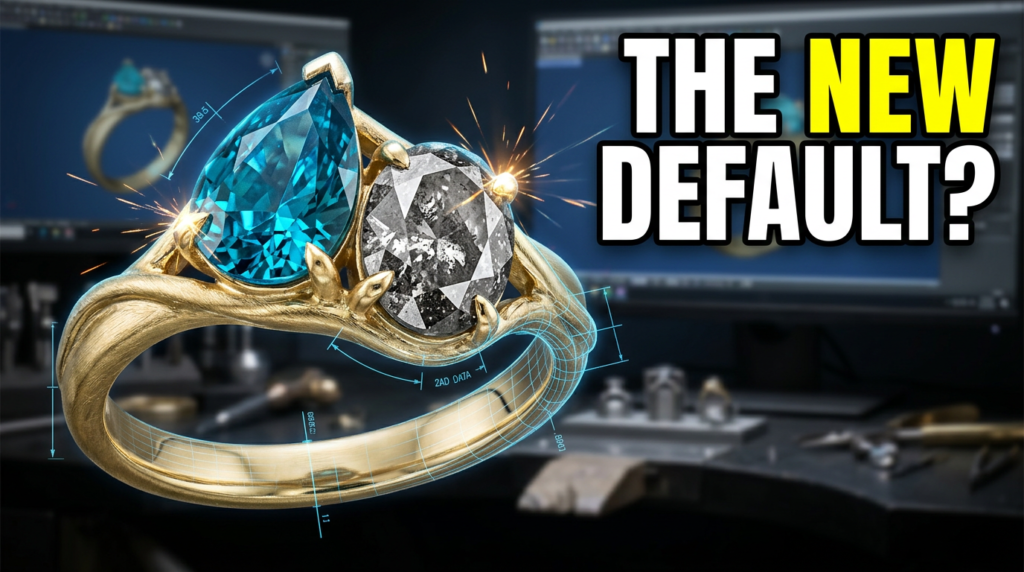
The second major shift moves away from mass-produced rings toward radical customization, and 3D printing makes it possible at scale. The days of jewelers carving wax models by hand are nearly over. Today’s designers work more like digital architects, building hyper-detailed 3D models in Computer-Aided Design (CAD) software before anything physical exists.
Think of it as a character customizer for your engagement ring. Couples can see exactly how a setting sits, zoom into the prongs, and test how the ring pairs with a wedding band before committing to a single piece of metal.
Hidden Details That Only the Couple Knows
Once the digital design looks right, a high-resolution 3D printer creates a wax or resin model. Jewelers then cast the final ring from that model. The result unlocks a creative range once reserved for the world’s top craftspeople.
Impossibly intricate patterns, flowing organic shapes, and hidden details become achievable with stunning accuracy. A couple can build a private symbol into the ring’s gallery or engrave a meaningful date in a spot only they can see. These invisible touches add romantic value that never fades with a trend.
This process is also shifting how couples shop. Rather than choosing from a display tray, more buyers want to be involved in designing a piece that tells their specific story. Boutique jewelers offering this co-creation experience are growing quickly because of it. Furthermore, 3D printing reduces material waste, making custom rings more accessible than ever without the environmental cost of traditional casting.
New Materials, Colors, and the Redefinition of “Ring”
The third trend involves a total reimagining of what an engagement ring is even made of. For decades, the formula held firm: white diamond, precious metal band. Both elements are now open to debate.
Diamonds still lead in popularity. However, colored gemstones are surging fast. Sapphires, emeralds, and fancy-colored lab diamonds in pinks and yellows are becoming serious contenders. A deep blue sapphire feels regal and timeless. A vibrant green emerald feels fresh and unexpected. These stones add personality that a traditional white diamond simply can’t deliver in the same way.
Toi et Moi Rings and the Return of Yellow Gold
“Toi et Moi” rings — meaning “You and Me” in French — feature two distinct center stones, often pairing different shapes or gems to symbolize two people coming together. They’re experiencing a genuine revival, particularly among couples who want a ring with clear symbolic meaning built into its design.
Metals are shifting too. Yellow gold has staged a massive comeback. Its warm, rich tone resonates strongly with modern buyers who find white metals too cold or corporate.
For couples focused on durability, alternative metals like titanium and tungsten appeal for their strength and modern look — particularly in wedding bands. Bezel settings, which encase a stone in metal instead of using prongs, are also seeing renewed popularity for the same reason: sleek, secure, and practical. Recycled precious metals add a sustainability dimension, since jewelers can melt and reforge them without any loss of quality.
Harper’s Bazaar’s deep dive into gemstone engagement ring trends tracks this colored gemstone surge in detail, noting that many couples now actively prefer a stone with personal meaning over a diamond chosen purely for convention.
The Return of Boldness: Sculptural Bands and Vintage Cuts
After years of delicate, barely-there bands dominating social media, a strong counter-movement has arrived. Chunky, substantial bands and sculptural, artistic settings now make major statements. In these architectural styles, the metal of the band carries as much visual weight as the center stone itself. The overall effect feels modern, durable, and less fragile — intentionally so.
This trend also brings a renewed fascination with antique and vintage-inspired cuts. Genuine antique cuts — the Old European, Old Mine, and Rose cut — attract buyers because they interact with light differently than modern brilliant cuts. They offer a softer, more romantic sparkle that feels soulful and full of character. No two antique-cut diamonds look exactly alike, giving each ring a truly one-of-a-kind quality.
Wearable Art Over Sheer Carat Size
The combination of bold bands, sculptural forms, and vintage cuts creates rings that feel less like traditional jewelry and more like wearable art. Asymmetrical settings, curved bands that follow organic shapes like vines and waves, and east-west settings that turn elongated stones sideways for an architectural profile all reflect the same underlying shift.
The focus has moved away from prioritizing carat size above everything else. Instead, couples search for a ring that feels deeply personal and visually interesting from every angle. That’s a meaningful change in values — and it’s reshaping the entire market.
Where Non Traditional Engagement Rings Are Headed
The future of engagement rings is personal, technological, and thoughtful. Lab-grown diamonds, 3D-printed settings, new materials, and a hunger for bold individual style aren’t just generating new trends. They’re changing the cultural meaning of the ring itself.
The shift moves away from a status symbol defined by rigid tradition and toward a piece of personal art, defined entirely by the couple wearing it. Technology hasn’t replaced the romance. It’s simply given couples better tools to amplify it — more creativity, more control, and a deeper connection to the object they create.
The most important factor is no longer conforming to an old standard. Non traditional engagement rings represent a new standard entirely: one where the ring reflects a life, not just a price tag. The question has changed from what a ring is supposed to look like to what it can look like.
FAQ — Non Traditional Engagement Rings
Q1: What counts as a non traditional engagement ring?
A: A non traditional engagement ring is any ring that moves away from the classic round diamond on a plain metal band. This includes rings with colored gemstones, lab-grown diamonds, vintage-cut stones, sculptural bands, alternative metals, and custom 3D-printed designs. The defining quality is intentional individuality over convention.
Q2: Are lab-grown diamonds a good choice for non traditional engagement rings?
A: Yes — lab-grown diamonds are chemically, physically, and optically identical to mined diamonds, but cost 60% to 90% less for the same quality. They appeal strongly to couples choosing non traditional engagement rings because they allow for larger stones, unique cuts, and a cleaner ethical story without sacrificing brilliance.
Q3: What gemstones are popular in non-traditional engagement rings besides diamonds?
A: Sapphires, emeralds, and fancy-colored lab diamonds in pink and yellow are among the most popular alternatives. Ruby and morganite also appear frequently. Each stone carries a different emotional quality — sapphires feel regal, emeralds feel fresh, and pink diamonds feel romantic and rare.
Q4: What is a Toi et Moi engagement ring?
A: A Toi et Moi ring features two distinct center stones rather than one. The name is French for “you and me,” and the design symbolizes two individuals coming together. Many couples choose it specifically because the two-stone design carries obvious personal meaning that a single stone cannot communicate on its own.
Q5: Can I design a completely custom engagement ring affordably?
A: Yes — 3D printing and CAD software have brought custom ring design within reach for many budgets. Boutique jewelers now offer co-creation experiences where couples design their ring digitally before anything physical gets made. The process reduces material waste, which also helps keep costs down compared to traditional hand-carved methods.
Q6: Are sculptural and chunky band rings practical for daily wear?
A: Generally yes — many sculptural bands use substantial metal construction that holds up better to daily wear than very delicate, thin bands. Bezel settings, which encase the center stone in metal rather than holding it with prongs, add further durability and make them a smart choice for active lifestyles.
Q7: What are Old European and Old Mine cut diamonds?
A: Old European and Old Mine cuts are antique diamond cuts predating the modern round brilliant cut. They feature fewer facets and interact with light differently, producing a softer, warmer, more romantic glow rather than the sharp, high-contrast sparkle of contemporary cuts. Because each stone reflects its hand-cut origin, no two look exactly alike.
Q8: Is yellow gold coming back for engagement rings?
A: Yes — yellow gold has made a strong comeback after decades of white metal dominance. Its warm, rich tone appeals to buyers who find platinum and white gold too cold or corporate. Yellow gold pairs especially well with colored gemstones and vintage-cut diamonds, making it a natural fit for non traditional engagement ring aesthetics.