
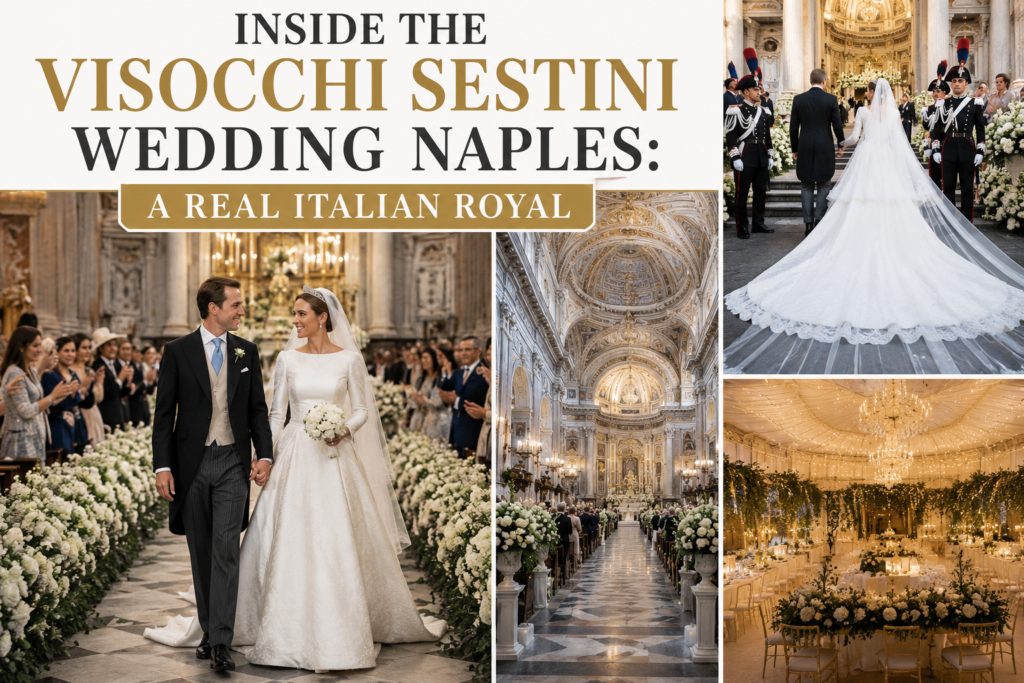
Inside the Visocchi Sestini Wedding Naples: Where Italian Nobility Still Lives
What if a wedding felt less like a ceremony and more like a coronation? That’s the story behind the visocchi sestini wedding naples, an event that unfolded in the heart of Naples like something pulled from the pages of a history book. This wasn’t just any party; it was a powerful statement on tradition and legacy. The union of two of Italy’s most notable families, the Visocchi Sanseverino and the Sestini Branca, was a masterclass in heritage and luxury. Here’s the story behind the priceless heirlooms, the royal and noble guests, and why this celebration offered a rare glimpse into a world where history is still very much alive.
Two Legacies Collide
In the world of European nobility, a wedding is rarely just about two people, it’s about the merging of legacies. And in this case, the legacies are immense. On one side, you have the bride, Anna Virginia Visocchi Sanseverino di Marcellinara. Her family, the House of Sanseverino, is one of the most important historical noble houses in Southern Italy. While Italy is now a republic, names like Sanseverino carry the weight of centuries, a lineage documented across Italy’s long history of noble houses.
On the other side is the groom, Corso Sestini Branca di Romanico. His family is linked to the Brancas, the entrepreneurial dynasty behind the world-renowned Italian liqueur, Fernet-Branca, founded in Milan in the 19th century. So, this union wasn’t just a marriage; it was a fascinating merger of deep-rooted aristocracy and a formidable industrial legacy. According to Vogue, the couple first met in Milan in 2019, an encounter Anna Virginia described as an instant, powerful connection. When they met again a year later, that connection was solidified, setting the stage for a wedding that would blend two remarkable family histories.
The Historic Setting in the Heart of Naples
For a wedding of this scale, just any venue wouldn’t do. The location had to reflect the historical significance of the occasion. The couple chose a 16th-century church in the heart of Naples for their ceremony, a symbolic act grounding their modern union in Italy’s deep cultural traditions.
After the vows, the 400 guests moved to the bride’s private family estate for the reception. And all of this unfolded against the iconic backdrop of Naples itself. Imagine a wedding procession with views of the Castel dell’Ovo on the water or photos taken from the hills of Posillipo overlooking the sun-drenched Bay of Naples. The city wasn’t just a location; it was an essential character in the story. Upon arrival, guests were welcomed by the sounds of a traditional tarantella, a detail that perfectly blended high society with vibrant local culture.
Heirlooms With a Story
While the setting was breathtaking, the bride’s attire was what truly captured the day’s sense of history. Anna Virginia’s gown was custom-designed by the celebrated mother-daughter duo Luisa and Lucilla Beccaria. But the dress was created around two incredible family heirlooms. First, her veil was a masterpiece of 18th-century antique Bruges lace from the Visocchi family.
But the true showstopper was the tiara. According to family history, the stunning diamond diadem worn by the bride was a gift to the Sanseverino family from the Emperor of Austria. Think about that for a moment. This is an artifact with reported imperial roots, a direct link to the royal courts of old Europe, worn not in a museum but as part of a living celebration. This single accessory speaks volumes, a silent testament to a legacy that has endured for generations.
A Guest List With Royal Connections
A wedding of this stature in Italy is a major social event, and the guest list read like a who’s who of European society. But this celebration included a notable royal presence. In attendance were Prince Carlo and Princess Camilla of Bourbon-Two Sicilies, with their two daughters, Princesses Maria Carolina and Maria Chiara, and Prince Carlo’s sister, Princess Beatrice. The House of Bourbon-Two Sicilies is a non-reigning royal house that once ruled over Southern Italy, the very region where the wedding took place.
Their presence was more than just a celebrity cameo; it was a nod to the deep historical ties between the families and the former monarchy. According to Italian media reports, Prince Carlo of Bourbon even played a formal role in the ceremony as the “compare d’anello,” or ring witness, a position of great honor. It was also reported that a solemn blessing from the Pope was read aloud by the presiding Bishop. Having members of a European royal house not just attending, but reportedly participating, helps explain why many have described the visocchi sestini wedding naples as a wedding with royal significance.
Traditions of Southern Italy
Beyond the grandeur, the wedding was a vibrant showcase of Southern Italian traditions, customs steeped in love and joy. The celebrations may have started the day before with “La Serenata,” a romantic ritual where the groom, often with musicians, sings to his bride beneath her window, a custom with roots stretching back through Southern Italy’s folk traditions.
On the wedding day, other customs come into play. The bride’s bouquet is traditionally a gift from her mother-in-law, symbolizing her welcome into the new family. As the newlyweds leave the church, guests shower them with rice instead of confetti, an ancient symbol of fertility and abundance. In parts of Southern Italy, some couples also break a glass or vase, and tradition says the number of broken pieces predicts their future years of happiness together. These customs, passed down through generations, ensure that the wedding is not just a modern party but an event that honors the past.
So, Was It Really a Royal Wedding?
So, was the Visocchi-Sestini union a “royal wedding”? Since Italy is a republic, it wasn’t a state occasion. And yet, the answer is more complex. When you have guests from a non-reigning royal house, a tiara with reported imperial origins, and traditions that stretch back centuries, you’re witnessing something that transcends a typical wedding. It was a celebration of love, absolutely, but it was also a powerful reaffirmation of lineage, heritage, and the enduring presence of Italian nobility in the 21st century. It reminded everyone that even now, some pockets of society don’t just remember history—they still live it. And for one spectacular day in Naples, everyone got a glimpse of it.
FAQ Section
Who got married in the Visocchi Sestini wedding in Naples?
The visocchi sestini wedding naples united Anna Virginia Visocchi Sanseverino di Marcellinara, of the noble House of Sanseverino, with Corso Sestini Branca di Romanico, linked to the Fernet-Branca liqueur dynasty.
Was the Visocchi Sestini wedding in Naples an actual royal wedding?
Not officially, since Italy is a republic, but the presence of guests from the non-reigning House of Bourbon-Two Sicilies and heirlooms with imperial origins gave it a distinctly royal atmosphere.
Where did the Visocchi Sestini wedding take place?
The couple held the ceremony at a 16th-century church in the heart of Naples, then celebrated the reception at the bride’s private family estate.
What did the bride wear at the Visocchi Sestini wedding?
The bride wore a custom gown by Luisa and Lucilla Beccaria, paired with an 18th-century antique Bruges lace veil and a diamond tiara reportedly gifted to her family by the Emperor of Austria.
What royal guests attended the Visocchi Sestini wedding in Naples?
Prince Carlo and Princess Camilla of Bourbon-Two Sicilies attended along with their daughters and Prince Carlo’s sister, with Prince Carlo reportedly serving as the ceremony’s ring witness.