Silver and Color Hair Style Guide: What to Wear
Most people treat the salon appointment as the finish line. It is actually the starting point. Silver and color hair demands a complete rethink of your wardrobe — what worked before may now wash you out, clash with the cool metallic tones, or make your entire look fall flat. The dye job is only step one. The real payoff comes from understanding which clothing colors amplify your new hair, how your skin tone shapes every decision, and which styling choices take silver from accidental gray to deliberately stunning. This guide covers all of it.
Does Your Skin Tone Work With Silver Hair?
Silver hair sits firmly in the cool-tone spectrum. Colorists typically create it using violet or blue-based pigments, which produce that luminous, metallic sheen. Because of this, silver harmonizes most naturally with skin that also carries cool undertones.
A quick test helps identify where you land. Check the veins on the inside of your wrist in natural daylight. Blue or purple veins suggest cool undertones. This test works well as a starting point, though it performs less reliably under artificial light or on deeper skin tones — so treat it as guidance rather than rule.
If You Have Cool Undertones
Cool-toned skin and silver hair create a naturally aligned pairing. Icy whites, vivid jewel tones, and sharp darks all amplify your features and make the silver appear more striking. You have the widest range of color options available, and high-contrast combinations tend to read as intentional and editorial rather than harsh.
As Harper’s Bazaar’s complete guide to silver hair color trends and styling confirms, cool-toned individuals consistently get the most dramatic and flattering results from true platinum and icy silver tones — making the upkeep investment much easier to justify.
If You Have Warm Undertones
Green-tinted veins suggest warm undertones — hints of yellow, peach, or gold in the skin. Silver is not off the table. However, a stark icy silver may create a cold contrast that dulls both the hair and the complexion. A warmer version — champagne silver or beige-silver — tends to work better. Your colorist might also use a blue-based toner, which complements darker, warmer skin tones and prevents the color from looking flat against the face.
For natural redheads transitioning to silver, the adjustment runs particularly deep. Your hair moves from the warmest end of the color spectrum to one of the coolest. The solution is to keep warm colors like rich coral and deep teal in your wardrobe, allowing your skin’s natural warmth to stay visible.
If You Have Neutral Undertones
Neutral undertones — where you genuinely cannot tell if the veins read blue or green — offer the most flexibility. Both icy blues and warm olives work equally well. You can pull from both sides of the color spectrum without the careful balancing act that warm-toned skin requires.
Building Your Wardrobe Around Silver and Color Hair
Your clothes can either amplify your hair’s brilliance or completely dull its shine. Getting the wardrobe right is 80 percent of the overall look.
Jewel Tones: Your New Non-Negotiables
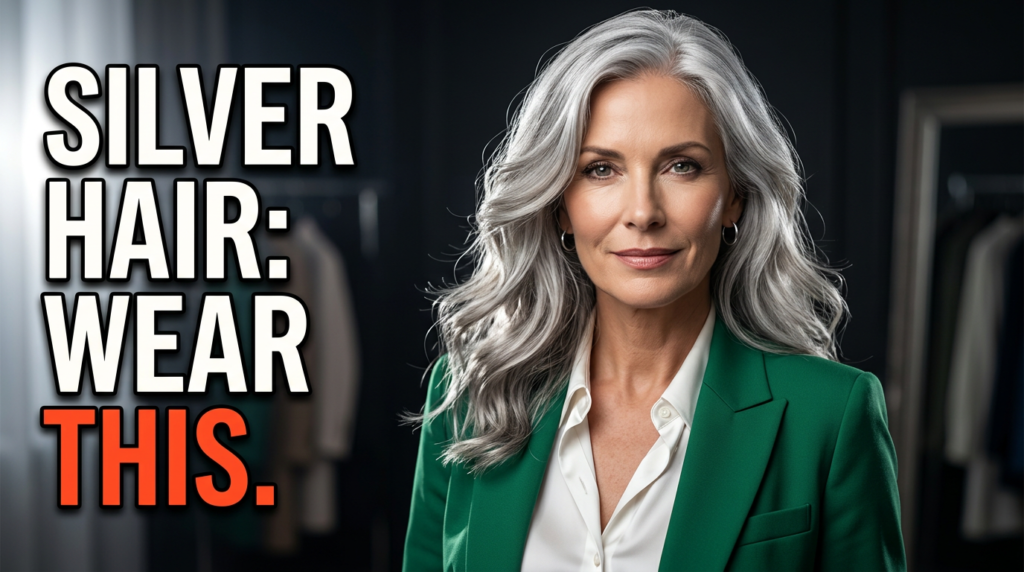
Rich, saturated jewel tones are the strongest performers against silver hair. Sapphire blue, emerald green, ruby red, and amethyst purple create a high-fashion contrast against the coolness of the color, making the silver appear more vibrant and intentional. These shades work across both cool and warm skin tones. Cool-toned individuals will find sapphire and amethyst feel especially natural, while warm-toned skin responds better to emerald and deep plum.
Vibrant emerald green and deep teal also function as strong wardrobe anchors. Both carry enough warmth to complement warmer skin while maintaining the coolness needed to harmonize with silver hair.
Your New Power Neutrals
Many people with silver hair discover their old neutral wardrobe needs a significant pivot. Beige and camel — reliable standbys for most hair colors — can look muddy against the sharp metallic tones of silver. Your new power neutrals are charcoal gray, deep navy, and crisp white.
Charcoal and navy provide the same grounding effect as black, but with more modern softness. Stark black, by contrast, can sometimes read as too severe against very light silver tones. Crisp, bright white creates a clean editorial contrast that photographs beautifully. If you have warmer undertones, lean toward off-whites — but avoid anything with a yellow cast, as it pulls the skin tone in the wrong direction.
Colors to Approach With Caution
Muted, mid-range earth tones present the biggest risk. Dusty beige, khaki, and mustard yellow carry muddy undertones that can make silver hair look flat and push the complexion toward a sallow tone. The issue is not that these colors are inherently wrong — they simply lack the clear pigmentation needed to hold their own against the strength of silver.
If you love warmer earth tones, keep them away from your face. Tan boots and a camel bag work perfectly. A mustard yellow sweater next to your silver hair is a genuine risk worth avoiding.
Pastels also require selectivity. Soft, cool pastels — icy blue, lavender, mint green — can look ethereal when chosen carefully. However, low-pigment or dusty pastels risk washing out the complexion entirely. Choose pastels with clear, crisp tones rather than muted ones, and the pairing works beautifully.
Styling Silver and Color Hair for Maximum Impact
Wardrobe is 80 percent of the equation. The remaining 20 percent lives in how you actually style the hair itself — and the choices here change everything.
Texture and Movement
Loose, natural-looking waves represent one of the most flattering approaches for silver hair. The texture catches light from multiple angles, revealing the multi-tonal complexity within the color. Waves also soften the metallic quality slightly, creating a modern shape that avoids looking stiff or overly styled.
A sleek, straight style makes an entirely different statement — sharp, high-fashion, and deliberate. This approach works especially well with a blunt cut or a high-contrast color. A platinum silver bob with a sharp, even cut delivers the kind of chic that very few colors can match.
Jewelry and Accessories
Silver hair makes jewelry choices noticeably more impactful than with most other hair colors. Silver, white gold, and platinum jewelry complement the cool tones naturally, creating a cohesive metallic effect. Yellow gold creates a bold, intentional contrast — particularly effective for warm-toned skin — though it requires confidence to pull off well.
Hair accessories carry real weight with silver hair. A minimalist metal clip plays up the metallic quality of the color. A silk scarf in a jewel tone — tied around a ponytail or worn as a headband — anchors the whole outfit and creates a deliberate color story. The goal is either to echo the metallic feel of the hair or provide a complementary pop of color that feels planned rather than accidental.
As Vogue’s silver hair styling guide for cool-toned women confirms, the most polished silver looks always involve intentional accessory choices that treat the hair as the statement piece it is — rather than competing with it.
Maintaining Silver and Color Hair Between Salon Visits
Getting the color right takes significant time and investment. Keeping it looking intentional requires consistent at-home care.
Purple Shampoo: How to Use It Correctly
Purple shampoo neutralizes the yellow tones that develop as silver hair fades and picks up environmental pigment. However, overuse causes real problems — too much purple shampoo deposits a lilac tint that most people do not want. Using it once or twice per week provides a solid starting point. The ideal frequency varies by hair porosity and water mineral content, so getting a personalized recommendation from your colorist is worthwhile.
Hydration and Color Longevity
The bleaching process that creates silver deposits significant stress on the hair shaft. Dull, dry hair does not reflect light well — and that luminous quality is precisely what makes silver worth the effort. A weekly deep conditioning treatment or hair mask restores moisture and maintains the shine that gives silver its impact.
Gloss treatments and leave-in conditioners also help seal the hair cuticle. Both add shine and extend color life between appointments. Furthermore, reducing wash frequency directly extends the vibrancy of the color — silver fades fastest through repeated shampooing.
Putting the Full Look Together
Silver hair works as a defining aesthetic statement — but only when the clothes, skin tone, and styling all pull in the same direction. The color itself is not the entire transformation. However, it creates the conditions for a very powerful one.
Start with your skin tone assessment and build your jewel tone foundation from there. Add your power neutrals — charcoal, navy, crisp white — and use them as the backbone of outfits you then punctuate with color. Approach pastels and earth tones deliberately rather than reflexively. Style the hair with intention, treat accessories as part of the color story, and maintain the color consistently so it never reads as neglected.
Silver hair done well signals confidence and a sharp sense of self. Getting the surrounding elements right is what turns a bold hair decision into a complete, cohesive look.
FAQ — Silver and Color Hair
Q1: What clothing colors work best with silver and color hair?
Jewel tones — sapphire blue, emerald green, amethyst purple, and ruby red — create the strongest contrast against silver hair and make the color look more vibrant. Deep navy, charcoal gray, and crisp white function as excellent power neutrals. Avoid mustard yellow and dusty earth tones near the face, as they tend to flatten both the hair color and the complexion.
Q2: Does silver hair suit warm skin tones?
Yes, but the approach needs adjustment. A stark icy silver can create a cold, draining contrast against warm-toned skin. Warmer silver variations — champagne silver or beige-silver — work better. A blue-based toner from a skilled colorist also helps. In the wardrobe, warm-toned skin benefits from deep plum, burgundy, rich olive green, and teal rather than the icy blues that suit cooler complexions.
Q3: How often should I use purple shampoo on silver hair?
Once or twice per week provides a reliable starting point for most people. Using it every wash risks leaving a lilac tint. Hair porosity and water mineral content both affect the ideal frequency — hard water deposits minerals faster and may require more regular use. A personalized recommendation from your colorist gives you the most accurate guidance for your specific hair type.
Q4: What jewelry looks best with silver hair?
Silver, white gold, and platinum jewelry creates a cohesive cool-toned look that complements the hair naturally. Yellow gold works as a deliberate contrast — particularly effective for warm-toned skin — but requires a confident, intentional approach. Minimalist metal hair clips also enhance the metallic quality of silver hair without competing with the color.
Q5: Can pastel colors work in outfits with silver hair?
Yes, selectively. Cool pastels with clear, crisp pigmentation — icy blue, lavender, and mint green — pair beautifully with silver hair. The risk lies in dusty or low-pigment pastels, which can wash out the complexion when worn close to the face. Choose pastels with visible color saturation rather than faded tones, and they work as strong accent pieces.
Q6: How do I maintain shine in silver hair at home?
Weekly deep conditioning treatments or hair masks restore moisture lost through the bleaching process. Leave-in conditioners and gloss treatments seal the hair cuticle and extend color vibrancy between salon appointments. Reducing wash frequency also helps significantly — silver fades most visibly through repeated shampooing, so every extra day between washes extends the quality of the color.