
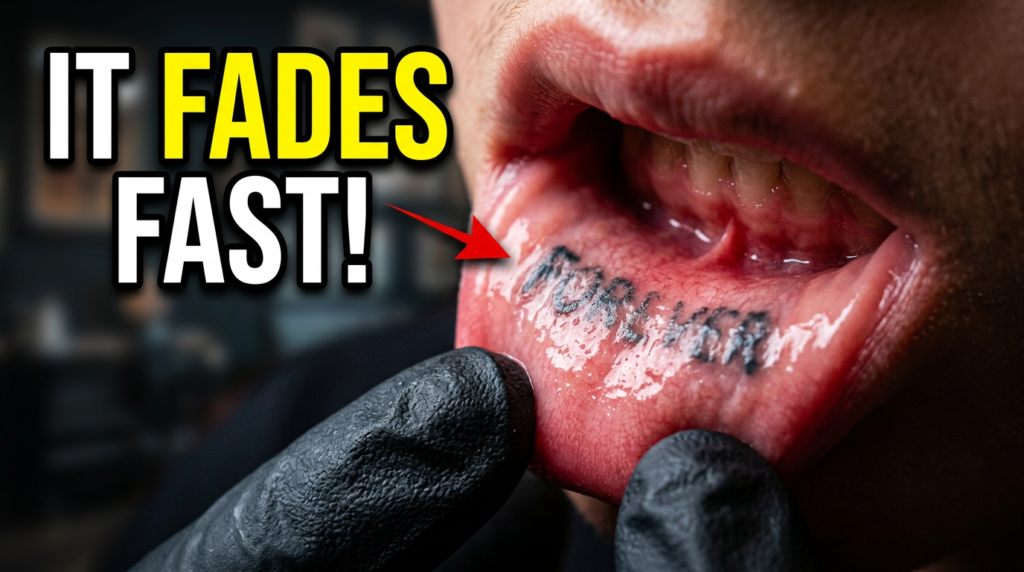
Inner Lip Tattoo: 7 Things Artists Won’t Tell You First
You’ve seen the photos. A tiny word, a symbol, a private joke hidden just inside the lower lip — visible only when someone chooses to show it. The inner lip tattoo has become one of the most searched body art decisions online, and for good reason. It looks effortlessly cool, costs relatively little, and feels intensely personal. However, what most people don’t hear before booking their appointment is how different this tattoo behaves compared to everything else on the body. If you’re seriously considering an inner lip tattoo, this guide covers what actually happens — before, during, and long after the needle lifts.
Why the Inner Lip Is Unlike Any Other Tattoo Placement
Most tattoos go into the dermis — the stable, deeper skin layer where ink particles lodge permanently inside immune cells called macrophages. These cells attempt to break down the foreign ink but cannot, so they essentially become stained for life, holding the design in place.
The inner lip is different. Tattooing here means working on the oral mucosa — the soft, moist tissue lining the inside of the mouth. This same tissue heals a bitten cheek in one or two days. That speed comes from rapid, constant cell turnover. New cells continuously replace old ones, and those old cells — along with any ink they hold — shed away.
The Biological Reality of Mucosal Tissue
The oral mucosa regenerates significantly faster than surface skin. As a result, the tattoo artist is placing ink into a surface that the body actively works to replace. No matter how precise the work, the biology creates a fundamentally different outcome from day one.
This is also why Vogue’s in-depth guide on body art placement identifies the inner lip as the single highest-risk zone for rapid ink loss — because the environment that surrounds the tattoo is never still, never dry, and never cooperative.
How Long Does an Inner Lip Tattoo Actually Last?
Here is the part most artists understate: inner lip tattoos are semi-permanent by nature, not by choice. The lifespan varies widely, but most designs fade significantly within the first six to twelve months. Some become unreadable smudges within three months. A small number, placed by highly experienced artists using precise ink density, hold a readable form for two to three years.
Several factors determine where your tattoo falls on that range.
The 5 Factors That Decide Your Tattoo’s Lifespan
1. Artist Experience With Mucosal Tissue
Working inside the lip requires a completely different technique than tattooing skin. The tissue is soft, moves constantly, and responds unpredictably to the needle. An artist without specific inner lip experience will almost always under-pack or over-work the area — both of which accelerate fading.
2. Design Complexity
Fine lines, small fonts, and intricate symbols fade first. Bold, simple designs — thick letters, solid shapes — hold longer because the ink mass is greater. A detailed floral design will blur into a vague shadow within months.
3. Aftercare Discipline
The healing window is roughly two weeks. During this period, every meal, every drink, and every missed mouthwash rinse chips away at the tattoo’s chance of lasting. Strict aftercare extends lifespan. Poor aftercare shortens it dramatically.
4. Individual Cell Turnover Rate
Everyone’s oral mucosa regenerates at a slightly different pace. Some people hold inner lip tattoos for years with minimal touch-ups. Others watch the same design blur within weeks. There is no way to predict which category you fall into before getting the tattoo.
5. Lifestyle Habits
Smoking, frequent alcohol consumption, and a diet high in acidic foods — citrus, tomatoes, spicy dishes — all accelerate the fading process. These irritants inflame the mucosal tissue and push cell turnover into overdrive.
The Healing Process: What No One Prepares You For
Healing a tattoo on standard skin means keeping the area moisturized, protected from the sun, and clean. Healing an inner lip tattoo means doing the opposite in the one place where doing the opposite is nearly impossible.
The goal during healing is to keep the tattooed area as dry and clean as possible. Inside a mouth producing saliva continuously, that goal is unrealistic — but the closer you get to it, the better the outcome.
A Realistic Aftercare Routine
Rinse with an alcohol-free antibacterial mouthwash after every meal, every drink, and every snack. Do this for at least ten days. Skip kissing for a minimum of one week to prevent bacterial transfer. Avoid spicy, acidic, and extremely hot foods during the first two weeks. Do not prod the area with your tongue.
Swelling is normal during the first two days. Partial ink loss — where sections of the design fall out during healing — is also common. This is not a sign of a bad tattoo or a bad artist. It is the oral mucosa doing exactly what it always does. Most artists include one free touch-up for this reason, so confirm that before your appointment.
The Semi-Permanent Appeal: Why People Still Get Them
Here is the part that surprises most people: for a growing number of tattoo enthusiasts, the fading is not the drawback — it is the point. In a culture where permanent tattoos can feel like a lifetime contract, the inner lip tattoo offers something rare: a commitment with a natural expiry date.
The privacy factor adds another layer of appeal. A tattoo on the forearm is a conversation piece every day. An inner lip tattoo exists entirely on your terms. Cosmopolitan’s honest breakdown of body art trends notes that inner lip tattoos rank among the top choices for people who want body art that doesn’t intersect with their professional life — and that trend has continued growing year over year.
Who Actually Gets Inner Lip Tattoos
The clientele for inner lip tattoos spans a wide range. Some choose a word that carries private significance — a name, a date, a phrase from a meaningful conversation. Others pick something purely for the reaction: a word that becomes a punchline when revealed. Both motivations are equally valid. The key point is that the decision works best when the person going into it fully understands what they are committing to.
What to Ask Before Booking Any Artist
Choosing the wrong artist for an inner lip tattoo does not just affect quality — it affects healing. Ask to see healed photos specifically, not fresh work. Fresh tattoos always look sharp. Healed inner lip tattoos reveal the truth about an artist’s technique, ink packing depth, and ability to work on mucosal tissue.
Ask directly: how many inner lip tattoos have you completed? What ink do you use for mucosal work? Do you include a touch-up in the price?
If the artist hesitates on any of these questions, or cannot show healed work, walk away. The inner lip is not a location to experiment with an artist building their portfolio.
Is an Inner Lip Tattoo Worth It? An Honest Answer
The answer depends entirely on what you want from it. If you are looking for a tattoo that lasts thirty years with zero maintenance, this is not it. If you want a bold, private design that holds beautifully for six to eighteen months and fades gracefully afterward, it can absolutely be worth the cost and the short healing window.
The pain level is moderate to high — the mucosal tissue is sensitive, and the artist must hold the lip back throughout the session. Most designs take fifteen to thirty minutes, which makes the pain window manageable. However, some people find the experience more uncomfortable than expected, so go in prepared.
The cost typically falls between $50 and $150 for a simple design, depending on the artist’s rate and your location. Factor in the near-certain need for a touch-up within the first year, and budget accordingly.
Final Takeaway: Go In With Both Eyes Open
An inner lip tattoo rewards people who understand it completely and punishes people who treat it casually. The biology works against permanence, the healing demands discipline, and the result is never fully predictable. However, when approached correctly — with an experienced artist, strict aftercare, and realistic expectations — it delivers something genuinely unique: a piece of body art that belongs entirely to you, for exactly as long as it chooses to stay.
If the semi-permanent nature works for you rather than against you, book with a specialist, prepare your aftercare kit in advance, and enjoy the process.
FAQ — Inner Lip Tattoo
Q1: How long does an inner lip tattoo last before fading?
Most inner lip tattoos fade significantly within six to twelve months. Some disappear within three months, while others last two to three years with ideal conditions. The lifespan depends on artist technique, aftercare quality, and individual cell turnover rate.
Q2: Does an inner lip tattoo hurt more than a regular tattoo?
Yes, generally. The mucosal tissue inside the lip is highly sensitive, and the artist must manually hold the lip back throughout the session. Most designs take fifteen to thirty minutes, so the discomfort is short but noticeable — usually rated between a five and seven out of ten.
Q3: Why do inner lip tattoos fade so fast?
The oral mucosa regenerates much faster than surface skin. The cells holding the ink shed and replace continuously, taking the ink with them. Constant moisture from saliva, friction from talking and eating, and exposure to acidic foods all accelerate the process further.
Q4: Can you touch up an inner lip tattoo to make it last longer?
Yes. Touch-ups can restore a faded inner lip tattoo, but each session carries the same healing challenges as the original. Most tattoos need a touch-up within the first year. After multiple rounds of fading and re-inking, the tissue can become difficult to work with.
Q5: What is the aftercare routine for an inner lip tattoo?
Rinse with alcohol-free antibacterial mouthwash after every meal and drink for ten to fourteen days. Avoid spicy, acidic, and very hot foods. Skip kissing for at least one week. Keep the area as dry as possible between rinses, and do not prod the tattoo with your tongue during healing.
Q6: Are inner lip tattoos safe?
When done by an experienced artist using sterile equipment, the risk is manageable. However, the mouth contains hundreds of bacterial species, and a fresh tattoo is an open wound. Infection risk is real. Following aftercare instructions strictly and choosing a reputable artist significantly reduces that risk.