What Do You Wear to a Gala — And Why You Keep Getting Dress Codes Wrong
You get an invitation. The dress code says “smart casual.” You think you’ve nailed it — crisp jeans, nice shirt, clean sneakers. Then you walk into the room and feel your stomach drop. Everyone else is in blazers and loafers. You’re not exactly wrong, but you’re not right either.
Sound familiar? If you’ve ever asked yourself what do you wear to a gala, a cocktail event, or even a “smart casual” dinner — and still walked in feeling like you missed a secret memo — this isn’t a fashion problem. It’s a psychology problem. And once you understand why dress codes mess with your head, you’ll never second-guess your outfit again.
The Real Reason Dress Codes Cause So Much Anxiety
Let’s be honest — dress codes are a minefield. Words like “smart casual,” “cocktail,” and “business casual” are notoriously vague. One person’s smart casual is another person’s lazy Sunday. Ask five different people what cocktail attire means and you’ll get five different answers, from a dark suit to chinos and a sports coat.
This ambiguity is the actual problem. Our brains crave certainty, and when we don’t have it, we get stressed. That stress isn’t just social awkwardness — it’s a genuine psychological response to uncertainty. You’re trying to fit into a group, but the rules for belonging aren’t clear.
The real fear isn’t just about wearing the wrong thing. It’s about sending the wrong message:
- Am I disrespecting the host?
- Do I look like I don’t belong?
- Will people think I don’t take this seriously?
This taps into something deep — the human need to belong. Most of us are wired to align with group norms to feel accepted. When a dress code is unclear, those norms are hidden. You have to guess. And if you guess wrong, you stand out in the worst way possible.
That’s why showing up underdressed feels so much worse than overdressing. Being underdressed signals you didn’t care enough to read the room. Being overdressed just says you made a strong effort. When in doubt, always lean slightly more formal — it’s a far safer social bet.
What Do You Wear to a Gala? First, Understand This Psychological Phenomenon
Here’s where it gets genuinely fascinating — and directly answers the question of what do you wear to a gala or any high-stakes event.
The reason your outfit has so much power over you isn’t just about what others think. It’s about what your clothes do to your own brain. This is a real psychological phenomenon called enclothed cognition, coined by researchers Hajo Adam and Adam Galinsky in 2012.
Their research found that the clothes we wear systematically influence our mental processes. But here’s the crucial part — it’s not just the clothes themselves that create the effect. Two things must happen:
- You physically wear the clothing
- You understand the symbolic meaning of that clothing
In their most famous experiment, participants who wore a white coat and were told it was a doctor’s coat showed a significant increase in sustained attention. But those who wore the exact same coat and were told it was a painter’s smock showed almost no improvement. Same coat. Completely different mental effect.
The symbolic meaning was everything.
We associate doctors with attentiveness, precision, and care. When participants wore that symbolic meaning, they subconsciously started to embody it. The same thing happens when you put on a tailored suit — you stand straighter, speak more deliberately, hold yourself differently. When you put on athleisure, you feel like moving.
Your clothes prime your brain to act in alignment with their symbolic meaning. Every single time.
The Halo Effect: How Your Outfit Shapes What Others Think Before You Speak
Alongside enclothed cognition, another powerful bias is constantly at work — the halo effect. This is your brain’s tendency to let one positive trait colour your entire perception of a person.
When someone walks into a room dressed well for the occasion, we unconsciously assume they are also more intelligent, more competent, and more trustworthy. Their outfit creates an invisible halo of positive judgment before they say a single word.
Get the dress code wrong, and you’re fighting on two fronts at once:
- Externally — you fail to trigger that positive halo effect in others, who subconsciously read you as out of place
- Internally — your own mind feels the clash between your clothes and the environment, quietly eroding your confidence
You don’t just look out of place. You start to feel out of place. That loss of confidence then affects how you speak, how you carry yourself, and how you come across. One outfit decision creates a ripple effect through your entire evening.
The 4-Question Framework: What to Wear to a Gala or Any Event
Stop thinking about dress codes as a list of rules. Start seeing them as a form of communication. The real shift is moving from “What clothes are allowed?” to “What message am I supposed to be sending?”
Before you open your wardrobe, ask yourself these four questions:
1. Who Is the Audience?
Dressing for a corporate fundraiser is worlds away from a friend’s gallery opening — even if both invitations say “cocktail attire.” The group’s expectations shape everything. Are you with colleagues, potential clients, old friends, or strangers in a creative industry? Sync your outfit to the specific group, not the generic label.
2. What Is the Purpose of the Event?
A wedding calls for celebratory energy. A networking dinner calls for quiet authority. A charity gala calls for polished elegance. Your outfit should match the event’s function. A power suit feels perfect in a negotiation but completely out of place at a casual birthday gathering.
3. Where Is the Venue?
Location gives you more clues than any dress code label ever will. A grand hotel ballroom, a modern art gallery, a rooftop bar — each has its own built-in formality. Let the space guide your level of dressing. A “smart casual” event at a country club is an entirely different outfit from “smart casual” at a trendy city bar.
4. What Is the Impression You Want to Make?
This is the most important question. How do you want to come across — creative, authoritative, approachable, elegant? Once you know your desired impression, you can use enclothed cognition deliberately. Want to feel more competent and polished? Go structured and formal. Want to seem open and creative? Introduce colour, texture, or a relaxed silhouette. You’re not just getting dressed — you’re choosing which version of yourself walks into that room.
Putting It Into Practice: Smart Casual at an Upscale Restaurant
Run the dreaded “smart casual” through this framework. The event: a team dinner at a high-end restaurant.
- Audience: Your boss and colleagues
- Purpose: Social, but still in a professional context
- Venue: Upscale, modern restaurant
- Impression: Professional, but warm and approachable
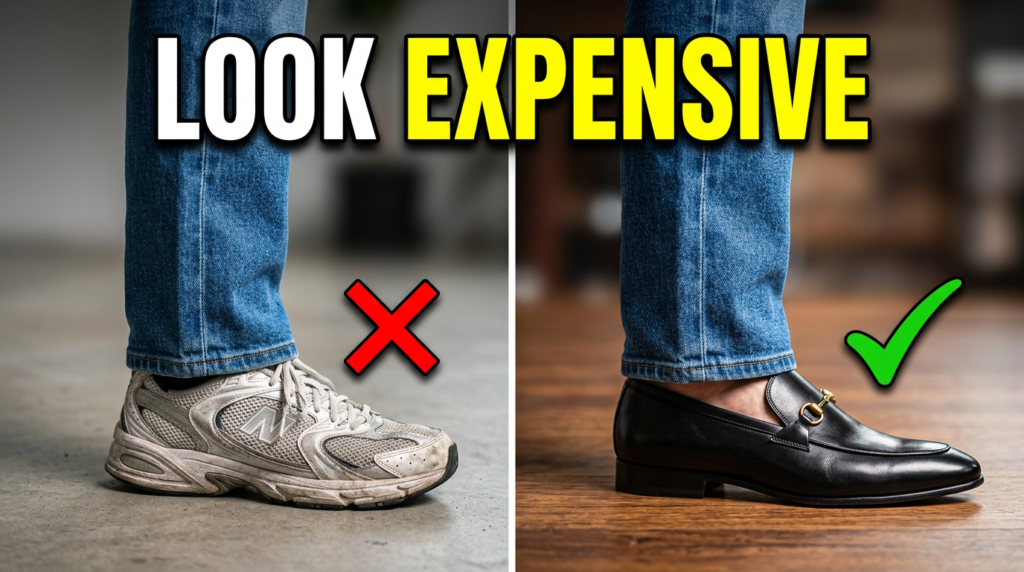
Suddenly, the outfit becomes obvious. Dark-wash jeans might still work — but swap the sneakers for loafers or polished boots. Replace the basic shirt with a quality button-down or a well-fitted blouse. Add a blazer.
The blazer is the key piece here. It carries the symbolic weight of professionalism — triggering enclothed cognition and the halo effect simultaneously — but in an unstructured cut, it still feels relaxed and social. You’ve cracked “smart casual” not because you memorised a rule, but because you understood the psychological context behind it.
What Do You Wear to a Gala: Specific Guidelines
Since gala events are often the most stressful dress code situations, here’s exactly how to approach them using the framework above.
Galas are formal or black-tie adjacent events — think charity dinners, awards evenings, or grand fundraisers. The symbolic meaning expected is elegance, effort, and respect for the occasion.
For women:
- Floor-length or midi gown in a rich fabric (silk, velvet, crepe)
- Tailored jumpsuit in a luxe fabric as a modern alternative
- Embellished clutch, heeled sandals or closed-toe heels
- Minimal, polished jewellery — statement earrings or a delicate necklace, not both
For men:
- Black tuxedo with a white dress shirt and black bow tie (classic black-tie)
- Navy or charcoal suit with a silk tie if the invite says “formal” rather than “black tie”
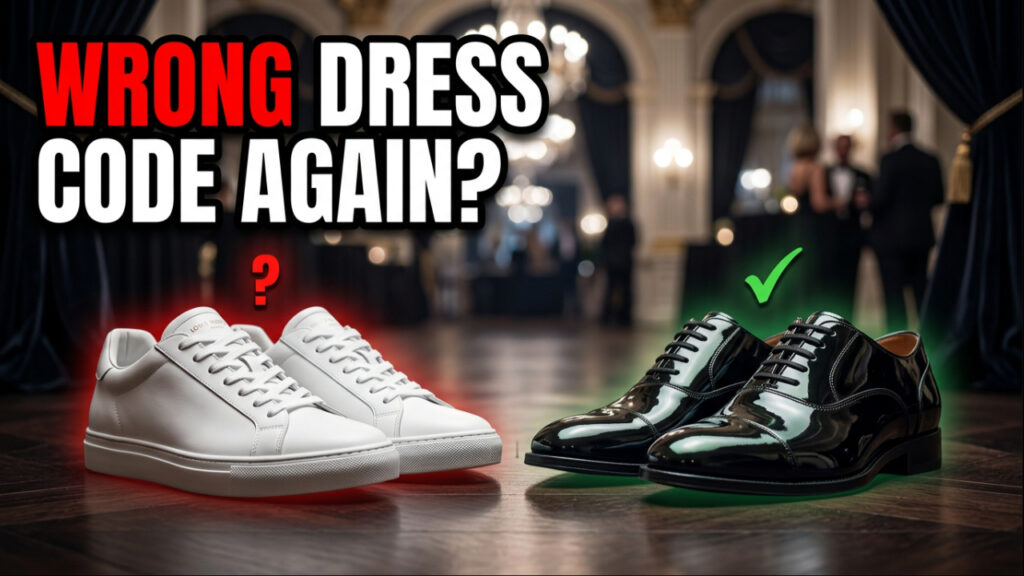
- Polished Oxford shoes or Derby shoes — never loafers at a true gala
- Pocket square adds intention and effort without trying too hard
Common gala mistakes to avoid:
- Wearing a cocktail dress when the dress code clearly states formal
- Choosing comfort-first footwear that clashes with a formal silhouette
- Over-accessorising — galas reward restraint
- Wearing anything with visible logos or branding — elegance is quiet
Fashion Mistakes That Reveal You Don’t Understand Dress Codes
Beyond galas, these are the most common dress code errors people make across all events:
Treating dress codes as permission slips. “Smart casual means I can wear jeans” is the wrong mindset. The question is never what’s technically allowed — it’s what’s contextually appropriate.
Ignoring the venue. The location is half the dress code. Always factor it in.
Dressing for the label, not the crowd. “Cocktail attire” at a creative agency party looks completely different from “cocktail attire” at a law firm reception.
Underpacking on effort. Effort is always noticed. Lack of effort is always noticed more.
The Real Takeaway: Dress Codes Are Social Intelligence, Not Fashion Knowledge
The biggest mistake people make with dress codes is treating them like a fashion exam. They’re not. They’re a test of social and emotional intelligence — your ability to read a room, understand context, and communicate the right message through what you wear.
The anxiety you feel when you get it wrong isn’t a sign that you’re bad at fashion. It’s a signal that you’ve temporarily failed to sync with your social environment. That’s fixable — and now you have a framework to fix it every time.
Your clothes work from the outside in and the inside out. They shape how others perceive you through the halo effect, and they shape how you perform through enclothed cognition. Use both deliberately.
Stop asking “What are the rules?” Start asking “What’s the context, and what’s my intention?” That shift turns dress codes from a source of anxiety into one of the most powerful tools you have — the ability to walk into any room not just looking like you belong, but genuinely feeling it.
Confidence is the one accessory that works at every dress code, every time.
FAQ: What Do You Wear to a Gala and Other Dress Code Questions
Q: What do you wear to a gala if the invite doesn’t specify black tie? When a gala invitation doesn’t specify, default to formal or black-tie adjacent. For women, a floor-length gown or elegant midi dress. For men, a dark suit with a tie at minimum — a tuxedo is always a safe and impressive choice.
Q: Is there a difference between gala attire and black tie? Yes. Black tie is a specific dress code (tuxedos for men, formal gowns for women). Gala attire is slightly broader — it suggests formal elegance but may allow a very polished dark suit or a sophisticated midi dress depending on the event’s context.
Q: What does “smart casual” actually mean? Smart casual sits between formal and casual. Think tailored pieces with relaxed elements — dark jeans with a blazer and dress shoes, or a midi skirt with a structured top. The key is that every piece should look intentional and put-together.
Q: Why does showing up underdressed feel worse than overdressing? Psychologically, underdressing signals a lack of effort or social awareness, while overdressing signals you made a strong attempt. Most hosts and guests interpret effort positively, even if you slightly misjudge the level.
Q: Can I wear a jumpsuit to a gala? Yes — a tailored jumpsuit in a luxurious fabric like silk, crepe, or velvet can absolutely work at a gala. Keep accessories minimal and shoes formal. It reads as modern and intentional rather than under-dressed.
Q: How does what you wear affect your confidence? Through a phenomenon called enclothed cognition, your clothes influence your own mental state and behaviour. Wearing something that symbolically aligns with the occasion primes your brain to act in alignment with that meaning — making you feel more confident, competent, and at ease.