Want to Wear “dressing for a Ballet” The Complete Dress Code Guide for Every Occasion
You just got your hands on ballet tickets — and now you’re standing in front of your closet, completely blank.
Too dressed up? Not dressed up enough? Will everyone else be in floor-length gowns while you show up in a blazer? The spiral is real, and you’re definitely not alone in it. But here’s the thing: knowing how to dress for a ballet is actually a lot simpler than people make it sound.
The secret comes down to one question — are you in the audience, or are you on the stage? Because those two worlds have completely different dress codes, and mixing them up is where most people go wrong.
This guide breaks it all down: what to wear as an audience member at every level of performance, what dancers actually wear (and why), and how to pull off that trending “balletcore” aesthetic without looking like you wandered in from a rehearsal studio.
The Audience Dress Code: What “Dressing for a Ballet” Really Means
Let’s clear something up immediately. There is no single strict dress code for most ballet performances today. You won’t get turned away at the door for not wearing an evening gown — unless you’re attending a very specific gala event with a formal dress code on the invitation.
But there is an unspoken etiquette, and it matters. When you dress for a ballet, it’s a quiet form of respect — for the dancers who have trained for years, for the art form itself, and for the stunning venue you’re sitting in. It also just makes the whole experience feel more special. A night at the ballet is an event worth showing up for.
The biggest mistake people make isn’t being too dressed up. It’s being too casual. Athletic wear, flip-flops, heavily distressed jeans — these feel out of place in a theater setting, and you’ll likely feel it too once you’re sitting there. The goal is simply to look polished and intentional.
What that looks like, though, depends entirely on the type of performance you’re attending.
Level 1: The Casual Matinee — Smart, Chic, No Pressure
Afternoon and weekend matinee performances are the most relaxed setting in the ballet world. The vibe here is smart casual — you want to look put-together, but there’s zero pressure to bring out your most dramatic outfit. Think “effortlessly chic” over “red carpet ready.”
What to Wear (Feminine Looks)
This is the perfect setting for stylish separates. Some solid options:
- High-waisted wide-leg trousers paired with a silky blouse — elegant without being fussy
- A pleated midi skirt with a fine-knit sweater — classic and very on-trend right now
- Dark-wash, well-fitting jeans (no rips) with an elegant top and a blazer to elevate the whole look
- A wrap dress or shirt dress in a solid color or subtle print
For shoes, prioritize comfort alongside style. You’ll likely be walking a bit before you settle into your seat. Chic flats, loafers, or low block heels are all excellent choices.
What to Wear (Masculine Looks)
Leave the full suit at home for a matinee — it’s a bit much for the occasion. Instead:
- Smart chinos or dress trousers with a crisp button-down shirt
- Layer with a well-cut blazer or a cashmere sweater for a more polished, layered look
- Finish with leather loafers or clean dress shoes
The key at this level is clean lines and quality fabrics. You’re aiming to look sharp while feeling relaxed enough to enjoy a two-hour performance.
Level 2: The Classic Evening Performance — Time to Turn It Up
This is what most people picture when they think of a night at the ballet. An evening show — especially on a weekend at a major venue like the Royal Opera House or Lincoln Center — calls for a noticeable step up. This is your moment to embrace cocktail attire and a little bit of drama.
What to Wear (Feminine Looks)
The little black dress is a timeless, genuinely foolproof option. But don’t default to it if color excites you more. Rich jewel tones — deep emerald, sapphire, wine — look absolutely stunning under evening theater lighting and photograph beautifully.
A few strong options for evening:
- A sleek satin or crepe jumpsuit — just as elegant as a dress, and honestly a bit more modern
- A slip dress with a tailored blazer layered over it — sophisticated and versatile
- A structured midi or knee-length cocktail dress in a rich color or subtle texture
- Statement jewelry — this is the occasion for it. Elegant earrings, a bold necklace, a beaded clutch
What to Wear (Masculine Looks)
A well-fitted suit is the right call here. Navy or charcoal are both classic and versatile choices. If you’d rather skip the full suit:
- A dark blazer with dress trousers hits the right note
- A crisp dress shirt is non-negotiable
- A tie elevates the look but isn’t always required — read the room (or the venue)
- Dress shoes only — sneakers feel mismatched with the energy of an evening performance, even at more relaxed venues
You’re matching the grand, atmospheric energy of the theater and the extraordinary performance you’re about to watch. Dress like you know it.
Level 3: Gala, Opening Night, or Premiere — Go All Out
This is the top tier. A gala, a season premiere, or a big opening night is a high-profile event — and the dress code absolutely reflects that. These events are often black-tie optional or full black-tie, so if you have a formal invitation, check it for specifics.
What to Wear (Feminine Looks)
This is your moment for a floor-length evening gown or a truly high-end cocktail dress. Think luxurious fabrication: velvet, silk charmeuse, intricate lace, sequins. Dramatic silhouettes work beautifully here. You might even spot opera gloves and embellished clutches in the crowd — and they’d be completely appropriate.
At this level, it’s very hard to be overdressed. Lean into the occasion.
What to Wear (Masculine Looks)
A tuxedo is not only appropriate — it’s excellent. If that’s not your style, a dark, impeccably tailored suit with a pristine white dress shirt and a silk tie or bow tie is the right alternative. Highly polished black dress shoes complete the look.
The small details matter here: cufflinks, a pocket square, a quality watch. These aren’t superficial — they signal that you understand the gravity of the event. At this level, you’re not just an audience member. You’re part of the spectacle.
What Ballet Dancers Actually Wear — And Why It’s Completely Different
Here’s where it gets interesting. Everything above is about dressing to celebrate the art. What dancers wear is about something else entirely: function.
The Leotard and Tights — A Practical Uniform
When you picture a ballet dancer in class or rehearsal, the image that comes to mind is usually a leotard, tights, and ballet slippers. That’s accurate — and it’s not a fashion statement. It’s a deeply practical uniform.
In class and rehearsal, a teacher needs to see the dancer’s body with complete clarity — are the knees fully extended? Is the spine properly aligned? Is the hip placement correct? Loose or baggy clothing makes it nearly impossible to spot and correct these details. The classic leotard-and-tights combination creates a clean, unobstructed line so nothing is hidden.
You’ll often see dancers wearing convertible tights — these have a small opening at the sole of the foot so dancers can easily access their toes to adjust pointe shoe padding or grip tape without removing the tights entirely.
Warm-Ups Are Essential, Not Optional
Before class begins, dancers layer up with wrap sweaters, leg warmers, and knit shorts to get their muscles warm and guard against injury. Cold muscles and ballet don’t mix well. Once class is fully underway and the body is warm, the layers come off.
The Ballet Bun — Not Just Tradition
Hair is almost universally pulled back into a bun for class and rehearsals — and it’s not purely traditional. During pirouettes and fast turns, loose hair becomes a genuine safety hazard and a major distraction. A whip of ponytail to the face mid-turn is not something anyone wants. For performances, hairstyles are often designed as part of the character and costume — but in the studio, the bun is purely functional.
Balletcore: Wearing Dance Inspiration Without Looking Like You Lost Your Way to the Studio
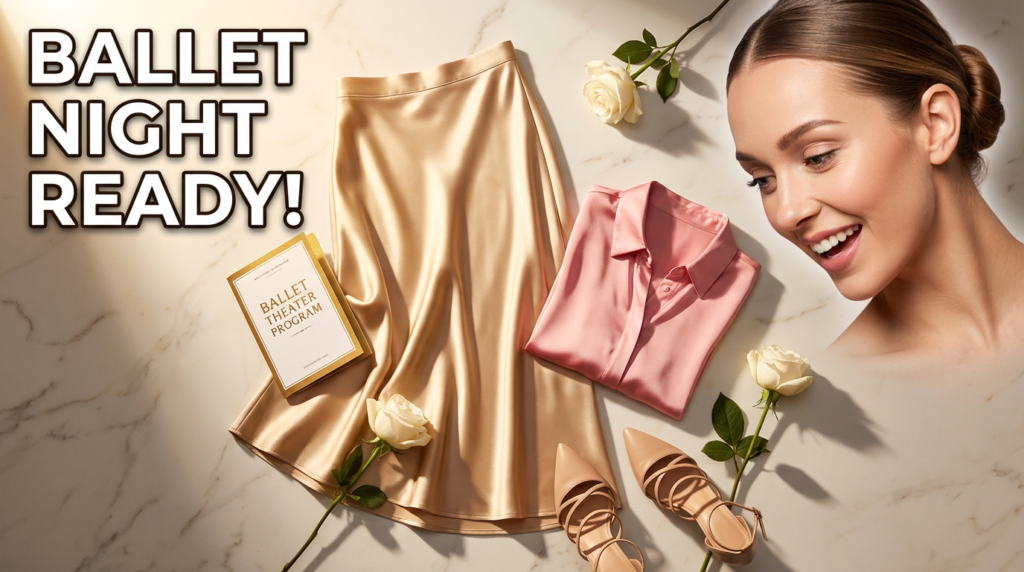
“Balletcore” has been everywhere — on Pinterest boards, in street style, all over TikTok’s fashion side. The aesthetic borrows from the dancer’s world: wrap cardigans, soft floaty skirts, ribbon-tied flats, muted neutrals and blush tones.
You can absolutely incorporate this energy into your ballet audience outfit. A wrap cardigan over a slip dress, ballet flats paired with a wide-leg trouser, a soft satin ribbon belt — these details read as fashion-aware and graceful without going full rehearsal-room.
Just leave the leotard and tights to the professionals. The line between “inspired by ballet” and “dressed like I’m about to do a barre class” is real, and you’ll know when you’ve crossed it.
A Few Things Worth Remembering Before You Get Dressed
Match the occasion, not just the venue. A Saturday matinee and a Friday evening opening night at the same theater call for very different outfits. Time of day matters as much as location.
When in doubt, overdress slightly. In a theater setting, being a little more dressed up than the average person around you never feels wrong. Being significantly underdressed does.
Bring a layer. Theaters are notoriously cold. A chic wrap, a blazer, or a structured cardigan serves a practical purpose and looks intentional at the same time.
Comfort is not optional. You’re sitting for an extended period. Make sure your outfit isn’t too tight, too short, or too restrictive. The performance should have your full attention — not your waistband.
Your Outfit Is a Form of Celebration
Here’s the thing about dressing for the ballet that nobody really says out loud: your clothing is a small, personal gesture toward the art you’re about to experience. The dancers have spent years — sometimes their entire lives — training to create something extraordinary for you. Showing up looking intentional is a quiet way of saying: I know this matters.
The lights will dim, the curtain will rise, and none of the pre-outfit anxiety will matter at all. But you’ll still feel better for having made the effort.
FAQ: How to Dress for a Ballet
Q: Is there a strict dress code for the ballet? Most modern ballet performances don’t enforce a strict dress code. However, there’s an unspoken expectation of polished, smart dressing. The level of formality should match the type of event — casual matinee, evening performance, or black-tie gala.
Q: Can I wear jeans to the ballet? Dark-wash, well-fitting jeans with no distressing can work for a casual matinee, especially when paired with an elegant top and blazer. For evening performances, it’s better to opt for dress trousers or a skirt instead.
Q: What shoes are appropriate for the ballet? For matinees, chic flats, loafers, or low block heels work well. For evening performances, heels or smart dress shoes are more fitting. Avoid trainers or athletic shoes for anything beyond a very casual daytime show.
Q: What is “balletcore” and can I wear it to the ballet? Balletcore is a fashion trend inspired by dancewear — think wrap cardigans, satin slip skirts, ribbon flats, and soft neutral tones. You can absolutely incorporate these elements into an audience outfit. Just avoid wearing an actual leotard and tights as your full look.
Q: What do ballet dancers wear in class vs. performance? In class and rehearsal, dancers wear leotards, tights, and soft ballet slippers — a practical uniform that lets teachers assess alignment and technique. For performances, costumes are designed specifically for each ballet and character, often including elaborate tutus, headdresses, and full theatrical makeup.
Q: Is it better to be overdressed or underdressed at the ballet? Almost always better to be slightly overdressed. A polished, more formal look in a theater setting is rarely out of place. Being noticeably underdressed can feel uncomfortable, especially at evening or gala events.