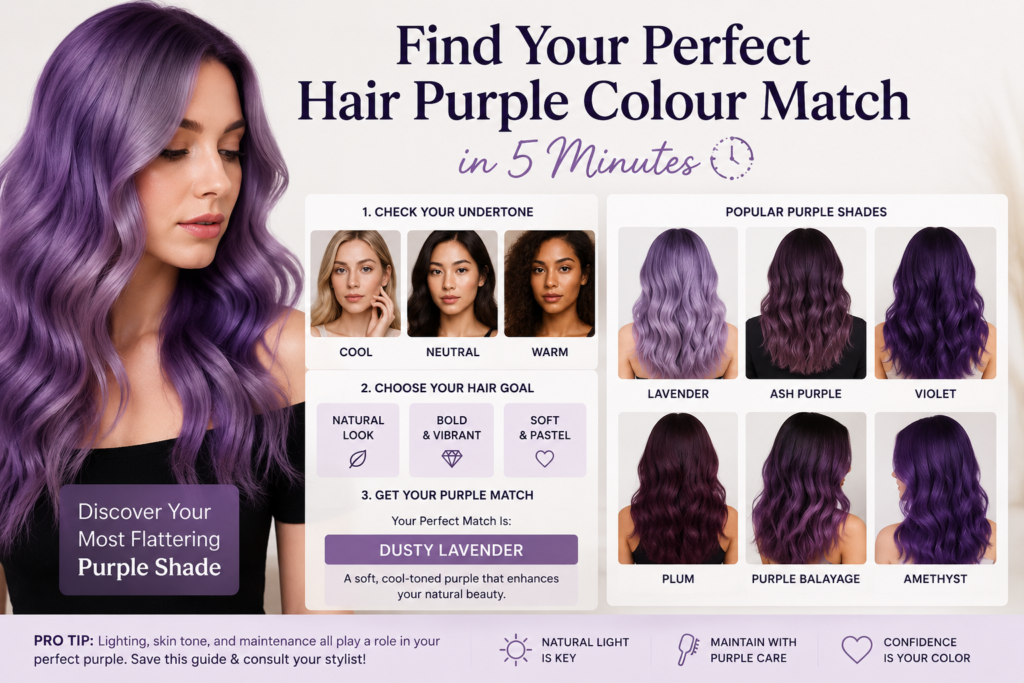
Find Your Perfect Hair Purple Colour Match in 5 Minutes
Before you even think about putting purple dye on your hair, you need to hear this. So many people who dye their hair a fantasy shade like purple end up regretting it or wanting a change within just a few weeks. It’s not because purple is a bad color, it’s because they picked the wrong hair purple colour for them. They didn’t consider their skin tone, their hair’s starting color, or the real-world maintenance involved. Here’s exactly how to find your perfect purple match, so your color looks amazing from day one and actually stays that way.
Purple hair is more than just a color, it’s a whole vibe. It’s confident, creative, and has a little bit of mystery to it. But with a whole spectrum of shades out there, from soft, dreamy lavenders to deep, luxurious plums, how do you know which one will make you glow versus which one might wash you out? The clues are in your skin tone, your natural hair color, and your lifestyle. Below, we’ll cover how to get a read on your skin’s undertones, what level of bleaching is realistic for different shades, and what kind of commitment you’re truly signing up for.
Choosing Your Perfect Hair Purple Colour: The Undertone Test
First things first, let’s talk about your skin’s undertone. Your skin’s undertone helps you choose a flattering purple shade. Most people have cool, warm, or neutral undertones, and the vein test offers a quick way to identify yours.
Flip your wrist over and look at your veins in natural light. If they look mostly blue or purplish, you likely have cool undertones. If they look more greenish, you probably have warm undertones. Can’t really tell, or you see a mix of both? You might be in the lucky neutral camp.
So what does this mean for your purple? If you have cool undertones, with pinkish or bluish hints in your skin, cool-toned purples tend to be incredibly flattering. Think shades like lavender, lilac, periwinkle, and icy, blue-based violets. These colors can harmonize with your skin and create a seamless look.
On the other hand, if you have warm undertones, meaning more golden, peachy, or yellow hints, you might want to lean into warmer purples. These are shades with a red or pink base, like plum, wine, magenta, and rich, warm violets. These deep, jewel-like colors can beautifully complement the glow in your skin.
If you have neutral undertones, you can wear most purple shades, from royal purple to berry and mauve. Let your personal style and eye color guide your final choice.
It’s also worth noting that whether a shade washes you out depends on more than just undertones, the depth and saturation of the color matter a lot too. For darker skin tones, highly saturated and vibrant purples like electric violet and deep plum can create a breathtaking pop of color. It’s all about finding a balance that makes you feel amazing.
The Bleach Question and Your Commitment Level
Now for a dose of reality: getting that perfect purple, especially the bright and pastel kinds, almost always involves bleach. While some highly pigmented dyes can leave a cool tint on darker hair, very few fantasy colors will show up as a true, vibrant shade without pre-lightening the hair first.
If you have light hair, like a natural level 8 to 10 blonde, you’re in a great spot. For a true pastel purple like a clean lavender, you’ll still want a very pale, even base, ideally a level 9 or 10, but you won’t need a dramatic amount of lightening.
For those with medium hair, from dark blonde to light brown, getting a vibrant purple will require lifting your hair. To achieve a bright, clear purple, a stylist will likely need to bleach your hair to a pale yellow. If you just put purple dye on medium brown hair, you’ll probably get a subtle, moody tint in the sunlight, but not that electric pop.
Dark hair usually needs significant bleaching for a vibrant purple. Without it, the color often appears as a subtle sheen that’s only visible in certain lighting. If you’re weighing up the bleaching process, Byrdie’s breakdown of common at-home hair color mistakes is worth a read before you start, since uneven lifting is one of the easiest things to get wrong.
This brings us to your commitment level. A high-maintenance hair color is only beautiful if you can actually maintain it. For a lower-commitment look, consider deeper shades like plum, dark violet, or burgundy. These colors are often more forgiving as they fade and can blend more naturally with darker roots, meaning less frequent touch-ups.
For a bold and trendy look, shades like electric violet are fantastic, but they are high maintenance. Brights are known for fading more quickly and will need regular refreshing to keep their punch. And for the soft and dreamy aesthetic of pastels like lavender and lilac, be prepared for one of the highest-maintenance options. These delicate shades have the least pigment, so they fade the fastest, sometimes in just a few weeks. They require a very light base and constant upkeep.
The Longevity Reality: How Long Will It Last?
Let’s talk about the elephant in the room: fading. Fantasy colors aren’t forever, and purple is no exception. How long your color lasts depends on the dye, your hair’s condition, and most importantly, your aftercare routine.
You might hear that semi-permanent dyes last 4 to 8 weeks, but honestly, that can be a very generous estimate. The fading process is gradual and can start much sooner depending on the product and your habits. Unlike permanent dyes that grow out, these colors coat the outside of the hair and slowly wash away.
On pre-lightened hair, the color looks super vibrant at first because your hair is more porous and soaks up the pigment. But that same porosity means the color can also escape more easily, which often leads to faster fading. Pastels can sometimes start to disappear in just a couple of weeks.
On darker, unbleached hair, deep plum shades often last longer because the hair is less porous. As they fade, the color simply becomes less noticeable or disappears.
The single biggest factor in how long your color lasts is how often you wash your hair. If you wash your hair daily with hot water, you could see serious fading in just a week or two. If you can stretch it to washing just once or twice a week, you’ll dramatically extend the life of your purple.
Maintenance Masterclass: Your Color-Saving Ritual
So you’ve picked your perfect purple and you’re ready to go. Now, how do you protect that investment and keep the color looking fresh? It all comes down to your routine.
First, wait about 72 hours before washing your hair. While it’s not a strict scientific rule, many salons recommend it to give the color time to settle and reduce early fading.
Next, adjust your washing routine. Wash your hair just once or twice a week, use dry shampoo between washes, and rinse with cool or lukewarm water to help preserve the color. Finish with a sulfate-free, color-safe shampoo and conditioner to reduce fading.
Beyond washing, a little extra care goes a long way. Bleached hair needs extra moisture, so use a hydrating hair mask or a deep conditioner once a week to keep your hair healthy and smooth. To fight the fade, try a color-depositing conditioner every week or two; these products add a little pigment back into your hair to revive the vibrancy, and they’re often a safer bet than mixing dye into your own conditioner, which can be unpredictable. According to Refinery29’s guide to hair color maintenance, how often you wash and the products you choose matter just as much as the dye job itself when it comes to keeping any bold color looking fresh.
Finally, protect your color from heat and sun. UV rays can fade color, so think about wearing a hat or using a UV-protectant hair spray if you’ll be in the sun for a while, and always use a heat protectant spray before using hot tools on the lowest effective setting.
Now you have everything you need to choose the right purple hair colour. The best shade complements your features and fits your lifestyle. Whether you prefer a subtle plum or a bold lavender, you can make your choice with confidence.
FAQ Section
What hair purple colour suits my skin tone best?
Cool undertones pair well with blue-based purples like lavender and periwinkle, while warm undertones suit red-based purples like plum and magenta. Neutral undertones can pull off nearly any shade of purple.
Do I need to bleach my hair for a purple hair colour?
It depends on your starting shade. Light blonde hair needs minimal lightening. Medium brown hair often needs partial bleaching for vibrant results. Dark hair usually needs significant bleaching to show a true purple.
How long does purple hair colour actually last?
Semi-permanent purple dye is often estimated at 4 to 8 weeks, but pastel shades can start fading within just a couple of weeks depending on wash frequency and hair porosity.
How can I make my hair purple colour last longer?
Wash your hair less often, use cool water, choose sulfate-free color-safe products, and refresh the color periodically with a color-depositing conditioner.
Does dark hair show purple hair colour without bleaching?
Not usually a vibrant one. Dark hair without bleaching typically only picks up a subtle sheen or tint that’s noticeable mainly in certain lighting.