Dorsey Tennis Necklace Review: Is It Actually Worth the Price in 2026?
You’ve seen it. On your favourite influencers, sparkling across Instagram feeds, maybe even around the neck of your most stylish friend. The dorsey tennis necklace is everywhere right now — and it’s gorgeous. It drips with sparkle, it’s built up a massive amount of hype, and it comes with a price tag that makes you stop and think before clicking “add to cart.”
So is it actually worth it? Is this a smart jewellery buy, or just one of the most brilliantly marketed products of the last few years? I bought one to find out. This is the full breakdown — unboxing, craftsmanship, sparkle, how it compares to the competition, and my honest final verdict on whether it deserves a place in your jewellery box.
First Impressions: The Unboxing Experience
Part of the magic of any well-loved direct-to-consumer brand is the unboxing experience, and Dorsey gets this completely right. The necklace arrives in a beautifully designed, heavy gift box that immediately makes the whole thing feel far more luxurious than you might expect. It’s the kind of packaging you actually feel bad throwing away.
When you open it, the sparkle hits you first. Even in regular indoor lighting, the necklace had an immediate, impressive shine. The piece also has a noticeable weight and substance to it — not flimsy or lightweight the way costume jewellery tends to feel. This feels like real, significant jewellery right out of the box.
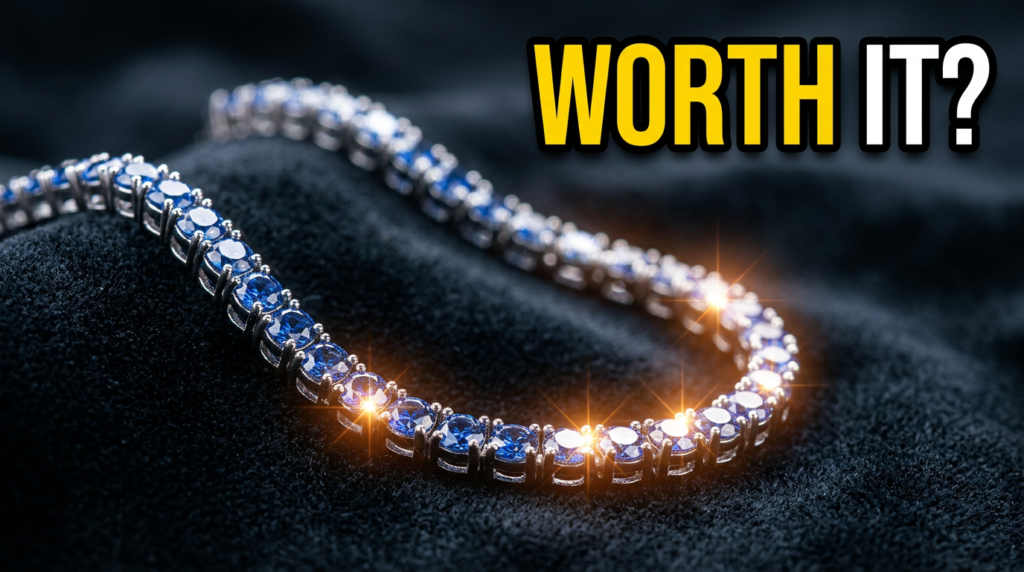
The specific style tested here is the Kate Riviere necklace with lab-grown white sapphires in sterling silver, one of Dorsey’s most popular pieces. The stones are individually set, and the overall first impression is clean, polished, and well-made. There’s a clear “wow” factor. Dorsey is clearly designed to make you feel like you’re holding something far more expensive than it actually is — and on that front, it absolutely delivers.
But a pretty box and a good first impression only go so far. Let’s get into the details that actually matter.
Breaking It Down: The 4 Cs of the Dorsey Tennis Necklace
To properly evaluate whether this necklace is worth your money, it helps to look at it like a jeweller would. Here’s a breakdown using four key criteria: Craftsmanship, Clarity and Sparkle, Competitors, and Cost.
Craftsmanship
Dorsey is a Los Angeles-based brand that sells directly to its customers — no retail middleman. That matters, because cutting out that layer should mean better quality without the crazy markups you’d expect from a traditional jewellery store.
The necklace is built on a solid 925 sterling silver base, which is stamped to prove authenticity and is what gives it that durable, weighty feel. The settings are precise, and each lab-grown gem is secured in a way that feels genuinely robust. One detail worth highlighting is the double clasp, which Dorsey uses on many of its necklaces. This is a fantastic security feature that’s typically only found on much more expensive fine jewellery. Some wearers have mentioned that the clasp can feel a little small and fiddly to do up alone, which is a minor but valid frustration. Overall, though, the craftsmanship feels solid — built for regular, everyday wear rather than occasional use.
Clarity and Sparkle
This is what everyone really wants to know: does it look like real diamonds?
The most common stone in Dorsey’s more accessible necklaces is the lab-grown white sapphire. It’s worth knowing that a white sapphire is a completely different gemstone from a diamond. Diamonds have a higher refractive index, which produces that signature fiery, rainbow-coloured flash. White sapphires, on the other hand, deliver a bright, silvery-white sparkle — more of a cool, ethereal glow than a fiery burst.
In direct sunlight, the sparkle is intense and genuinely impressive. Indoors, it keeps a bright, captivating shimmer that reads as high-end from a distance. Will a trained jeweller clock it as non-diamond up close? Of course. But to the average person — even someone with a decent eye — this necklace is visually stunning and easily passes as a luxury piece.
One particularly reassuring detail: a common issue with cheaper tennis necklaces is that the stones flip or rotate while wearing, disrupting the whole look. With the Dorsey, the stones stay put, which says a lot about the quality of the individual settings.
As Vogue’s jewellery editors have noted in their coverage of accessible fine jewellery, the shift toward lab-grown gemstones in quality sterling silver settings has made genuinely impressive jewellery available at a fraction of traditional luxury prices — and the Dorsey is a strong example of exactly that.
Competitors: Where Does Dorsey Actually Sit?
To understand the value of the dorsey tennis necklace, you need to understand the broader market it lives in.
At the top, there’s traditional luxury — a natural diamond tennis necklace from Tiffany & Co. or Cartier. These are breathtaking, heirloom-grade pieces with price tags starting around $5,000 and going significantly higher. They’re the absolute pinnacle of jewellery, but they’re out of reach for most people.
In the middle, you have lab-grown diamond brands like VRAI, Brilliant Earth, and Mejuri. These brands use lab-grown diamonds — chemically identical to mined stones — set in solid gold. Their tennis necklaces are excellent quality, but they’re priced much higher than Dorsey, typically in the $1,500 to $5,000 range, with some entry-level pieces occasionally available for less.
At the lower end, there’s the budget fashion jewellery you’d find on Amazon or in fast-fashion stores. These use cubic zirconia or glass stones set in cheap plated metals. They might look fine from across the room, but the plating wears off quickly, the sparkle looks flat and artificial up close, and the stones have a tendency to fall out. They’re a temporary solution, not a lasting one.
Dorsey has found its place right between the mid-range and budget categories — delivering a product that looks and feels impressively close to those higher-end options at a fraction of the cost. That positioning is genuinely smart.
Cost and Real-World Value
A classic Dorsey tennis necklace with lab-grown white sapphires typically runs from a few hundred dollars up to around $900 or more, depending on the style and length. So what exactly are you getting for that price?
You’re getting the look of a multi-thousand-dollar necklace, built on durable 925 sterling silver, set with lab-grown white sapphires that rate 9 out of 10 on the Mohs hardness scale — one step below a diamond’s perfect 10 and highly scratch-resistant for daily wear.
A few care notes worth knowing: while some wearers say they keep their Dorsey on in the shower or through sleep, it’s always smart practice to remove jewellery before exposing it to chemicals, lotions, or water. Sterling silver, though durable, can tarnish over time with air and product exposure — but it’s easy to clean and restore.
The value here isn’t about resale potential, which is low for lab-grown stones. The value is entirely in cost-per-wear. For a few hundred dollars, you get an accessory that can genuinely anchor any outfit for years to come.
How to Wear It: Styling the Dorsey Tennis Necklace
A necklace can be technically beautiful, but if it’s uncomfortable or inflexible in how it wears, it’ll just sit in its box. The Dorsey is surprisingly comfortable for its size. Length options typically range between 15 and 17 inches, giving you the choice between a close choker fit or a slightly longer look that rests naturally on the collarbone.
The real strength of this necklace is its versatility. This is not a special-occasion-only piece. It works just as naturally with a simple white t-shirt and jeans — adding a touch of unexpected sparkle to a casual look — as it does layered over a blazer for the office or paired with a cocktail dress for an evening out.
It’s one of those rare pieces that genuinely bridges casual everyday style and formal evening wear without looking out of place in either setting. For layering, it’s particularly effective: pair a shorter Dorsey with a longer, simple gold or silver chain and let the tennis necklace take centre stage.
According to Harper’s Bazaar’s guide to jewellery layering, a classic tennis necklace is one of the most versatile layering anchors you can own — and a white sapphire version like the Dorsey sits beautifully alongside both warm gold tones and cool silver chains.
The Verdict: Is the Dorsey Tennis Necklace Worth It?
After breaking it all down, the definitive answer is yes — but for the right person.
The pros are significant. You get an incredibly high-end look at a genuinely accessible price. The lab-grown stone angle is a real draw for anyone who wants to avoid the ethical concerns tied to mined gems. And the quality is built for frequent wear, offering real durability in daily use.
The cons are also real. The base metal is sterling silver, not solid gold, which may be a dealbreaker for fine jewellery purists. Gold-plated versions could eventually show wear with heavy use over years. And this is not an investment piece in the traditional sense — it won’t hold or grow in monetary value the way natural diamonds might.
Who is this necklace for? It’s perfect for the style-lover who wants a durable, sparkly piece they can wear all the time without the anxiety that comes with a ten-thousand-dollar price tag. It’s for the consumer who prefers lab-grown stones over mined ones. And it’s for anyone who wants that luxury look without the extreme cost.
Who should probably skip it? If you’re a jewellery investor looking for something with resale value, this isn’t your piece. And if you exclusively wear solid 14k or 18k gold, you might want to look at Dorsey’s higher-end solid gold options, or explore brands like Mejuri instead.
Dorsey has brilliantly filled a genuine gap in the jewellery market. It delivers the visual impact of luxury jewellery with the practicality and price point that makes sense for modern, everyday life. That’s a smart buy — and one that genuinely delivers on its promise.
FAQ: Dorsey Tennis Necklace
Q1. Is the Dorsey tennis necklace worth the money?
Yes, for most buyers — particularly those who want the look of high-end jewellery at an accessible price. The craftsmanship, sparkle, and durability all punch well above the price point. It’s not an investment piece in the resale sense, but the cost-per-wear value is genuinely strong.
Q2. What stones does the Dorsey tennis necklace use?
Most of Dorsey’s more affordable styles use lab-grown white sapphires set in 925 sterling silver. Some higher-end Dorsey pieces use lab-grown diamonds in solid gold settings. White sapphires are not the same as diamonds but offer a bright, silvery sparkle that reads as very high-end to the eye.
Q3. Does the Dorsey tennis necklace look like real diamonds?
To most people, yes. The lab-grown white sapphires have a brilliant, captivating sparkle that holds up impressively in both natural and indoor light. A trained gemologist would notice the difference up close, but in everyday wear, it reads as luxury jewellery.
Q4. How does the Dorsey necklace compare to Tiffany or Cartier?
Traditional diamond tennis necklaces from Tiffany or Cartier start around $5,000 and go significantly higher. The Dorsey offers a visually similar look at a fraction of the cost, using lab-grown sapphires in sterling silver rather than mined diamonds in gold or platinum. It’s not a like-for-like comparison in material terms, but for everyday wearability and appearance, Dorsey holds its own impressively.
Q5. Can you wear the Dorsey tennis necklace every day?
Yes. The sterling silver base and lab-grown sapphires are both durable enough for regular wear. That said, it’s best practice to remove any jewellery before showering, swimming, or applying lotions and perfumes, as these can accelerate tarnishing on sterling silver over time.