
What “Clean Sunscreen” Actually Means — And How to Choose the Right One
You see it everywhere. On bottles, in beauty feeds, lining store shelves — the phrase clean sunscreen. It sounds great. It suggests something safe, natural, and just plain better for you. But here’s the thing: “clean sunscreen” doesn’t really mean anything official. It’s a marketing buzzword, not a scientific one, and it has no standardised regulatory definition whatsoever.
So, what should you actually be looking for? This guide cuts through the hype and looks at what science really says makes a sunscreen safe — for you and for the planet. Because what’s in your sunscreen matters a lot more than the word “clean” on the front of it.
The “Clean” Myth: What Does It Actually Mean?
If “clean” isn’t an official term, why is it absolutely everywhere? Because the clean beauty movement has tapped into a very real concern we all share: are the ingredients in our products actually safe?
When people search for a clean sunscreen, they’re usually looking for something that’s non-toxic, eco-friendly, and honest about its formula. The problem is, the word “clean” has become a misleading shortcut. It tends to create this idea of “dirty” versus “clean” ingredients — often without the scientific evidence to back it up.
This has created a lot of fear-based marketing. On one side, you have alarming headlines warning about “toxic chemicals” in your favourite sunscreens. On the other, you have dermatologists and cosmetic chemists pointing out that the dose makes the poison, and that many of these ingredients are perfectly safe in the amounts used in skincare. The goal here is to find the truth in the middle. A truly clean sunscreen isn’t one with a label — it’s one whose formula stands up to scientific review for being both safe and effective.
The Great Debate: Mineral vs. Chemical Sunscreen
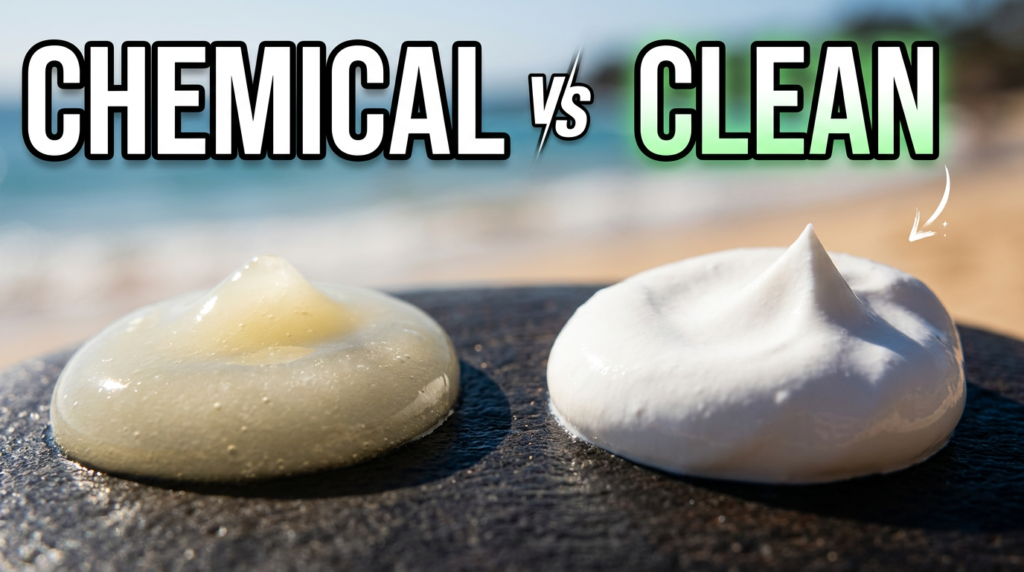
At the centre of the clean sunscreen conversation is the debate between mineral and chemical formulas. Understanding this is the first real step to choosing wisely. The main difference comes down to how each type protects your skin.
Mineral sunscreens use active ingredients like Zinc Oxide and Titanium Dioxide. For a long time, people thought they worked like a mirror — sitting on top of the skin and physically reflecting UV rays. That’s actually a bit of an oversimplification. We now know they work primarily by absorbing UV radiation and converting it into a tiny amount of heat, with a smaller portion of protection coming from scattering and reflecting UV rays.
Chemical sunscreens use organic, carbon-based compounds like avobenzone and octinoxate. These also work by absorbing UV radiation and releasing it as heat from the skin. While you’ve probably heard that you need to wait 15–20 minutes for them to “start working,” protection actually begins as soon as a proper layer is applied. The wait time is mostly recommended to let the sunscreen form an even film on the skin so it doesn’t rub off easily.
For years, the clean beauty movement has pointed to mineral sunscreens as the better choice. That’s because Zinc Oxide and Titanium Dioxide are the only two sunscreen filters the U.S. Food and Drug Administration (FDA) has designated as “Generally Recognised As Safe and Effective” — known as GRASE. The safety data behind them is very strong.
Chemical filters, however, have a more complicated story, with some flagged for potential health and environmental concerns. This led to the simple idea that mineral is “good” and chemical is “bad.” But it’s really not that black and white. Mineral sunscreens can leave that infamous white cast, especially on deeper skin tones. Chemical formulas are often lighter and blend in without a trace. Additionally, many newer-generation chemical filters have been used safely in Europe and Asia for years — and there’s hope they’ll eventually be approved in the U.S. These advanced filters offer excellent broad-spectrum protection without the chalkiness of mineral formulas.
As Elle’s skincare editors explain in their sunscreen guide, the mineral vs. chemical debate is less about one being inherently better and more about matching the right formula to your skin type, concerns, and lifestyle.
Is Your Sunscreen Toxic? The Body Absorption Question
Let’s talk about personal health. The main fear around chemical sunscreens comes down to one thing: absorption. Studies have shown that some chemical filter ingredients can be absorbed into the bloodstream. The ingredient that gets the most attention is Oxybenzone, with some research raising concerns that it could be an endocrine disruptor — meaning it might interfere with hormones. Other filters like octinoxate and homosalate have faced similar questions.
That sounds alarming. And it’s why many people have sworn off chemical sunscreens entirely. However, context is everything. Most of these studies show a potential link, not a definite cause, and often use exposure levels far higher than what you’d get from normal sunscreen use. The FDA sets concentration limits for these ingredients to minimise risk, but has also said that twelve common chemical filters — including oxybenzone — need more safety data before they can earn GRASE status.
So, what does that mean practically? If you’re pregnant, have very sensitive skin, or simply feel uneasy about the potential risks, choosing a mineral sunscreen is a straightforward way to get peace of mind. Zinc oxide and titanium dioxide show very minimal absorption into the body and have a fantastic safety record. That’s why they’re the top recommendation for babies and people with skin conditions like eczema or rosacea. Zinc oxide, in particular, is a real powerhouse — offering great broad-spectrum protection against both UVA (aging) and UVB (burning) rays all by itself.
Beyond the active ingredients, it’s worth scanning the inactive ingredient list too. One of the most common causes of skin sensitisation from skincare products is fragrance. If your skin is on the sensitive side, choosing a fragrance-free formula is always a smart move. High amounts of drying alcohols or certain preservatives can also be worth watching if your skin tends to react easily.
Decoding “Reef-Safe” Sunscreen
The idea of clean sunscreen isn’t just about personal health — it’s also about the planet. “Reef-safe” has become a major selling point in recent years, but just like “clean,” it’s a marketing term that can be genuinely misleading.
Here’s what we know: lab studies have shown that certain chemical sunscreen filters can be harmful to marine life. When ingredients like oxybenzone and octinoxate wash off in the ocean, they’ve been linked to coral bleaching and broader ecosystem damage. This science — even while some experts say the real-world scale is still being studied — led places like Hawaii and Palau to ban sunscreens containing these ingredients.
In response, many brands simply removed oxybenzone and octinoxate, slapped a “reef-safe” sticker on the bottle, and moved on. The problem? Those formulas sometimes still contain other chemical filters like octocrylene, which some research also suggests may pose concerns for marine ecosystems. This kind of move can feel like greenwashing — making a product appear more eco-friendly than it actually is.
So what does a genuinely reef-conscious sunscreen look like? Based on the precautionary principle, many environmental groups point to non-nano mineral sunscreens. Mineral filters come in different particle sizes. “Nano” particles are extremely small, while “non-nano” particles are larger. The concern is that nano-sized particles might be small enough to be ingested by coral, causing damage. Non-nano particles are thought to be too large to be absorbed this way — making them a more cautious choice for marine environments.
This means you can’t simply trust the “reef-safe” sticker. You have to turn the bottle over and actually read the active ingredients. Look specifically for “Non-Nano Zinc Oxide” or “Non-Nano Titanium Dioxide.” If a label just says “zinc oxide” without specifying particle size, it’s worth seeking out a brand that’s more transparent about its formula.
According to Byrdie’s breakdown of reef-safe sunscreen claims, true reef-conscious formulas will always clearly label their mineral filter particle size — so if that information is missing, it’s a sign the brand hasn’t thought carefully enough about the full picture.
Your Practical Guide to Choosing the Right Sunscreen
That was a lot of science. So let’s boil it all down to a simple guide you can actually use.
Step 1: Read the Active Ingredients
This is the most important part of any sunscreen label. For a solid precautionary choice for both your body and the planet, look for Non-Nano Zinc Oxide or Non-Nano Titanium Dioxide. If you prefer a chemical formula, look for options that use newer-generation filters wherever possible.
Step 2: Scan the Inactive Ingredients
Keep an eye out for potential irritants. If your skin is sensitive, avoiding “Fragrance” or “Parfum” in the formula is the top priority. Watch for high amounts of drying alcohols too, especially if your skin tends to feel reactive.
Step 3: Check the Stats
Make sure the label says Broad Spectrum — this means protection from both UVA and UVB rays. Then, choose an SPF of 30 or higher. SPF 50 is actually a great target, since most people don’t apply quite enough sunscreen, and a higher number provides a useful safety buffer.
Match the Formula to Your Skin Type
The best sunscreen in the world is useless if you can’t stand wearing it day after day.
For oily or acne-prone skin, a lightweight mineral formula can work beautifully. Many zinc-based sunscreens are non-comedogenic and can even absorb a bit of excess oil throughout the day.
For dry skin, a mineral lotion or cream with hydrating inactive ingredients like glycerin or hyaluronic acid is a great pick.
For sensitive skin, a fragrance-free, mineral-only sunscreen is the gold standard for avoiding irritation.
So, What Does “Clean Sunscreen” Actually Mean?
It means looking past the marketing slogans and becoming your own informed reader of ingredient labels. It means understanding that a sunscreen’s real quality comes from the science inside the bottle — not a buzzword on the front of it.
Based on the current evidence, a broad-spectrum, SPF 30+ sunscreen using non-nano mineral filters is a straightforward and excellent choice if you have concerns about ingredient absorption or environmental impact. The sunscreen field is also always improving, with newer and better-performing filters on the horizon that promise even more options for every skin type and concern.
Ultimately, the most important thing is finding a sunscreen you genuinely love wearing every single day. Consistent protection is your best defence against both premature aging and skin cancer. Don’t let fear-based marketing stop you — let the science empower you instead.
FAQ: Clean Sunscreen Explained
Q1. What does “clean sunscreen” actually mean?
“Clean sunscreen” is a marketing term, not a regulated category. It generally refers to sunscreens formulated without certain chemical ingredients that consumers consider potentially harmful. However, since there’s no official definition, what counts as “clean” varies widely from brand to brand.
Q2. Is mineral or chemical sunscreen better?
Neither is universally better — it depends on your skin type, concerns, and priorities. Mineral sunscreens (zinc oxide and titanium dioxide) have strong safety records and are the FDA’s preferred GRASE-certified filters. Chemical sunscreens are often lighter and easier to wear daily. Choosing comes down to what works best for your skin and lifestyle.
Q3. Is oxybenzone in sunscreen dangerous?
Some studies have raised questions about oxybenzone’s potential as an endocrine disruptor, but most research shows a possible link rather than a confirmed cause — and typically at exposure levels much higher than normal sunscreen use. That said, the FDA has noted it needs more safety data. If you want to avoid it, opt for a zinc oxide or titanium dioxide-based formula.
Q4. What does “reef-safe” sunscreen mean?
“Reef-safe” is a marketing term with no legal definition. It typically means a sunscreen free from oxybenzone and octinoxate, which have been linked to coral reef damage. However, many “reef-safe” products still contain other potentially problematic chemical filters. For the most reef-conscious choice, look for non-nano zinc oxide or non-nano titanium dioxide formulas.
Q5. What SPF should I use every day?
SPF 30 is the minimum recommended for daily protection. SPF 50 is an even better target, since most people apply less sunscreen than the tested amount, and a higher SPF provides a useful extra buffer. Always choose a broad-spectrum formula that protects against both UVA and UVB rays.
Q6. What is non-nano zinc oxide in clean sunscreen?
Non-nano zinc oxide refers to zinc oxide particles that are larger in size, as opposed to nano particles which are extremely small. Non-nano particles are considered the more environmentally cautious choice because they’re thought to be too large to be ingested by coral — making them a popular pick for reef-conscious sunscreen formulas.