Block Heel Sandals: 7 Things Stylists Know That Most People Don’t
Most people still think of block heel sandals as the “sensible” choice — the shoe you reach for when your feet hurt, not the one you plan an outfit around. That assumption is wrong, and stylists have known it for years. Block heels have quietly moved from the footnotes of fashion to the front row, and understanding why means rethinking everything you thought you knew about what makes a heel worth wearing. This guide covers the design, history, and practical styling logic that makes block heel sandals one of the smartest footwear investments right now.
The Stiletto Was Never as Powerful as It Looked
For decades, one heel dominated: the stiletto. Named after a slender Italian dagger, it became the default “dressed up” shoe for most of the 20th century. However, its rise was built on a paradox. The stiletto concentrated a wearer’s full body weight onto two minuscule points — creating immense pressure on the ball of the foot and throwing the body’s balance completely off-centre. Walking became precarious. Running was impossible. Navigating cobblestones turned into an event.
The Posture Illusion
High heels do alter posture. They increase the curvature of the lower back and shift the body’s centre of gravity, creating what became a symbol of Hollywood glamour — most famously worn by Marilyn Monroe. But “looking powerful” and “feeling powerful” are two very different things. The stiletto offered the visual at a significant physical cost. When Roger Vivier engineered the first modern slim heel for Dior in 1954, he used a concealed steel rod to support the design. The silhouette depended on a clear engineering compromise: make it beautiful, but make it precarious.
For decades, fashion accepted this trade-off without question. The blisters, the aching arches, and the hobbled walk at the end of the night were treated as the price of admission. However, that consensus has shifted — and block heel sandals are at the centre of that shift.
As Vogue’s definitive guide to heel history explains, the cultural moment that made stilettos synonymous with femininity was always more constructed than inevitable.
Why Block Heel Sandals Are Actually Better-Engineered
The core advantage of a block heel is straightforward: surface area. While a stiletto forces your entire weight onto a single narrow point, a block heel distributes that same weight across a significantly wider base. The result is immediate and noticeable — the wobble disappears, the pressure on the ball of the foot drops sharply, and your stride becomes far more natural.
Stability Changes How You Move
When you feel stable, you move differently. You stop micro-managing each step and start walking with genuine confidence. Uneven pavement, subway grates, and restaurant terraces stop being threats. Furthermore, the psychological effect compounds over a full day. Wearing block heel sandals to an all-day event — a wedding, a full day of meetings, a long weekend of travel — stops feeling like an endurance act.
Modern block heels also benefit from significant material innovation. Where stilettos rely on a steel rod for structural integrity, contemporary block heel construction incorporates lightweight composites, recycled plastics, and in some high-end designs, aerospace-grade foam elements that improve shock absorption. Some of the best designs on the market now come from collaborations between footwear designers and orthopaedic specialists — a shift that would have been unthinkable during the stiletto’s unchallenged reign.
Arch Support as a Design Feature
Poorly designed heels fail at arch support, which is where most long-wear discomfort actually originates. Well-engineered block heel sandals address this with contoured footbeds that keep the foot properly aligned — reducing strain not just on the arch, but on the ankles, knees, and lower back. Memory foam and gel inserts, borrowed from performance athletic footwear, now appear regularly in block heel designs at every price point.
The Fashion History Most People Miss
Block heel sandals are not a recent invention, and they were never simply the “comfort compromise.” The silhouette entered modern fashion in the 1960s — most notably through Roger Vivier’s Pilgrim pump for Yves Saint Laurent in 1965. With its squared toe and low, solid heel, it became the footwear expression of the Mod era: a shoe you could actually move in, designed for a generation that equated freedom with mobility.
Why the 1990s Buried It (And Why That Was Temporary)
For much of the late 20th and early 21st centuries, the block heel was pushed into the “comfort” or “orthopedic” category — code, in fashion’s language, for boring. The stiletto dominated editorial imagery, red carpets, and cultural shorthand. However, what looked like a defeat was actually a pause. The block heel was waiting for culture to catch up with its logic.
That catch-up came from several directions at once. The post-pandemic reassessment of what “getting dressed” should feel like arrived first. After years of working from home in trainers and lounge wear, the idea of returning to painful, restrictive footwear felt genuinely absurd to a large portion of the market. Stylists and fashion editors noted a clear shift: women began prioritising support and heels they could move in without immediate discomfort. The block heel was the obvious answer — but it needed design credibility to close the deal.
How High Fashion Made the Block Heel Cool Again
The block heel’s full rehabilitation required high-fashion endorsement, and it arrived. Prada, Gucci, and Bottega Veneta each developed signature takes on the silhouette — offering everything from architectural sculptural heels to sleek minimalist pumps. Chanel and Tory Burch brought it to a broader commercial audience, pairing block heels with polished ready-to-wear in a way that made the “sensible” choice look like the most sophisticated one in the room.
The Redefinition of What “Power Dressing” Means
The old model of power dressing — shoulder pads, stilettos, aggressive silhouettes — was always built on a mimicry logic: dress like the authority figure, earn the authority. A newer, more self-assured aesthetic has replaced it. Power now reads as ease and capability. It is the ability to stride purposefully, stand for three hours, handle whatever the day presents, and still look exactly as put-together as when you started. Block heel sandals fit this updated definition far better than stilettos ever could.
As Harper’s Bazaar’s comprehensive wardrobe guide on the shift toward functional elegance confirms, the most influential dressers of the current moment prioritise clothes and shoes that work with their lives — not against them.
The Versatility Advantage
A good pair of block heel sandals functions across more contexts than almost any other heeled shoe. Wear them with straight-leg jeans and a linen shirt for a relaxed Saturday, with tailored wide-leg trousers for the office, or with a midi dress for an evening event. That kind of wardrobe-wide utility aligns directly with a growing consumer preference for fewer, better pieces — investments that earn their space by working in multiple situations.
How to Style Block Heel Sandals: What Actually Works
Styling block heel sandals well comes down to proportion and silhouette management. The heel’s width and solidity create a visual anchor at the base of the outfit — which is an asset if you use it intentionally.
With Wide-Leg Trousers
Wide-leg or straight-cut trousers pair naturally with a block heel. The leg width echoes the heel’s proportions, creating a visually cohesive line from hip to floor. Cropping the trouser to just above the ankle lets the heel show cleanly. Avoid very tapered or skinny trousers — the proportion shift between a narrow leg and a wide heel reads as awkward.
With Midi and Maxi Lengths
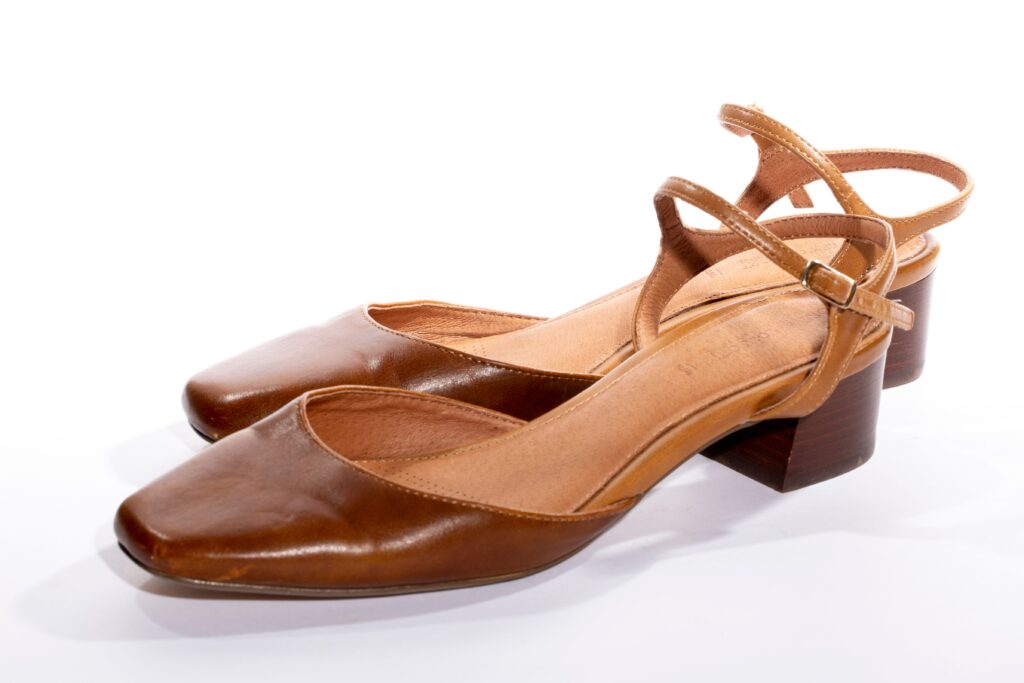
Block heel sandals handle midi and maxi lengths exceptionally well because the heel provides enough height to prevent the hem from dragging while keeping you steady on your feet all day. A strappy block heel sandal with an ankle strap works especially well here — it anchors the shoe visually against longer hemlines that might otherwise overwhelm a delicate silhouette.
With Tailored Suiting
The combination of a sharply tailored suit with a block heel sandal is one of the most current silhouettes in fashion right now. The suit supplies structure; the sandal supplies the signal that you dressed this way because you chose to — not because formality demanded it. A low or mid-height block heel works best here; very high block heels can tip the look into costume territory.
What to Look for When Buying Block Heel Sandals
Not all block heels are equal. Several design details separate a shoe that works hard from one that gives up after an afternoon.
Heel Height and Width Ratio
The most comfortable and most stylish block heel sandals keep the heel height proportional to the heel width. A very tall block heel with a narrow width undercuts both the stability advantage and the aesthetic logic. Mid-height heels — roughly 5 to 7.5 centimetres — tend to offer the best balance of elevation and wearability. The heel base should be wide enough that it contacts the ground with real surface area, not just a thicker version of a stiletto’s point.
Footbed and Strap Design
Look for a contoured footbed rather than a flat one — the contour supports the arch across long wear periods. Strap placement matters significantly. Choose an ankle strap that sits just above the ankle bone. It helps keep the foot in place and reduces the risk of blisters. A well-structured toe box that doesn’t compress the toes is equally important.
Material Quality
Upper materials in genuine leather or high-quality suede mould to the foot over time, improving fit rather than degrading it. Synthetic materials tend to stay rigid, which compounds pressure points. Choose non-slip rubber sole plates for added traction. On a slick leather sole, a block heel can lose much of its stability advantage.
The Bigger Picture: What Block Heels Say About Where Fashion Is Going
The block heel’s rise isn’t a trend in the conventional sense. It reflects something more structural: a shift in what the footwear industry — and fashion more broadly — is optimising for. For most of the 20th century, aesthetics were the primary variable and comfort was the compromise. That equation is inverting. Consumers increasingly want products that perform across the full demands of their actual lives.
This is driving genuine innovation. 3D-printed customised soles are moving into mainstream production. The same is true for smart materials developed with sports science researchers and bio-based alternatives to conventional leather. Sustainability is also driving change across the industry. Designers are exploring circular shoe designs that can be repaired or recycled. Materials derived from mushrooms, grape waste, and recycled ocean plastics are also finding their way into commercial collections.
Block heel sandals sit at the intersection of all these shifts. They proved that the market would embrace footwear that prioritises the wearer’s experience without sacrificing visual appeal. In many cases, consumers actively prefer it. The stiletto hasn’t disappeared, and it won’t. But it now shares its cultural authority with a heel that earns that authority honestly.
The Bottom Line on Block Heel Sandals
Block heel sandals reward a closer look. The design logic is sound, and the style credentials are fully established. The wearability advantage over stilettos is not a minor quality-of-life improvement. It is a fundamental difference that changes what the shoe allows you to do and how you feel while wearing it. The best block heel sandals available today combine thoughtful engineering with strong visual appeal. That combination would have been rare in this category even ten years ago.
Many people still see block heels as the “comfortable compromise.” That perception is outdated. Start with a mid-height style in a neutral leather or suede. It will work with more outfits than almost any other shoe in your collection. It will also stay comfortable and useful long after the day gets demanding.
FAQ — Block Heel Sandals
Q1: What exactly counts as a block heel sandal?
A: A block heel sandal is an open-toe or open-sided shoe with a wide, squared-off heel — as opposed to a thin stiletto or tapered kitten heel. The defining characteristic is the heel’s flat, broad base, which distributes weight more evenly across a larger surface area. Heights range from low (around 3 cm) to high (over 9 cm), all sharing the same wide-base structure.
Q2: Are block heel sandals actually more comfortable than stilettos?
A: Yes — and the reason is physics, not personal preference. A block heel spreads your body weight across a wider base, reducing pressure on the ball of the foot significantly. Most people who switch from stilettos to block heel sandals report being able to wear them for full days without the foot pain they associate with heeled shoes. That said, fit quality and footbed design still matter enormously.
Q3: What height block heel sandal should a beginner start with?
A: A mid-height block heel — roughly 5 to 6.5 centimetres — is the most accessible starting point. It offers enough elevation to change the silhouette of an outfit without requiring significant adjustment to your gait. Very low block heels (under 4 cm) can feel more like a flat, while very high block heels (over 9 cm) require more confidence and core stability to walk in comfortably.
Q4: Can block heel sandals be worn to formal events?
A: Absolutely. Many of the most sophisticated formal block heel sandals come from luxury houses including Prada, Bottega Veneta, and Manolo Blahnik. A sleek block heel sandal in satin, metallic leather, or nude tones works well with formal midi dresses. It also pairs nicely with tailored eveningwear. The key is choosing a refined silhouette — avoid overly chunky or platform-integrated styles for black-tie occasions.
Q5: How do I style block heel sandals with wide-leg trousers?
A: Crop your wide-leg trousers to just above the ankle so the heel is visible — this creates a clean, deliberate line rather than a buried silhouette. Match the heel width to the trouser leg width. Very wide palazzo-style trousers work well with a chunkier block heel, while tailored wide-leg trousers pair better with a refined mid-width block heel.