The Best Eye Makeup Remover for Sensitive Eyes Isn’t What You Think
Stop rubbing your eyes. Seriously. If you’ve been on that endless hunt for the best eye makeup remover for sensitive eyes — one that’s actually gentle but still works on stubborn, waterproof mascara — the answer might not be in those expensive, oily bi-phase removers everyone tells you to buy. Your mascara might come off in five seconds, but the wrong remover can leave your eyes irritated for hours.
The Real Reason Your Eyes Are Irritated After Removal
You know the struggle. You spend the day with flawless, budge-proof eyeliner, only to spend your night in a frustrating battle with a cotton pad. You wipe, you scrub, and you wake up the next morning with raccoon eyes and a pair of red, irritated eyes that feel dry and gritty.
Here’s the interesting part: when people say they have “sensitive eyes,” the problem usually isn’t just one specific ingredient. It’s the entire experience. It’s the rubbing, the oily residue, the hidden fragrances, the alcohol, and the formulas that force you to physically scrub the most delicate skin on your body just to feel clean.
That friction is a major enemy. Repetitive, harsh rubbing over time can contribute to inflammation and stress on the skin, which is linked to the breakdown of collagen and elastin — potentially leading to premature fine lines. It can also irritate the tiny, fragile blood vessels under your skin, which may worsen the appearance of dark circles.
So if you’ve ever taken off your makeup and thought, “Why do my eyes feel worse after I clean them?” — this is exactly why. The best eye makeup remover for sensitive eyes isn’t always the strongest one. It’s the one that works without you having to do all the extra work.
Why Formula Matters More Than You Think
The core idea here is simple: the best removers dissolve makeup instead of dragging it off. That single distinction matters more than anything else.
The skin around your eyes is significantly thinner than the skin on the rest of your face. It has fewer oil glands, meaning its natural protective barrier is weaker and more vulnerable to irritation. When you use a remover that requires repeated rubbing, you’re creating friction right where your skin is least equipped to handle it.
This is why understanding the formula is so important. Labels that say “ophthalmologist-tested,” “fragrance-free,” “alcohol-free,” and “suitable for contact lens wearers” are your first clue. They signal that a brand has at least considered the unique needs of the eye area. According to Byrdie’s guide to eye makeup removers, eye-specific formulas exist for a reason — and skipping this detail is one of the most common mistakes people make.
The 4 Types of Eye Makeup Removers Tested
To find out which formula actually lives up to the promise of being both gentle and effective, four contenders were put to the test — each representing a different approach to makeup removal.
The exact same makeup was applied for every test: two coats of notoriously stubborn waterproof mascara and a black, long-wear gel eyeliner, fully set before each attempt.
1. The Micellar Water (The Micellar Myth)
Standard, everyday micellar water is often marketed as the ultimate gentle cleanser. With a soaked cotton pad pressed on the eye for about 20 seconds — it took off eyeshadow, but the waterproof mascara and eyeliner held on for dear life.
A second pass. A third. More pressure. The familiar stinging sensation began to creep in. This is the friction problem in action. It’s simply not strong enough to dissolve heavy-duty makeup, so rubbing becomes unavoidable. For waterproof formulas, this is a fail.
2. Clarins Instant Eye Makeup Remover (The Luxury Classic)
This high-end bi-phase formula has been a cult favorite for years. Give it a good shake, soak a fresh pad, press, and hold — 10, 9, 8 seconds… One gentle swipe. Wow. About 95% of the makeup gone in a single, gentle pass.
The formula feels soothing thanks to botanical extracts like cornflower water and rose water. There is a slight oily residue left behind, which some people might not love, but there was absolutely no stinging and minimal rubbing. A very strong performance.
3. CeraVe Comforting Eye Makeup Remover (The Drugstore Darling)
Another bi-phase remover, but with that trusted CeraVe reputation — packed with ceramides and hyaluronic acid to support the skin barrier. Shake, soak the pad, place it on the eye, and let the formula work.
Just like the Clarins, it sliced right through that waterproof mascara and liner with almost no effort. No stinging at all. It feels slightly less oily on the skin than the Clarins, which is a big plus. Fantastic performance, especially for the price point.
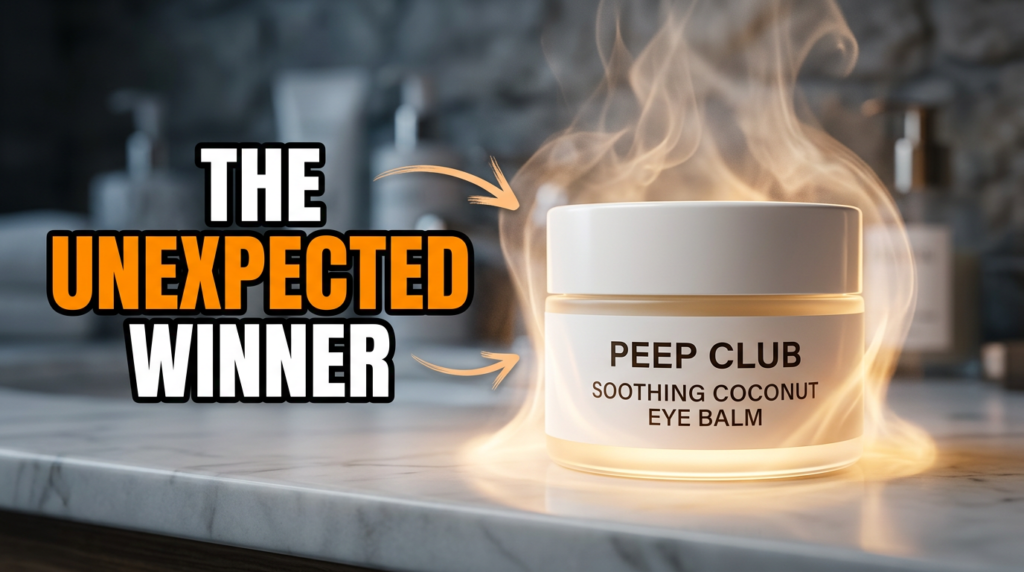
4. Peep Club Soothing Coconut Eye Balm (The Wildcard)
This one is completely different. No cotton pads. A pea-sized amount of the balm, warmed between the fingertips, massaged directly onto the dry eyelid and lashes.
It feels strange at first — like smearing the makeup around — but the friction is incredibly low. Made with coconut oil, chamomile, and cureberry extract, it feels calming on the skin. Once the makeup has completely melted, a warm, damp cloth gently wipes everything away.
Everything is gone. Every last speck of mascara and eyeliner dissolved. The eye area doesn’t just feel clean — it feels soft, calm, and hydrated. No redness. No irritation. It felt like a spa treatment, not makeup removal.
The Winner — And the Science Behind Why
The product that delivered the most effective and gentle clean was the one that required the least amount of rubbing: The Peep Club Soothing Coconut Eye Balm.
This is exactly what “the best remover isn’t what you think” actually means. We’ve been so conditioned by marketing to believe eye makeup removal requires a liquid and a cotton pad that we’ve accepted rubbing as a necessary evil. But it’s not.
The reason the balm worked so flawlessly comes down to chemistry. The principle is “like dissolves like.” Waterproof makeup is formulated to repel water using ingredients like waxes, silicones, and film-forming polymers. Because these ingredients are lipophilic — or “oil-loving” — the oils in the cleansing balm latch onto and dissolve the makeup on contact. The warmth from your fingertips speeds the process up. You’re not relying on the physical force of a cotton pad. You’re letting the ingredients do the heavy lifting.
That said, the bi-phase removers were excellent too. Both the CeraVe and the Clarins operate on a similar oil-dissolves-makeup principle and are far better than standard micellar water for waterproof formulas. The CeraVe, in particular, offers incredible value. But the balm was a different league because it almost completely removed harsh rubbing from the equation — and as we’ve established, that’s the biggest source of irritation for sensitive eyes.
The Bigger Picture: Cumulative Damage Is Real
This becomes even more critical when you think about the cumulative effect of daily makeup removal. If you wear contact lenses, have allergies, or deal with conditions like dry eye or blepharitis, your eyes are already in a heightened state of sensitivity. The wrong remover, used night after night, can contribute to a cycle of irritation — leaving your lids red, dry, puffy, and more reactive over time.
The future of eye care isn’t just about creating stronger cleansers. It’s about what you could call low-irritation engineering. More formulas are being built around skin barrier support, with fewer known triggers like fragrance and alcohol, and smarter textures designed to minimize friction. As Vogue’s beauty editors have noted, brands are finally recognizing that your eyelids are not the same as your cheeks — they need specialized care.
A good remover should act like a gentle problem-solver. It should remove the makeup without ever reminding your eyes that they exist.
One last, crucial point: the best remover on paper is not always the best remover for you. A product can be ophthalmologist-tested and fragrance-free, but if you hate the way an oil feels — or if a balm makes your vision slightly cloudy for a few minutes — you won’t use it. Your personal experience is the ultimate test.
How to Find Your Perfect Match
Ready to end the war with your eye makeup? Here’s the simplest strategy:
1. Always look for fragrance-free, alcohol-free formulas — ideally ophthalmologist-tested.
2. If you wear waterproof or long-wear makeup, choose an oil-based or bi-phase remover to reduce rubbing.
3. Listen to your skin. If a product stings, burns, or leaves you red, stop using it. That’s not a sign it’s working — it’s a sign of irritation.
4. Perfect your technique. Hold the soaked pad or let the balm sit on your eye for at least 10–20 seconds before wiping. Let the formula do the work, then gently glide — don’t scrub.
The ultimate takeaway: for sensitive eyes, “best” doesn’t mean most powerful. Best means effective enough to dissolve the makeup, and gentle enough that you forget it was even there.
If you’ve been blaming your waterproof mascara for all your eye irritation, the real culprit might just be how you’re taking it off. Shift your mindset from scrubbing to dissolving, and your entire nightly routine changes. Treat eye makeup removal like a chemistry problem, not a wrestling match — and your eyes will thank you for it.
FAQ Section
Q: What is the best eye makeup remover for sensitive eyes? A: The best eye makeup remover for sensitive eyes is one that dissolves makeup rather than requiring heavy rubbing. Cleansing balms, bi-phase removers like CeraVe and Clarins, and fragrance-free, alcohol-free formulas are top choices. The Peep Club Soothing Coconut Eye Balm is a standout for zero-friction removal.
Q: Is micellar water good for sensitive eyes? A: Micellar water is gentle, but it often falls short on waterproof or long-wear makeup — meaning you end up rubbing more to compensate, which can cause irritation. For sensitive eyes, a bi-phase or oil-based remover is a much better choice.
Q: Can eye makeup remover damage your eyes over time? A: The remover itself usually isn’t the issue — it’s the friction from rubbing. Repeated harsh rubbing can break down collagen and elastin in the delicate under-eye area and irritate fragile blood vessels, potentially worsening dark circles and fine lines over time.
Q: How long should I leave eye makeup remover on before wiping? A: At least 10–20 seconds. Pressing the soaked pad or balm against your eye and letting the formula dissolve the makeup before wiping dramatically reduces the need for rubbing — and keeps the skin barrier intact.
Q: Are cleansing balms safe for the eye area? A: Yes, balms formulated specifically for the eye area — like the Peep Club Soothing Coconut Eye Balm — are safe and often gentler than liquid removers because they rely on chemistry rather than friction. Always warm the balm between your fingertips first and follow with a soft, warm cloth.