The Collarless Jacket: The Accidental Design That Defines Modern Style
What do a rockstar, a Parisian designer, and a modern minimalist have in common? They were all captivated by a jacket with a missing piece.
The collarless jacket. Today, it’s a statement of effortless chic and a staple of modern design. But this icon of style has a surprisingly wild history — with roots in British sportswear, military uniforms, and even the formal wear of Indian Prime Ministers. Its journey to the forefront of fashion wasn’t a grand plan. It was a series of surprising twists and unlikely connections.
This is the story of how removing one small piece of fabric changed tailoring forever. It’s about the power of subtraction — and how the simplest ideas often become the most revolutionary.
Why the Collarless Jacket Is Such a Big Deal
Before getting into the history, it’s worth understanding why losing a collar is such a big deal. It seems like a tiny detail, but in the language of clothing, it’s a shout.
For centuries, the collar has been one of the most important parts of a garment. It frames the face. It gives a jacket structure. It signals formality, tradition, and status. Just think of the stiff, starched collars of the Victorian era or the sharp lapels on a classic power suit. They carry weight — both literally and figuratively.
So, what happens when you take it away? The whole vibe changes. The eye is drawn to the line of the neck and shoulders. The jacket suddenly feels less rigid, more fluid. It can make an outfit feel cleaner, more architectural, and somehow, more intentional.
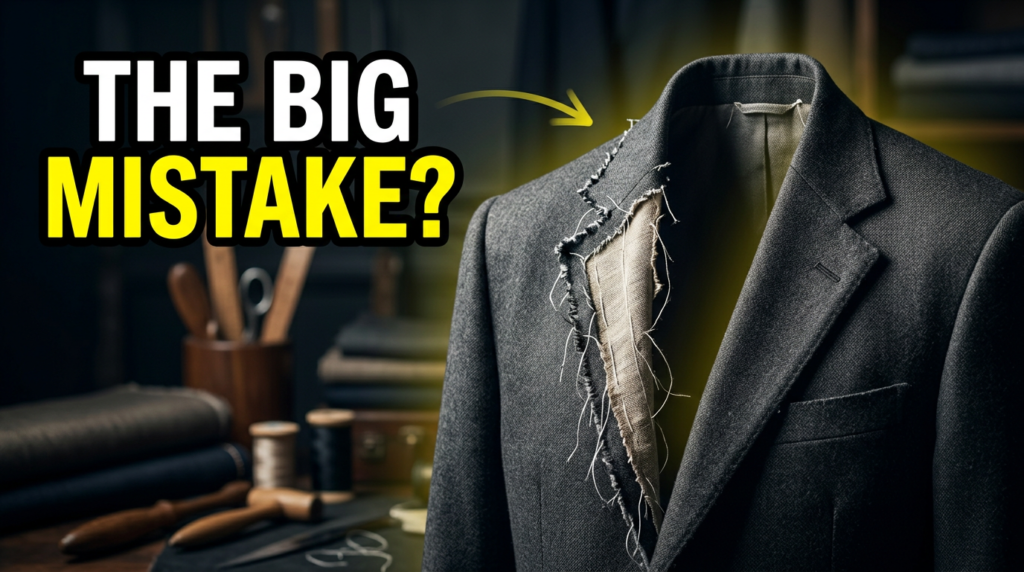
A collarless jacket isn’t just a jacket with something missing — it’s a deliberate choice that recalibrates an entire look. It can feel futuristic and avant-garde, or it can feel elegantly simple. It can be a canvas for a bold necklace or the perfect frame for a simple turtleneck.
That deceptive simplicity is its secret weapon — a weapon that’s been discovered and rediscovered throughout history.
Coco Chanel and the Revolution in Tweed
The story of the modern collarless jacket kicks off not with a designer trying to be radical, but with one obsessed with comfort.
In the 1920s, Gabrielle “Coco” Chanel was spending time in Scotland with the Duke of Westminster. She was fascinated by his sportswear — especially his tweed jackets. They were practical, comfortable, and made for movement.
At the time, womenswear was still incredibly restrictive. Chanel, who built her entire brand on freeing women from corsets and stiff fabrics, saw an opportunity. She borrowed the Duke’s jackets, fell in love with the supple tweed, and started making her own versions.
But it wasn’t until 1954, when she was 71 years old, that she perfected the design that would become her signature.
In a fashion world dominated by Christian Dior’s structured “New Look” — with its tiny waists and heavy skirts — Chanel offered something completely different: a straight-cut, collarless tweed suit. The French press hated it at first, calling it a relic. But American women loved it.
The jacket was engineered for ease: lined in silk for a smooth fit and weighted with a delicate chain sewn into the hem so it always hung perfectly. And that missing collar? It wasn’t just a style choice — it was a statement about freedom. It let a woman move her head and neck easily, to feel unconstrained.
The design became a massive hit, championed by some of the most famous women in the world. Most notably, Jackie Kennedy’s embrace of the style cemented its status as a timeless classic. As Vogue has documented, the Chanel suit remains one of the most referenced silhouettes in fashion history — and the collarless cut is central to its enduring appeal.
The Sixties, Space-Age, and The Beatles
While Chanel was making the collarless jacket a symbol of feminine elegance, a totally different scene was brewing in menswear.
The 1960s were a decade of explosive change, and fashion was right there on the front lines. In Paris, designers like Pierre Cardin weren’t looking to the past — they were obsessed with the future. Inspired by the Space Race and pure geometric shapes, Cardin wanted to strip down the traditional men’s suit, which he saw as stuffy and old-fashioned.
So, he started subtracting. He got rid of the lapels, simplified the cuffs, and — most famously — removed the collar. The result was a collection of sleek, minimalist suits that looked like they belonged in a sci-fi film. Unlike anything menswear had ever seen, they perfectly captured the decade’s futuristic optimism.
This forward-thinking design might have stayed a niche Parisian trend if not for a fateful connection.
As their fame exploded, The Beatles were looking to swap their rough leather look for something sharper and more modern. Their manager, Brian Epstein, wanted a cleaner image. Inspired by the new, sleek styles coming out of Europe — including Cardin’s work — the band went to London tailor Dougie Millings in 1963 to create their own version.
The resulting four-button, collarless suits became their uniform. Suddenly, this avant-garde design was on TV screens and stages all over the world, worn by the biggest band in history. For millions of young fans, the “Beatle suit” was a symbol of a new generation — clean and sharp, but a clear break from the stuffy suits their parents wore.
The unlikely link between Parisian couture and Liverpool pop had turned the collarless jacket into a cultural icon.
The Collarless Jacket as a Modern Wardrobe Staple
After the 60s explosion, the collarless jacket didn’t go away. It became a secret weapon for designers whenever fashion turned toward simplicity.
It resurfaced during the minimalism of the 1990s — a perfect match for the clean, unadorned look that designers used to push back against the excess of the 80s.
Today, its comeback is tied to ideas like “quiet luxury” and the capsule wardrobe. In a world of loud logos and fast-fashion trends, the collarless jacket feels thoughtful and permanent. It’s become a modern uniform for people who want to look put-together without looking like they tried too hard.
Modern designers have embraced its incredible versatility. You’ll see it as a classic tweed blazer, a cropped denim jacket, a soft coat-like layer, and even in menswear as a less formal alternative to a traditional blazer. Elle’s ongoing coverage of capsule dressing consistently cites the collarless jacket as one of the smartest foundational pieces — precisely because its clean lines work across so many different contexts.
Fashion editors love it as an easy “third piece” — something that can instantly polish a simple t-shirt and jeans or add a modern edge to workwear. Its history is no longer just about Chanel’s elegance or Cardin’s futurism. It’s about a design so clean that it can become whatever you want it to be.
How to Actually Wear a Collarless Jacket
The quiet genius of the collarless jacket is that its success really depends on what you put under it. Since you’ve removed the frame of a traditional collar, you have to create a new one.
The neckline is everything. The best pairings either go higher than the jacket’s opening — like a slim turtleneck — or noticeably lower, like a scoop-neck tee or a V-neck. This creates a clean, uninterrupted line. The one thing to avoid is a crewneck t-shirt that ends right at the jacket’s edge — it can make the whole area look jumbled.
Proportion matters too. A boxy, Chanel-style jacket looks amazing balanced with something slimmer on the bottom — straight-leg jeans or a pencil skirt. A sleeker, more fitted collarless blazer works beautifully with wide-leg trousers. The jacket is already creating a sharp silhouette, so the rest of the outfit can stay simple.
And when in doubt, the most powerful formula is also the easiest: pair it with clean lines and a monochrome colour palette. That’s when the jacket’s minimalist roots really shine, making the whole outfit feel deliberate and expensive. It’s a piece that makes thoughtful styling look completely effortless.
Why “Edited” Is Better Than “Unfinished”
The journey of the collarless jacket is a perfect lesson in the power of design. What started as an adaptation of menswear for comfort, later reimagined as a vision of the future, became an icon through a series of surprising connections. It was never one designer’s grand plan.
It just proves that sometimes the most revolutionary act in design isn’t adding something new — it’s having the confidence to take something away. Removing the collar forced everyone to think differently about shape, proportion, and what it means to be formal. It created a blank space that could be filled with elegance, rebellion, or minimalist cool.
So the next time you see a collarless jacket, don’t think of it as “unfinished.” Think of it as edited. Think of it as intentional. It’s a quiet icon — a piece of unlikely history that, by having a little less, ended up doing so much more.
FAQ
What is a collarless jacket? A collarless jacket is exactly what it sounds like — a jacket designed without a traditional collar or lapels. Rather than being an unfinished garment, it’s a deliberate design choice that creates a cleaner, more architectural silhouette. It can range from a structured tweed blazer to a soft, minimalist coat.
Where did the collarless jacket originate? Its modern roots trace back to Coco Chanel’s iconic tweed suit of 1954, though Pierre Cardin’s 1960s Space-Age minimalism and The Beatles’ four-button suits also played a huge role in cementing it as a cultural staple. The design draws from much older traditions of collarless garments in sportswear, military dress, and South Asian formal wear.
Is a collarless jacket still in style in 2026? Absolutely. The collarless jacket is a core piece in quiet luxury and capsule wardrobe dressing — two aesthetics that are still dominant in 2026. Because it’s rooted in minimalism rather than trend, it doesn’t date the way seasonal styles do.
What should you wear under a collarless jacket? The key is to be intentional with your neckline. A slim turtleneck works beautifully, as does a deep V-neck or scoop-neck. Avoid crewneck tops that end right at the jacket’s neckline — this creates a visually cluttered area. A clean, open neckline or a contrasting high neck both give the jacket the space it needs to look its best.
Can you wear a collarless jacket to work? Yes — in fact, it’s one of the most versatile office pieces you can own. Paired with tailored trousers and a turtleneck, it reads as polished and professional. It offers the structure of a blazer without the formality of a full lapel, making it ideal for modern, smart-casual workwear.