What Is Black Tie Attire for Women — The Rules, The Flexibility, and the Details That Matter
You’ve just received that beautiful invitation — the thick cardstock feeling important in your hands. Your eyes scan down past the elegant calligraphy to two words that spark both excitement and dread: Black Tie. Your mind immediately races to your closet, and a wave of questions hits you. What does that really mean? Is a long dress required? Can you wear colour? What fabrics actually count as formal enough?
If you’ve ever felt that jolt of confusion, you’re in exactly the right place.
For something that sounds so simple, “black tie” is one of those phrases that can make smart, stylish people stare into their wardrobes like it just insulted them. It might be the world’s most misunderstood dress code. But it doesn’t have to be. This guide is going to demystify black tie completely — with a particular focus on what is black tie attire for women, the unwritten rules, and the surprising flexibility you actually have once you understand the framework.
What Is Black Tie Attire for Women? Length, Fabric, and Formality
The women’s black tie code is more open to interpretation than the men’s — which is ironically why it causes so much confusion.
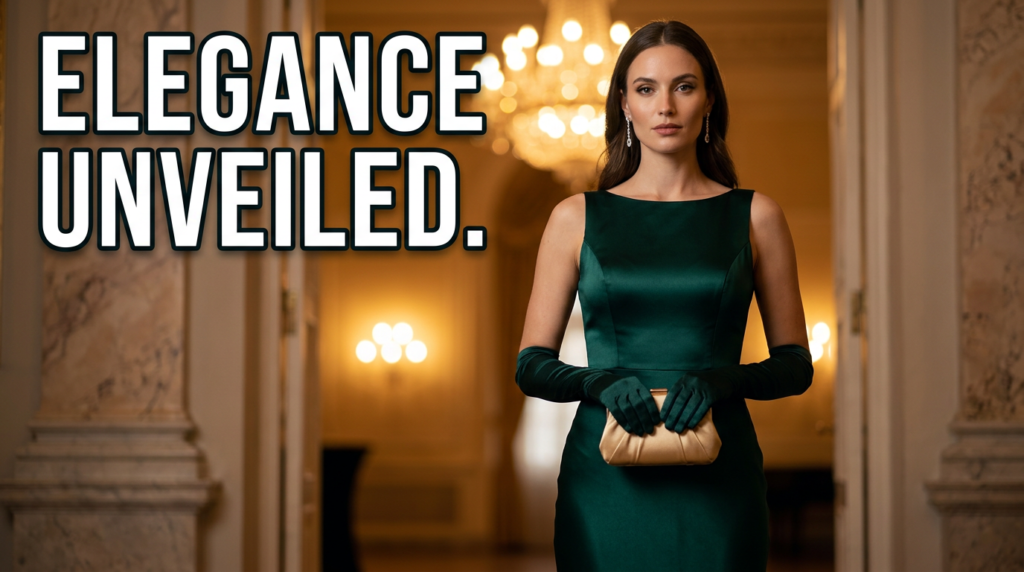
The short version is this: black tie calls for a formal, evening-appropriate look. And the safest, most traditional, universally accepted choice? A floor-length gown. This is the gold standard. When an invitation says “black tie,” a long dress is always the right answer.
But here’s where people get tripped up — don’t get stuck on the word black. A black-tie dress does not have to be black. The term refers to the level of formality, not a mandatory colour. Deep jewel tones like emerald, sapphire, and amethyst are stunning and entirely appropriate. So are metallics, rich navies, and burgundies. While solid colours often read as more sophisticated, an elegant pattern isn’t forbidden — as long as the overall effect remains formal.
According to Vogue’s guide to black tie dressing, evening events at this level call for a look that feels intentional from head to toe — not just a slightly dressier version of your usual wardrobe.
It’s All About the Fabric
Fabric is where formality is truly communicated. Black tie is your moment for luxe materials. Think silk, satin, chiffon, velvet, organza, or fine lace. These fabrics drape, reflect light, and move in a way that feels inherently special.
A dress made of cotton, linen, or a standard jersey will almost always feel too casual — no matter its length. The fabric does at least half the work at a formal event.
What About Other Silhouettes?
In recent years, a chic, well-tailored jumpsuit in a luxurious fabric or a very formal evening suit has become an acceptable and fashion-forward choice. Elegant evening separates — like a long, flowing skirt paired with a sophisticated top — can also work beautifully.
While traditional etiquette still favours floor-length gowns, some very formal cocktail dresses can be appropriate for certain black tie events, especially if they’re made from luxurious fabrics and carry a genuinely glamorous feel. When in doubt, though, longer is always the safer and more traditional option.
The Details That Separate Novices from Experts
A successful black tie look is an exercise in polish — and the details are what make all the difference.
Your bag. Opt for a small evening bag or clutch instead of your everyday handbag. Size matters here.
Your jewellery. Keep it intentional. Either a pair of statement earrings or a beautiful necklace — but rarely both. The goal is elegance, not overload.
Hair and makeup. It doesn’t need to be overly dramatic, but it should look like you made an effort for a special occasion. Polished and intentional is the brief.
Shoes. Yes, you can absolutely wear elegant flats. The outdated notion that formalwear requires painful heels is long gone. If the shoe is dressy and refined, it works. Full stop.
As Harper’s Bazaar notes in their evening dressing guide, the difference between a woman who looks effortlessly formal and one who looks overdressed or underdressed almost always comes down to these finishing details — not the dress itself.
Decoding “Black Tie Optional” and “Creative Black Tie”
This is where the grey area lives — and it’s worth understanding both variations clearly.
Black Tie Optional
“Black Tie Optional” is a nod to guests who may not own full black tie attire. It means the hosts are setting a formal tone and would love for guests to dress up, but they’re giving a little breathing room.
For women, it offers slightly more leeway. A floor-length gown is still perfect, but a very elegant cocktail dress or a dressy evening suit is also appropriate here.
Creative Black Tie
“Creative Black Tie” is a modern twist that allows for more personality — without breaking the formality entirely. For women, this is the perfect opportunity for a high-fashion gown, a formal jumpsuit in a bold colour, or more avant-garde accessories.
The creative part is about showing your personal style. The black tie part is a reminder to keep it formal. You’re bending the rules, not abandoning them.
The Men’s Side: A Quick Breakdown
Since black tie events involve everyone, it’s worth quickly covering the men’s code too — especially if you’re dressing a partner or just want to understand the full picture.
The most common mistake men make is thinking a black suit is an acceptable substitute for a tuxedo. Traditionally, it isn’t. A business suit is built for the day; a tuxedo — or dinner jacket — is built for the night.
The key differences? The tuxedo’s lapels are faced with satin or grosgrain, which catches low, warm evening light in a way that wool simply doesn’t. The trousers have a satin stripe down the side of the leg. And there’s no belt — proper tuxedo trousers are held up by side adjusters or suspenders, keeping the waistline clean and uninterrupted.
The shirt should be white with French cuffs requiring cufflinks. The tie should be a self-tied bow tie — a long necktie is for business, not black tie. And shoes should be black patent leather or highly polished black leather oxfords.
The Real Secret: Confidence Over Perfection
After all these rules — the floor-length gowns, the luxurious fabrics, the intentional accessories — the real secret to black tie is not about slavish adherence to a historical checklist.
It’s about showing up with confidence.
The rules exist not to restrict you, but to create a shared sense of occasion. When everyone adheres to a formal dress code, it signals that the moment is different — that it’s special. Your objective isn’t to have the most expensive outfit in the room. It’s to look appropriate, polished, and completely at ease.
A beautiful gown should make you feel graceful and at your best — not like you’re in a costume. If you’re constantly tugging at your dress or adjusting something all evening, you’ve missed the point. Fit is everything. And comfort is a form of confidence.
People will remember the person who looked like they understood the assignment and genuinely enjoyed the evening — far more than they’ll remember the specific designer of the dress.
Recap: The Modern Black Tie Playbook for Women
- A floor-length gown is your most reliable and universally correct option
- The dress does not have to be black — jewel tones, metallics, and rich navies all work
- Focus on luxurious, evening-appropriate fabrics: silk, satin, velvet, chiffon, lace
- A formal jumpsuit or elegant evening suit can be fashion-forward and appropriate
- Keep accessories intentional and edited — a clutch, one statement piece of jewellery
- Elegant flats are completely acceptable
- “Black Tie Optional” gives you a little more leeway; “Creative Black Tie” invites personality — but both are still formal events
The next time those two words appear on an invitation, don’t let dread be your first reaction. See it as an opportunity — to honor the occasion and to present the most polished, confident version of yourself.
Because the ultimate unwritten rule of black tie is this: it’s not about looking perfect. It’s about looking like the evening itself mattered.
6. FAQ Section
Q1: What is black tie attire for women exactly? Black tie attire for women means a formal, evening-appropriate look. The most traditional and universally accepted option is a floor-length gown in a luxurious fabric like silk, satin, chiffon, or velvet. The dress doesn’t have to be black — the term refers to the formality level, not the colour.
Q2: Can a woman wear a cocktail dress to a black tie event? Traditionally, a floor-length gown is preferred. However, a very formal, glamorous cocktail dress in a luxurious fabric can be appropriate for some black tie events. When in doubt, longer is always the safer choice.
Q3: What colours are appropriate for black tie attire for women? Almost any rich, sophisticated colour works — deep jewel tones like emerald, sapphire, and amethyst are excellent choices. Metallics, navy, and burgundy are also very appropriate. Black is classic, but it’s far from the only option.
Q4: Can women wear jumpsuits to black tie events? Yes — a chic, well-tailored jumpsuit in a luxurious fabric like silk or satin is increasingly accepted as a fashion-forward black tie option, especially for “Creative Black Tie” events.
Q5: What shoes should a woman wear to a black tie event? Formal heels are traditional, but elegant flats are completely acceptable. What matters is that the shoe looks dressy and refined — not casual. Strappy heels, embellished flats, and sleek pointed-toe styles all work.
Q6: What accessories are appropriate for black tie attire for women? A small evening clutch, intentional jewellery (statement earrings or a necklace — not both), and polished hair and makeup. The goal is elegance without overload.
Q7: What does “Black Tie Optional” mean for women? It means a floor-length gown is perfect but not strictly required. A very elegant cocktail dress or a dressy evening suit is also appropriate. It’s not an invitation to dress casually — the event is still formal.