Best Foundations for Rosacea — I Tested 20 So You Don’t Have To
If you have rosacea, you already know the drill. You spend a small fortune on a foundation that promises full coverage and a flawless finish — only to end up with either a patchy mask that clings to every dry spot, or a full-on flare-up by lunchtime. It’s exhausting. Finding the best foundations for rosacea feels like searching for something that shouldn’t have to be this hard.
Here’s the thing: the best foundation for rosacea isn’t always the most expensive one, or the one with the most glowing reviews on TikTok. It’s the one that quietly does the least damage to your already reactive skin. Coverage matters, yes — but so does what’s in the formula.
I put 20 popular foundations to the test on my type 1 and type 2 rosacea-prone skin, and I’m breaking down every single result. The failures, the “meh” ones, the solid options, and the three that genuinely surprised me.
How I Tested All 20 Foundations (And Why It Matters)
Before we get into the rankings, a quick word on methodology — because context is everything when it comes to rosacea reviews.
My skin is reactive. Type 1 rosacea means I deal with constant flushing and redness across my cheeks and nose. Type 2 adds texture and small bumps to the mix, which makes full-coverage formulas tricky — they can look great for ten minutes and then suddenly look like a mask. Add dryness into the equation, and matte foundations become my worst enemy. (If you’re still figuring out which type of rosacea you have, the National Rosacea Society has a really clear breakdown worth bookmarking.)
Here’s how I kept the testing as fair as possible:
- Same primer every time — a gentle, hydrating base with no active ingredients
- Half-face application — one side with foundation, one side bare, for a true before-and-after
- Full 8-hour wear test — I paid attention to stinging, itching, fading, pilling, and separation
- No touching up — I wanted to see how each formula held on its own
One big caveat: rosacea triggers are deeply personal. What causes a flare for me might be your everyday go-to. Always patch-test a new foundation on a small area before committing to a full face. That advice never gets old.
Now let’s get into it.
Best Foundations for Rosacea — And the Ones to Avoid Completely
These three foundations had me running to the sink. If you have reactive skin, consider yourself warned.
The Viral Matte Formula That Caused Immediate Stinging
You’ve seen it all over Instagram Reels. It’s everywhere, it photographs beautifully, and the coverage is genuinely impressive. I was hopeful.
Within minutes of applying it, I felt that telltale low-grade tingling — the kind that signals a flare-up is incoming. Not a burning pain, but enough discomfort to make me anxious for the rest of the day. By the two-hour mark, it had settled into every fine line and clung to texture I didn’t even realize I had. The matte finish looked flat and mask-like, and the irritation made wearing it feel like a punishment.
The lesson: Viral popularity means nothing for reactive skin. If a formula causes immediate stinging, your skin is telling you something — listen to it.
The “Skin-Loving” Serum Foundation That Did Nothing
On paper, this one should have been a winner. Marketed as dewy, hydrating, and packed with skin-loving ingredients, the application was actually beautiful — it glided on effortlessly and gave my skin a gorgeous, lit-from-within look.
The problem? The coverage was so sheer it barely touched my redness. After three layers — which made my skin look visibly congested — my cheeks were still flushed. By hour two, the formula had separated around my nose and gathered in oily patches. No irritation, but no performance either.
A foundation that doesn’t cover redness isn’t really a foundation for rosacea. It’s just expensive skincare you applied in the wrong order.
The “Clean Beauty” Foundation That Fragrance-Bombed My Skin
This one stung in a different way — it had a gorgeous, natural ingredient list and smelled like a spa. But that scent was the problem. Essential oil fragrances, however natural, can be potent irritants for rosacea-prone skin. Within minutes, the redness on my cheeks deepened and I felt that familiar heat spreading across my face.
This is a really common trap in the clean beauty world. “Natural” and “non-irritating” are not the same thing. For most of us with rosacea, fragrance-free isn’t just a nice-to-have — it’s non-negotiable.
The “Meh” Zone: Foundations That Work, But Won’t Wow You
These foundations didn’t cause any problems, which earns them some credit. But they also didn’t deliver anything worth getting excited about.
The Long-Wear Drugstore Formula That Felt Heavy
A very popular long-wear foundation that promises a natural matte finish. It delivered on the coverage and the staying power — this thing did not move. But on dry, sensitive skin, it felt suffocating. It sat on top of my skin rather than blending in, and by the end of the day, it looked flat and lifeless. Great for oilier skin types, but not comfortable for mine.
The Liquid-to-Powder Formula That Faded Fast
The concept is genuinely clever — applies like a liquid, sets to a soft powder finish. It blurred pores nicely and offered decent light-to-medium coverage. The problem was longevity. By the four-hour mark, it had faded right where I needed it most: the center of my cheeks. Too much touching up required for a full day, though it could work well for shorter events or low-key days when you don’t need much coverage.
Honorable Mentions: Great Foundations for Specific Situations
These didn’t make my top tier, but they absolutely earn a recommendation — just for the right person or occasion.
Estée Lauder Double Wear Stay-in-Place Makeup
A classic for a reason. The coverage is phenomenal, and it genuinely lasts through everything — heat, humidity, a long day on your feet. When I have an event, a photoshoot, or anything where I need bulletproof coverage that won’t budge, this is what I reach for.
The reason it’s not in my top tier: it can feel heavy on dry skin, and the full matte coverage feels a bit intense on days when my skin is already sensitized. But for maximum-coverage needs? Unbeatable.
BareMinerals Original Loose Powder Foundation
For days when my skin is at its most reactive and the thought of a liquid formula feels like too much, this is what I grab. Minimal ingredients, incredibly gentle, buildable coverage, and a soft natural finish that never looks cakey. Applying it with a dense brush lets you target redder areas without heavy friction on the skin.
The tradeoff: it doesn’t have the staying power of a liquid foundation. Think of it as your sensitive-skin “good skin day” option rather than an all-day wear solution.
IT Cosmetics CC+ Cream with SPF 50+
This one has earned a cult following in the rosacea community for good reason. Full coverage, a natural dewy finish, SPF 50 built in, and a formula loaded with niacinamide and hyaluronic acid. It does a lot of heavy lifting.
One important note: to actually get SPF 50 protection from a makeup product, you need to apply roughly a quarter-teaspoon for your face — much more than most people use. Layer a light setting powder on top for better longevity, and this becomes a genuinely reliable everyday option.
The Holy Grails: Best Foundations for Rosacea in 2025
These are the ones that changed the game for me. Out of all twenty formulas, these three delivered the perfect balance of coverage, comfort, and finish — without a single hint of irritation. If you want to browse the full range of options before committing, Sephora’s sensitive skin foundation collection is a solid starting point.
Lancôme Teint Idole Ultra Wear
I almost skipped this one because of the matte finish. Matte and dry skin? Sounds like a nightmare.
But this formula completely surprised me. It’s incredibly lightweight — almost water-thin in texture — yet it provides flawless full coverage that completely neutralizes redness in one or two layers. It doesn’t feel heavy or drying, and it creates a smooth, velvety base that genuinely lasts all day without flaking or separating. The version I tested is fragrance-free and oil-free, making it a solid choice for reactive skin. (Always check the label, as formulations can vary.)
This is the matte foundation for people who think they hate matte foundations.
Giorgio Armani Luminous Silk Foundation
Yes, it’s a splurge. But if you’re going to invest in one foundation for rosacea, this is the one I’d argue for.
The finish is what makes Luminous Silk legendary — it’s luminous without being greasy, and it has this remarkable ability to blur texture while making your skin look like a better, more even version of itself. Medium coverage that builds up beautifully over redder areas, and it feels like absolutely nothing on the skin. No stinging, no discomfort, no separation. On dry days when I want to look radiant and feel comfortable, this is the one I reach for.
It’s not the most long-wearing foundation in the lineup, but paired with a light setting powder, it holds up well throughout the day.
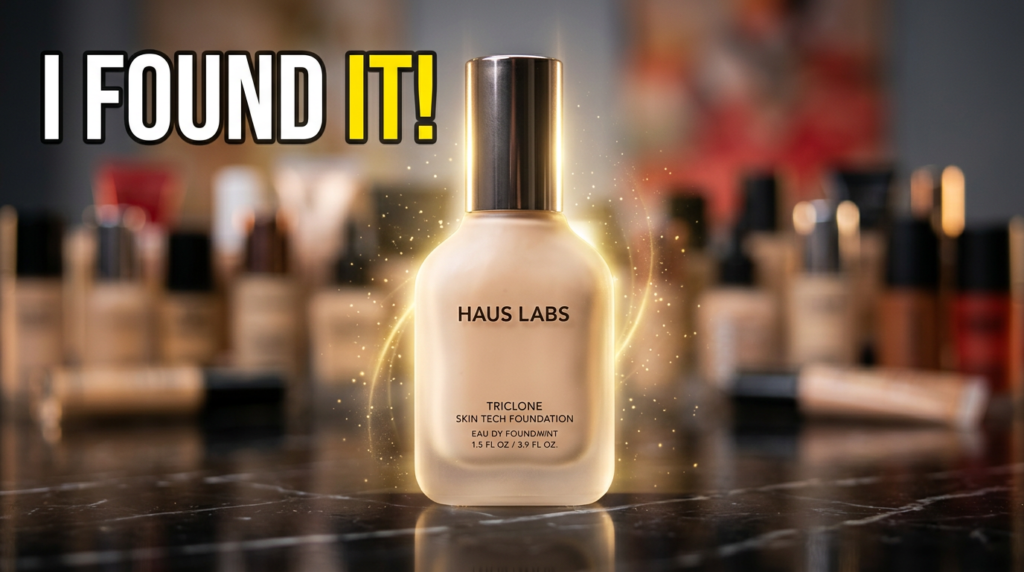
Haus Labs Triclone Skin Tech Foundation — Best Overall
Out of everything I tested, this one blew me away the most.
It’s described as a medium-coverage, serum-like foundation, and that description is spot-on. The formula includes fermented arnica, which the brand claims helps reduce redness and inflammation. Whether that’s the arnica or just the overall skin-friendly formula, I can say that my skin subjectively feels calmer after a full day of wear with this foundation — which is something I genuinely cannot say about any other product I’ve tested.
A note: arnica is a contact allergen for some people, so if you’re sensitive to it, patch-test carefully before committing.
The coverage is a perfect medium that erases redness while still looking like actual skin. The finish is naturally radiant without tipping into dewy or greasy. It doesn’t break up, settle into fine lines, or fade around the cheeks. It just… works. For my rosacea, this is as close to perfect as I’ve found.
The Best of the Bunch: Quick-Reference Awards
| Award | Winner |
|---|---|
| 🏆 Best Overall | Haus Labs Triclone Skin Tech Foundation |
| 💸 Best Budget Pick | L’Oréal Paris Infallible 32HR Fresh Wear Foundation |
| ✨ Best Splurge | Giorgio Armani Luminous Silk Foundation |
| 🌿 Best for Sensitive Days | BareMinerals Original Loose Powder Foundation |
| 💪 Best Bulletproof Coverage | Estée Lauder Double Wear Stay-in-Place |
On the L’Oréal Infallible: It didn’t make the in-depth sections above, but it absolutely earns its budget crown. Buildable coverage, a formula that blends beautifully, and — crucially for a matte drugstore formula — it doesn’t cling to dry patches. If you’re starting your rosacea foundation search without wanting to spend a lot, this is where I’d begin.
5 Rosacea Foundation Mistakes You Might Be Making
Even with the right formula, application can make or break your results. Here are the most common mistakes worth avoiding:
1. Skipping moisturizer. Rosacea skin is often dehydrated. Foundation clings to dehydrated skin and looks patchy within hours. Apply a gentle, fragrance-free moisturizer and give it a few minutes to absorb before any makeup touches your face.
2. Using your fingers to apply. Friction can trigger redness. A damp beauty sponge or a soft brush distributes product more evenly and reduces the physical irritation on your skin.
3. Piling on layers to get more coverage. More foundation doesn’t always mean more coverage — it means more product sitting on your skin, which leads to creasing, pilling, and an unnatural finish. Build slowly and let each thin layer set before adding another.
4. Ignoring SPF. UV exposure is one of the most common rosacea triggers. If your foundation doesn’t include SPF, apply a separate sunscreen underneath. Sun damage makes redness worse over time.
5. Choosing based on reviews alone. A foundation with 10,000 five-star reviews might be a disaster for reactive skin. Always check the ingredient list for known irritants: fragrance, alcohol denat., essential oils, and certain preservatives like methylisothiazolinone.
What the Future of Foundation Looks Like for Rosacea Skin
The industry is clearly paying attention. More brands are developing hybrid formulas that bridge the gap between makeup and skincare — think niacinamide, ceramides, hyaluronic acid, and fermented actives built directly into the foundation formula rather than just listed for marketing purposes.
This is a genuinely exciting direction for those of us with sensitive and reactive skin. Fewer products, less friction, and formulas that support the skin barrier rather than just sit on top of it. We’re not fully there yet — any active ingredient can still cause a reaction for the wrong person — but the trend is moving in the right direction.
The most important takeaway from testing twenty foundations is this: the best formula for rosacea isn’t necessarily about coverage. It’s about coverage without compromise. Your foundation should work with your skin, not against it.
Always prep with a gentle moisturizer and sunscreen. Foundation is the final step, not a rescue mission.
FAQ: Best Foundations for Rosacea — Your Top Questions Answered
What should I look for in a foundation if I have rosacea? Prioritize fragrance-free, alcohol-free formulas with minimal irritants. Look for foundations that include skin-soothing ingredients like niacinamide, hyaluronic acid, or ceramides. Medium to full coverage is usually ideal, but avoid very heavy, full-matte formulas if your skin is also dry.
Is it better to use liquid or powder foundation for rosacea? It depends on your skin type. Liquid foundations generally offer better coverage and hydration, making them a good fit for dry rosacea-prone skin. Loose powder formulas like BareMinerals work well on extra-sensitive days when you want minimal product on the skin.
Can foundation make rosacea worse? Yes — certain ingredients can trigger or worsen flare-ups. Fragrance (including “natural” fragrance from essential oils), alcohol denat., and some preservatives are common culprits. High-friction application methods can also aggravate redness.
Does primer help with rosacea coverage? A gentle, hydrating primer can make a significant difference — it creates a smooth base, helps foundation adhere evenly, and reduces the number of layers you need to build coverage. Look for green-tinted primers if color-correcting redness is a priority.
What’s the best drugstore foundation for rosacea? The L’Oréal Paris Infallible 32HR Fresh Wear Foundation is a standout at the drugstore level. It offers buildable coverage, doesn’t cling to dry patches, and holds up well through the day.
Should I use SPF under my foundation if I have rosacea? Absolutely. UV exposure is one of the most common rosacea triggers. Apply a separate SPF 30–50 sunscreen before your foundation, especially if your foundation’s SPF is below 30 or you won’t be applying enough product to get full sun protection.